Buying guide
Best Cooling Towels for Hot-Weather Walks
A damp reusable towel can be a convenient comfort accessory on a warm walk, but it is not protective equipment and it cannot make unsafe heat safe. The useful comparison is about fabric feel, size, re-wetting, carry, and cleaning—not dramatic cooling numbers or weight-loss promises.
Who this guide is for
This guide is for adults comparing ordinary reusable towels for comfort during warm-weather walks, breaks, or the trip home. It does not assume a towel prevents heat exhaustion, heat stroke, dehydration, sunburn, or any other heat-related problem. A towel also does not increase fat loss.
For the broader gear decision, use the routine-support tools pillar. A walking hat for sun or light rain and a lightweight hand-carried bottle solve different routine needs and do not replace weather planning.
Best-fit towel formats, not unsupported winners
No towel products were temperature-tested, worn, or ranked for this guide. These formats describe practical options to compare.
- Best format for neck coverage: A longer, narrower towel that drapes without trailing into clothing or gear.
- Best format for sensitive texture preferences: A smooth, soft weave with finished edges rather than a coarse mesh.
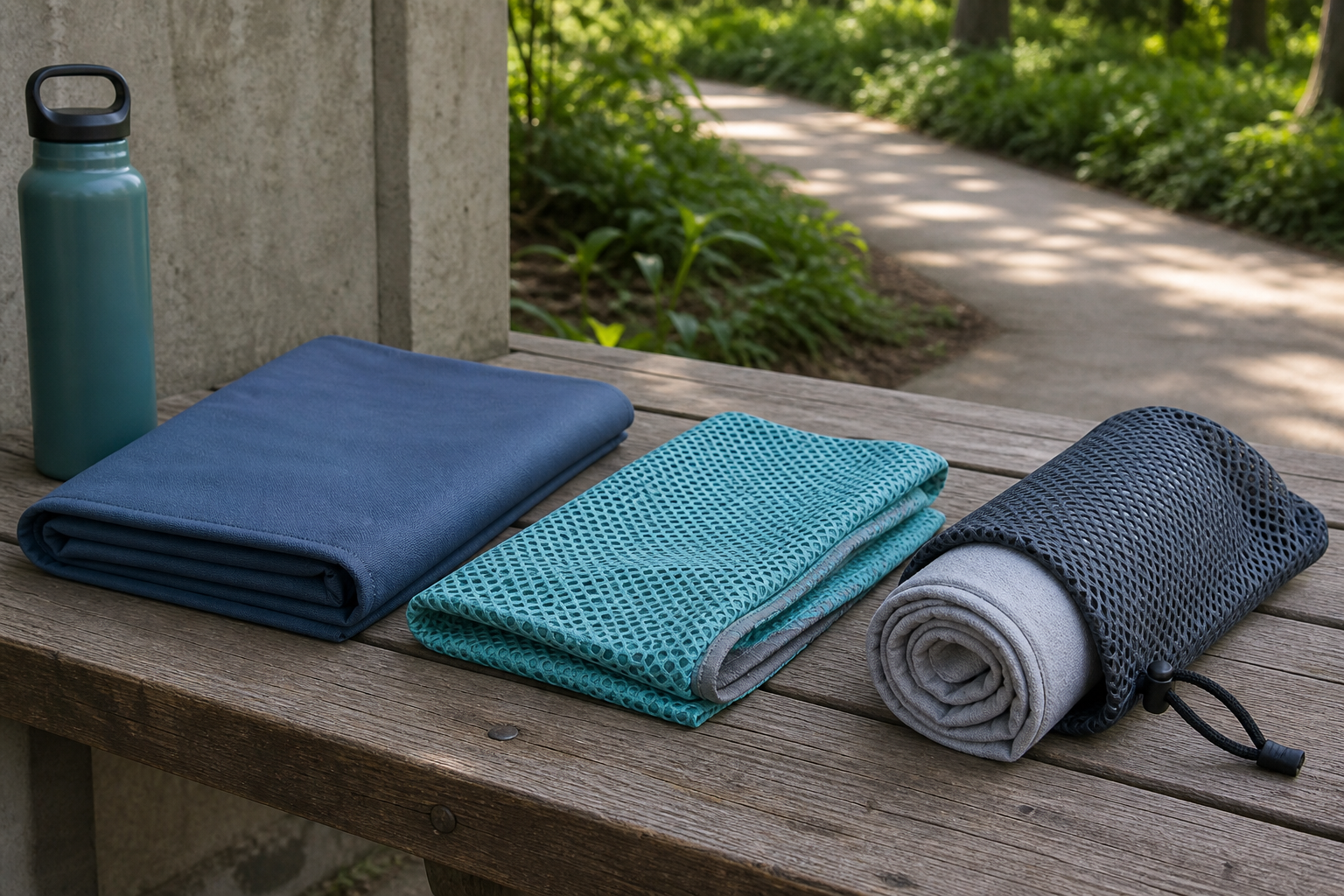
- Best format for a small walking bag: A compact towel with a ventilated pouch, provided it can be unpacked and dried fully after use.
- Best format for repeated re-wetting: A lightweight fabric that is easy to rinse, wring, and reposition using the maker's directions.
- Best format for shared households: Distinct colors or simple washable labels so each towel remains identifiable.
Selection criteria that matter
- Check open dimensions: Compare actual length and width with where you intend to place it. Product photos can make small towels look larger.
- Read the fabric description: Smooth microfiber, knit, and open mesh can feel different on the neck and face. “Soft” is subjective.
- Verify activation instructions: Note whether the exact item is meant to be soaked, wrung, shaken, or simply dampened and how often it may need re-wetting.
- Treat cooling numbers cautiously: A claimed temperature drop or duration depends on test conditions, airflow, humidity, starting water temperature, placement, and use. Without a documented method, it is marketing language rather than a reliable forecast.
- Inspect the carry setup: A hard tube may add bulk; a mesh pouch may ventilate better but still should not become permanent wet storage.
- Confirm wash care: Check machine-wash, detergent, bleach, dryer, and air-drying instructions for the exact towel.
- Plan for wet weight: A large saturated towel can feel heavier and may drip onto clothing or into a bag.
- Check the return path: Texture and odor retention are difficult to judge online, so confirm the current seller and return terms before ordering.
A simple comparison framework
Write down where the towel will sit, how you will carry it wet, and where it will dry afterward. Then mark each listing yes, no, or unclear:
- Are the open dimensions stated in familiar units?
- Are fabric content and edge construction described?
- Are activation, re-wetting, washing, and drying directions available?
- Will the wet towel and case fit the bag or pocket you actually carry?
- Can the towel be removed from its case and dried fully after the walk?
- Does the listing avoid turning a comfort accessory into a heat-safety guarantee?
- Would the towel still be useful if it made no fitness or body-result difference?
A cooling towel does not make dangerous heat safe
Plan the walk around a reliable local forecast, shade, route length, access to water, and your own circumstances. In high heat or humidity, shortening, relocating, rescheduling, or skipping the walk can be more appropriate than adding another accessory. Follow current public-health guidance for hot weather in your area.
Stop activity and move to a cooler place if you feel unwell. Confusion, fainting, or other signs of a possible heat emergency require urgent help; do not rely on a towel to manage them. Individual advice about a health condition, medication, or heat tolerance belongs with a qualified healthcare professional.
Who should skip this purchase
Skip a cooling towel if a clean damp cloth already fits the routine, if you cannot dry the product fully after use, or if the dimensions, fabric, activation, and care instructions are missing. Skip walking in conditions that exceed your experience or safe plan rather than treating a towel as permission to continue.
Also skip listings that promise heat-illness prevention, medical treatment, detox effects, accelerated calorie burn, or weight loss. Those claims are outside the role of a reusable towel.
Bottom line
The best cooling towel is a modest comfort tool with a texture you tolerate, enough coverage, simple re-wetting, a practical wet-carry plan, and care instructions you can follow. Compare those details first and keep weather decisions separate from product marketing.