GoodWeighFinds is for general information only and is not medical advice. Readers should talk with a qualified healthcare professional before starting weight-loss products, supplements, diets, or exercise changes.
Routine-support buying guide
Best Fridge Organizers for Meal Prep and Leftover Visibility
Fridge organizers can make planned meals, leftovers, snacks, and ingredients easier to see before they get forgotten. They do not cause weight loss, make a meal plan right for your body, or turn a refrigerator into a health plan. The useful question is whether an organizer lowers everyday friction without adding clutter or diet pressure.
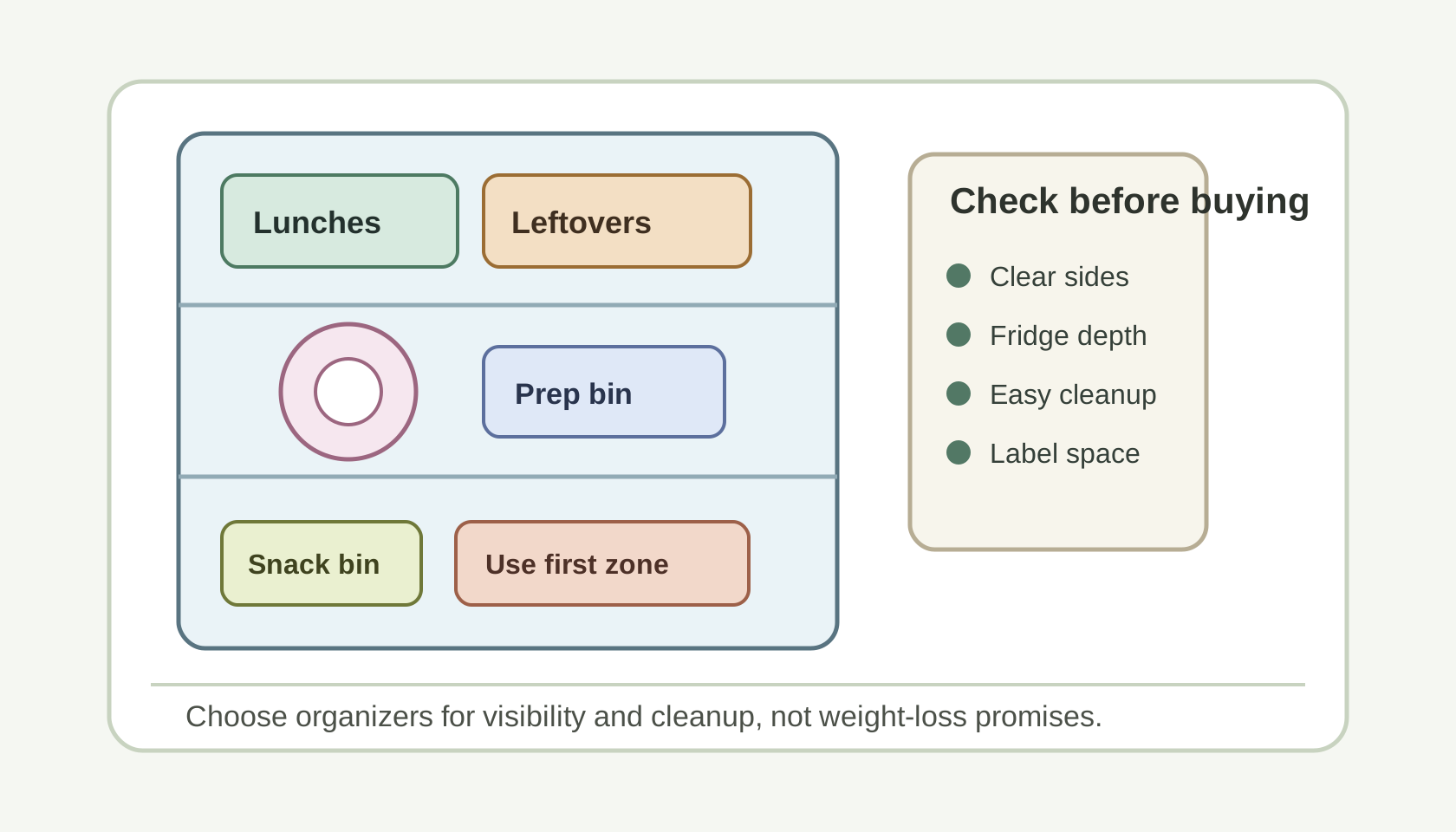
Start with the visibility problem
This guide is for adults who meal prep, save leftovers, share fridge space, or buy ingredients with good intentions and then lose them behind taller containers. The goal is not a perfect refrigerator. It is a setup where useful food is easier to notice, reach, label, and clean around.
For broader buying decisions, start with the routine-support tools guide. If your main issue is the container itself, the meal prep container guide covers material, lid, and storage tradeoffs. If dates and contents are the hard part, the food storage label guide is the closer fit.
Best organizer types by routine fit
GoodWeighFinds has not tested specific fridge organizers hands-on for this page, and this is not a ranked review list. Use these best-fit categories to compare product listings without relying on fake precision or weight-loss promises.
- Clear fridge bins: Useful for grouping lunches, snacks, condiments, or meal-prep ingredients while keeping contents visible.
- Turntables: Helpful for jars, sauces, or small containers that otherwise disappear in the back corner of a shelf.
- Stackable drawers: Worth considering when vertical shelf space is wasted, but only if they fit your fridge depth and do not block airflow.
- Use-first bins: Good for leftovers, washed produce, or ingredients that should be seen soon, especially when paired with simple labels.
- Can or bottle organizers: Practical for households that need beverage order, but not necessary if they crowd out meals or leftovers.
Selection criteria that matter
A polished product photo can hide the real issues: awkward dimensions, brittle plastic, poor handles, and bins that are annoying to clean. Compare the practical details before buying a matching set.
- Exterior dimensions: Measure shelf width, depth, and height with the door closed. Include hinges, drawers, water filters, and tall bottles in the way.
- Clear versus opaque material: Clear bins usually make leftovers easier to notice. Opaque bins can look calmer but may recreate the hidden-food problem.
- Handle design: Open handles can make bins easier to pull out, while narrow cutouts may be awkward when the bin is heavy.
- Stackability: Stacking saves space only when the bottom layer remains easy to reach and the setup does not crush softer foods.
- Cleaning instructions: Check whether the organizer is dishwasher labeled or hand-wash only. Grooves and seams can collect spills.
- Label surfaces: Smooth front panels help if you date leftovers, mark a use-first zone, or coordinate a shared refrigerator.
Comparison framework
Before adding a set to your cart, use a simple scorecard. The best fridge organizer is the one that makes your real routine easier, not the one that creates the neatest photo.
- What exact shelf, drawer, or door area will this organizer improve?
- Will it fit with the containers, bottles, and groceries you already buy?
- Can you see the contents without opening every bin?
- Will it be easy to pull out, wipe down, and put back during a normal week?
- Does it support labels, dates, or household zones if those help you?
- Would the organizer still be worth buying if it caused no change in weight at all?
Food storage limits still matter
An organizer can make food easier to find, but it does not make food safe by itself. Storage time, refrigerator temperature, handling, container seals, reheating, and the needs of the person eating the food still matter.
Use current public-health food-safety guidance for storage timelines instead of relying on organizer listings. Be more cautious when preparing food for someone who is pregnant, immunocompromised, older, very young, or otherwise at higher risk.
Weight-loss claim red flags
Fridge organizers are ordinary kitchen tools. Slow down if a listing claims a bin system will force portion control, guarantee meal-plan compliance, stop cravings, create fat loss, or deliver a body transformation. Those are not claims a plastic bin can support.
Also avoid bundles that pair organizers with supplements, detox teas, appetite-suppression products, stimulant powders, patches, or GLP-1 alternative language. Those product categories need warning-first review, not casual add-on recommendations.
Who should skip this purchase
Skip fridge organizers if your current containers and labels already solve the problem, if the set will reduce usable space, or if the purchase is mostly about matching an online photo. A simpler first step may be clearing expired food, moving leftovers to eye level, or using one low-cost bin you already own.
It is also reasonable to skip any organization system that makes eating feel more rigid, monitored, or punitive. If meal planning, food storage, or tracking has become stressful or tied to unsafe restriction, a qualified healthcare professional, registered dietitian, or mental health professional with eating-concern experience is a better next step than another kitchen product.
Bottom line
The best fridge organizers for meal prep and leftover visibility are clear, easy to clean, correctly sized, and useful with the containers you already use. Buy them for visibility, access, and cleanup. Do not buy them because a listing implies an organized fridge can guarantee a body outcome.