Shared-fridge identification guide
Best Lunch-Bag Name Tags for Shared Workplace Fridges
A name tag can solve one narrow problem: making a lunch bag easier to identify in a shared refrigerator. The useful choice attaches securely to the bag you already own, stays readable in that setting, and can be cleaned or relabeled without turning personal information into a display.
As an Amazon Associate, GoodWeighFinds earns from qualifying purchases.
Who this guide is for
This guide is for adults labeling a reusable lunch bag or rigid food container in a shared workplace fridge. It covers removable personal-identification tags, not food-date labels, tamper seals, trackers, locks, or systems for enforcing workplace refrigerator rules.
If the bag itself is the decision, start with the work lunch-bag guide. For dates and contents on meal-prep containers, use the food-storage label guide. This page maps to the broader routine-support tools guide.
Useful formats—not unsupported winners
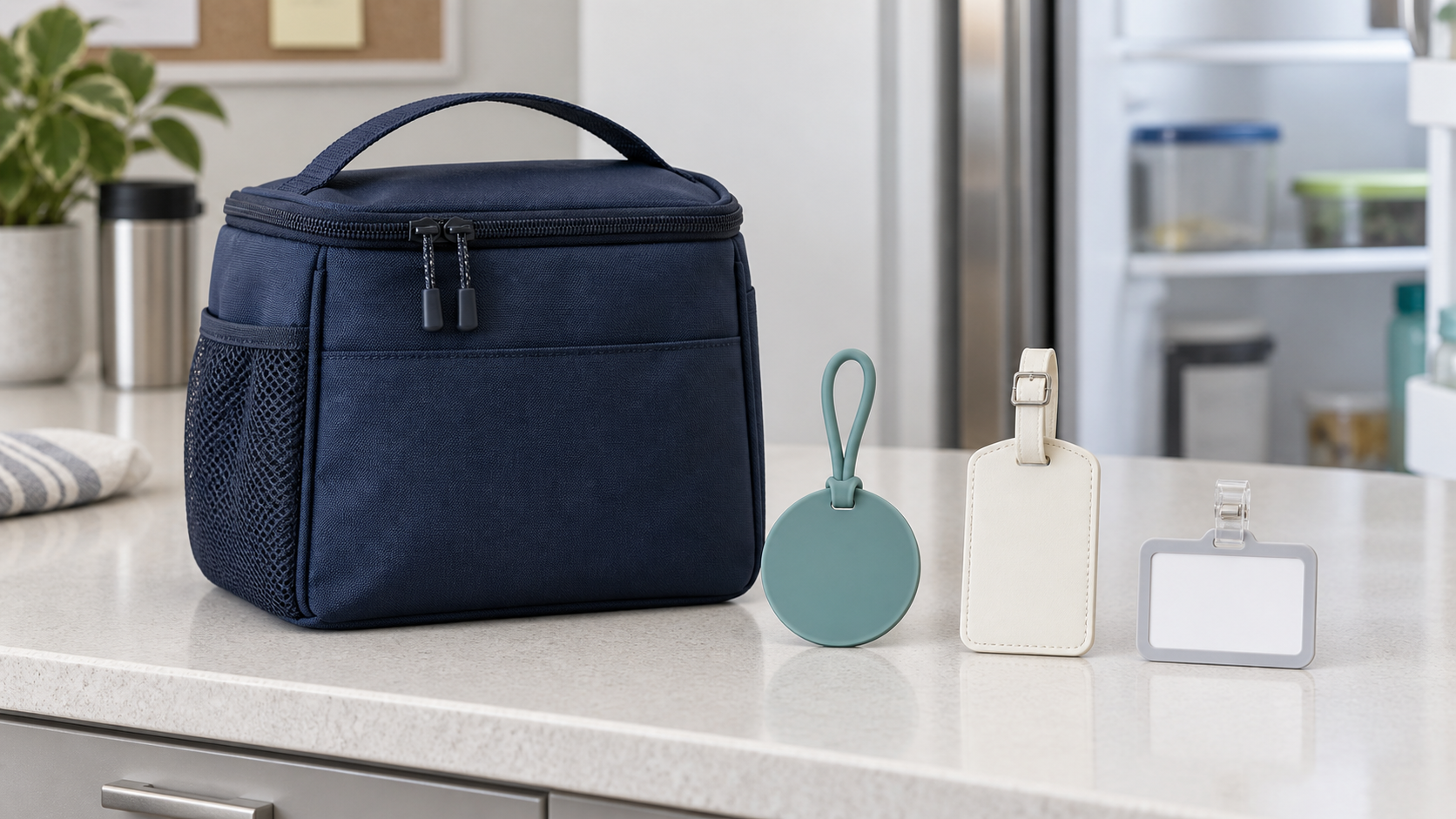
- Silicone loop tags: A flexible loop can fit a handle without metal hardware, but the loop and opening still need measured compatibility.
- Buckle or strap tags: An adjustable strap may fit a wider handle range, though extra hardware adds bulk and cleaning points.
- Clip-on writable tags: A clip is quick to move between bags, but it needs a secure attachment point and enough clearance to avoid snagging.
- Insert-window tags: A protected paper insert is easy to rewrite, but moisture can reach an opening and the insert may reveal more information than necessary.
Selection criteria that matter
- Attachment fit: Measure handle width, webbing thickness, zipper-pull opening, or loop diameter. Do not rely on “universal” wording.
- Loaded clearance: Check whether the tag can hang outside the refrigerator door, catch on a shelf, press against another bag, or interfere with the zipper.
- Readable area: The face should hold the minimum identifier you choose in lettering that remains legible at a normal viewing distance.
- Writing system: Determine whether the surface needs a permanent marker, wet-erase marker, paper insert, printed card, or separate label. Verify removal instructions before assuming it is reusable.
- Claim limits: “Waterproof,” “dishwasher safe,” “fade resistant,” and “indestructible” are claims to check against specific maker instructions and exclusions.
- Cleaning: Prefer a simple stated method. Crevices, fabric straps, paper windows, and exposed metal can add drying or upkeep work.
- Visibility without oversharing: A first name, initials, team label, or other minimal identifier may be enough. Avoid phone numbers, home addresses, employee IDs, schedules, or other unnecessary details.
- Multipack fit: Buy only the number and colors your routine uses; a large assortment is not better if most tags become clutter.
A practical comparison framework
Mark each candidate yes, no, or unclear:
- Does the attachment fit a real handle, loop, zipper pull, or container feature?
- Will the tag stay out of the zipper and close fully inside the fridge footprint?
- Is the blank area large enough for a minimal readable identifier?
- Is the writing or insert method clearly described and easy to update?
- Are cleaning and drying directions specific?
- Are water, marker, temperature, and durability claims limited rather than absolute?
- Can the tag move to another bag without damaging either item?
- Would a tag you already own, a tied ribbon, or an existing bag label solve the same problem?
Privacy and workplace limits
A visible tag identifies an item; it does not secure the bag, track who opened it, reserve refrigerator space, or guarantee that it will not be moved. Follow workplace policies and use only the information needed for recognition. If the workplace uses an assigned labeling format, follow that before buying a separate tag.
Do not attach loose hardware where it can fall into food, machinery, or a walking path. Keep the tag on the outside of the closed bag or container and follow the maker's cleaning and material guidance.
Who should skip this purchase
Skip a separate tag if the lunch bag already has a visible label panel, the refrigerator uses assigned bins, or a simple low-cost marker such as a colored handle wrap already distinguishes the bag. Also skip listings that omit dimensions, attachment details, writing instructions, or care information.
A paper label may be enough for one event. A dedicated reusable tag makes more sense when the same bag regularly enters a genuinely shared space and the tag can stay attached without snagging or adding unwanted personal information.
Bottom line
The best-fit lunch-bag name tag is the simplest reusable format that attaches to your actual bag, stays readable, and supports a minimal identifier. Measure first, treat performance wording as a claim to verify, and skip the purchase when an existing label or easy visual cue already does the job.