Meal-prep reheating buying guide
Best Microwave Food Covers for Meal-Prep Reheating
A reusable microwave cover can contain splatter and reduce cleanup, but only when it clears the food and microwave walls, vents as directed, and is simple enough to wash after use. Compare measured fit and care instructions—not vague claims about universal sizing or safer reheating.
Who this guide is for
This guide is for adults who regularly reheat planned meals on plates or in open dishes and want a reusable splatter barrier. It compares freestanding covers rather than vented storage-container lids. If the bigger problem is packing or storing meals, start with the meal-prep container guide.
For the wider decision about products that reduce routine friction without promising body results, use the routine-support tools pillar.
Best-fit formats, not unsupported winners
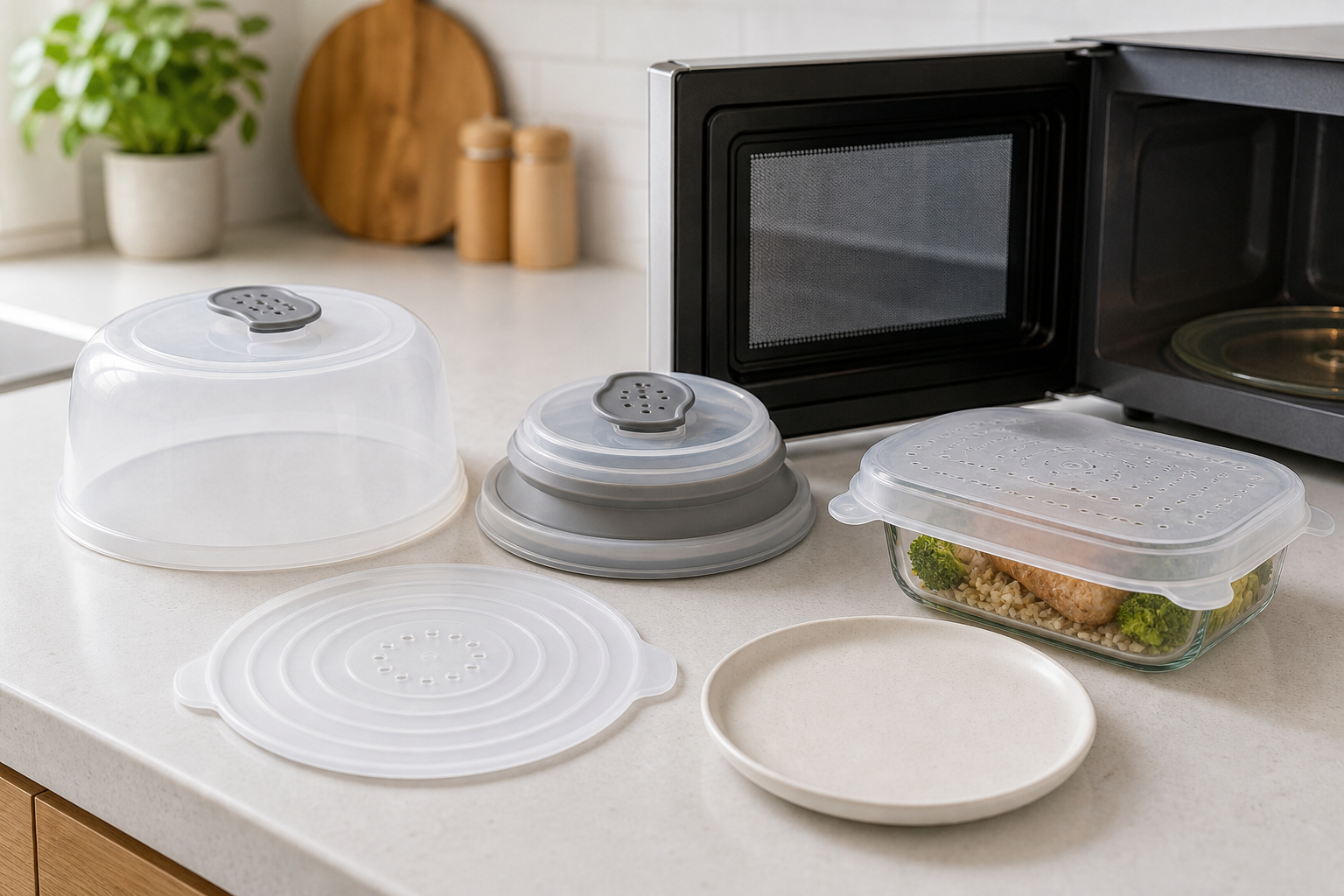
No covers were purchased, heat-tested, or ranked for this guide. These formats are practical starting points for comparing current listings:
- Rigid vented dome: Best fit when interior height and easy rinsing matter more than compact storage.
- Collapsible vented dome: Best fit for shallow cabinets or drawers, provided the expanded walls lock into shape and the folds are reachable for cleaning.
- Flat multi-size cover: Best fit for lower-profile dishes when the cover has enough clearance to avoid touching food and the maker's directions support the intended use.
- Cover with an elevated grip: Useful when the handle remains easy to grasp, but confirm the grip does not exceed the microwave's vertical clearance or interfere with rotation.
Selection criteria that matter
- Measure the microwave interior: Record usable width, depth, and height, including the turntable, rack, and door opening.
- Measure the dishes: Compare the widest plate or bowl rim and the tallest typical serving. Exterior diameter alone does not reveal usable interior clearance.
- Check vent instructions: Confirm whether vents should remain open, whether the cover must sit loosely, and whether the maker sets heating-time or power limits.
- Read material and appliance labels: Look for explicit microwave-use and component-level care directions. Do not infer compatibility from appearance.
- Inspect the grip design: Compare where fingers go, whether the handle folds, and the maker's directions for handling after heating. A “cool-touch” phrase is a claim, not a guarantee.
- Count cleaning surfaces: Vents, hinges, folds, rims, and removable parts can trap splatter. Choose a design you can reach, rinse, and fully dry.
- Compare storage size: Check collapsed height and whether the mechanism stays flat in the intended cabinet or drawer.
- Confirm rotation: The cover and dish should turn without striking the microwave walls when the appliance uses a turntable.
- Check seller and returns: Current return terms matter when listing dimensions prove incomplete or inaccurate.
A simple comparison framework
Mark every listing yes, no, or unclear against the same questions:
- Does the cover fit the measured microwave and rotate without contact?
- Does its usable interior clear the usual plates, bowls, and food?
- Are vent position and microwave-use directions explicit?
- Are material labels and care directions stated for every component?
- Can the vents, folds, rim, and grip be cleaned and dried fully?
- Does the stored size fit the intended cabinet or drawer?
- Are handling limits, seller details, and return terms clear?
- Would a plain microwave-safe plate already owned solve the splatter problem under the appliance maker's guidance?
What a cover can and cannot do
A microwave cover can contain some splatter and may help keep the appliance easier to wipe out. It cannot prove food has reheated evenly, make an unsuitable container microwave-safe, prevent every burn, or replace the microwave and food-container makers' instructions. Pause and stir food when the applicable directions call for it, and handle hot dishes cautiously.
Be skeptical of “universal,” “never hot,” or material-safety guarantees that are not paired with specific dimensions, limitations, and use directions. This is a cleanup and convenience product, not a weight-loss tool.
Who should skip this purchase
Skip a new cover if an existing microwave-safe plate or vented container lid already fits the task and is supported by its maker's directions. Skip domes that cannot clear the microwave walls or typical food, collapsible designs whose folds you will not clean, and listings that omit dimensions, material labeling, or vent instructions.
Also skip the category when reheating happens rarely or storage space is tighter than the cleanup problem warrants. A reusable product only reduces friction when it is easier to store and clean than the splatter it prevents.
Bottom line
The best microwave food cover is the simplest format that fits the measured appliance and dishes, vents according to clear directions, leaves food clearance, and can be washed and dried completely. Compare those facts across current listings and keep the option to use something suitable you already own.