Weather-ready walking guide
Best Packable Rain Jackets for Walking Routines
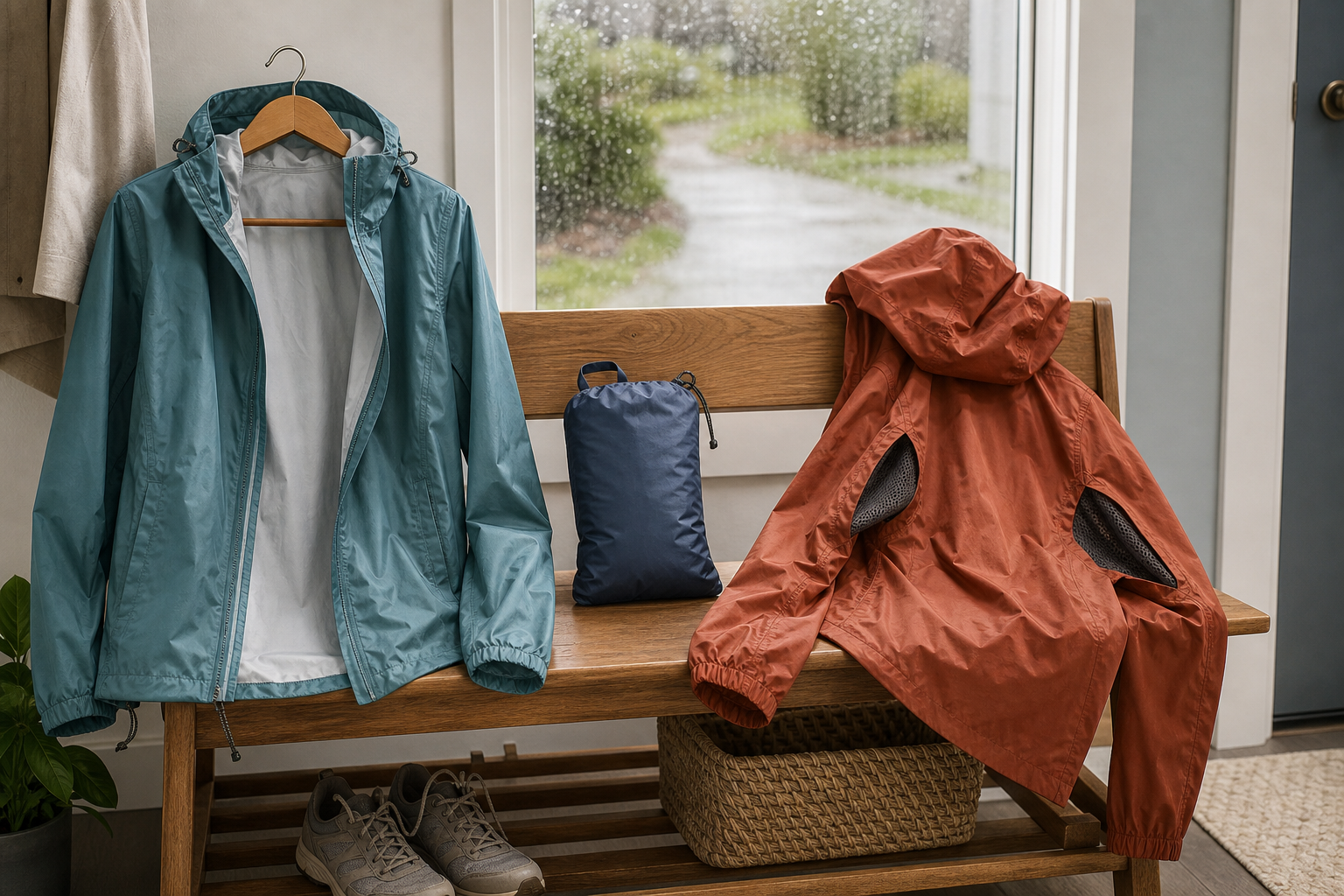
A packable rain jacket can make a damp forecast easier to plan around, but “packable” and “waterproof” are not interchangeable promises. Start with fit, ventilation, hood control, and the maker’s exact weather specification; then decide whether the folded size is genuinely useful for your route and storage space.
As an Amazon Associate, GoodWeighFinds earns from qualifying purchases.
Who this guide is for
This guide is for adults who take ordinary walks when light rain is possible and want a layer that can be carried without much bulk. It is about clothing fit and weather logistics, not exercise performance or body results. For a broader view of practical walking and kitchen categories, see the routine-support tools guide.
Best-fit types, not unsupported rankings
- Best fit for a bag or tote: A self-packing shell with published packed dimensions and a pouch closure that is easy to use.
- Best fit for warm, damp weather: A light shell with defined ventilation, such as pit zips, a back vent, or mesh-lined openings.
- Best fit for variable layers: A jacket with a detailed size chart and enough room for the clothing you actually wear underneath.
- Best fit for wind-driven drizzle: A hood with front and rear adjustment, a brim that does not block vision, and cuffs and hem that can be secured comfortably.
- Best fit for dim conditions: A visible color or useful reflective details, paired with dedicated visibility gear where the route calls for it. A jacket is not a safety guarantee.
Selection criteria that matter
- Model-specific size chart: Compare body and garment measurements when supplied. Check sleeve length, shoulder movement, hem coverage, and room over intended layers.
- Garment and packed dimensions: “Packs small” is vague. Look for weight and packed length, width, and depth for the exact model or expect to measure during the return window.
- Weather specification: Water-resistant, water-repellent, and waterproof are different claims. Prefer a stated fabric rating, seam construction, and use limit over absolute marketing language.
- Seams and closures: Check whether seams are taped or sealed, whether the front zipper has a storm flap, and whether pockets close securely.
- Ventilation: Pit zips and vents can release heat, but openings may also admit water. Compare access, placement, and whether a backpack would block them.
- Hood control: Look for adjustment that keeps the hood from turning across your eyes. Check whether the brim sheds water without narrowing useful vision.
- Cuffs and hem: Adjustable cuffs and a drawcord hem can change coverage and airflow. Check for comfortable hardware and safe cord placement.
- Care and durability: Follow the manufacturer’s wash, dry, and water-repellent-treatment directions. Do not assume every coating or taped seam responds to care the same way.
- Return policy: Try the jacket over real walking layers and move your arms before removing tags when the seller’s policy permits.
A practical comparison framework
Mark each candidate yes, no, or unclear. Treat unclear specifications as details to verify before buying.
- Does the exact size chart accommodate the intended base or mid layer?
- Are garment weight and packed dimensions published, or can they be checked during a useful return window?
- Does the listing distinguish fabric, seam, zipper, and hood weather protection?
- Can the hood be adjusted without obscuring peripheral vision?
- Is there a realistic ventilation method for the usual temperature and pace?
- Will pockets, vents, and reflective details remain usable with the bag or belt normally carried?
- Are washing, drying, coating-care, and return instructions clear?
- Would the jacket still solve a real rain-and-storage problem if it had no effect on weight or fitness?
How to read waterproof and breathable claims
A fabric rating does not describe the whole jacket. Water can enter around an unsealed seam, zipper, cuff, hem, or face opening, and protection can change with wear and care. Likewise, “breathable” does not mean the inside stays dry during exertion: sweat, temperature, humidity, layers, vents, and pace all affect comfort.
Use the exact maker specification as a comparison input, not a guarantee. Be skeptical of phrases such as “100% stormproof,” “works in any weather,” or “keeps you completely dry” when conditions and test methods are missing.
Visibility is a separate decision
A bright shell or small reflective trim may help contrast, but neither guarantees that drivers, cyclists, or other road users will see you. If low light is part of the route, compare dedicated front, back, and side visibility options in the reflective walking gear guide. Changing the route, time, or indoor plan can be the better choice when conditions are poor.
Who should skip a packable rain jacket
Skip the purchase if an existing shell already fits, vents, and packs well enough; if rain is rare enough that an umbrella or schedule change is simpler; or if the listing hides sizing, seam, care, or return details. A heavier rain shell may fit sustained wet conditions better than an ultralight packable layer, while a poncho may offer more bag coverage at the cost of wind control and arm movement.
Do not use a rain jacket to push through lightning, flooding, poor visibility, extreme wind, unsafe heat, or a route that feels unstable. Waterproof layers can trap heat; slow down, seek shelter, or change plans if overheating or concerning symptoms develop.
Claims to ignore
A rain jacket can reduce friction around wet-weather planning. It cannot burn fat, increase calorie burn by itself, “sweat off” body weight safely, detox the body, or guarantee that a walking routine changes weight. Skip listings that use sauna-suit language, dehydration as a benefit, or body-shaping promises.
Bottom line
The best packable rain jacket is the one that fits over your real layers, gives the hood and ventilation control your route needs, and folds to a verified size you will actually carry. Compare exact specifications and return terms, treat waterproof and breathable language as limited product claims, and choose a different plan when weather exceeds what a light shell can reasonably handle.