Visibility-first buying guide
Best Pantry Bins for Meal-Planning Visibility
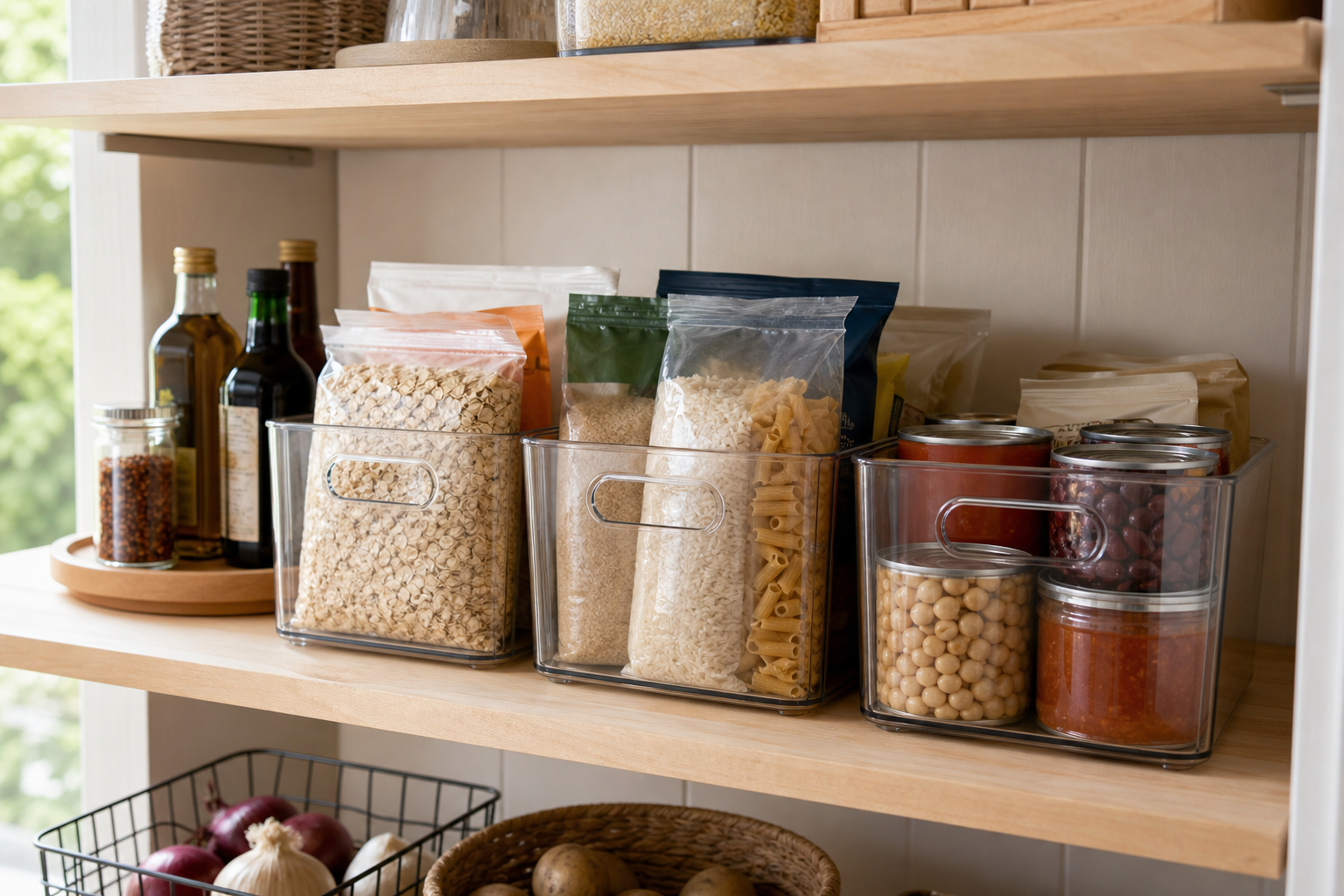
Pantry bins can make shelf-stable staples easier to see and reach, but a matching set is not automatically a useful system. Measure the shelf, identify what keeps getting lost, and choose the smallest setup that fixes that specific access problem.
As an Amazon Associate, GoodWeighFinds earns from qualifying purchases.
Who this guide is for
This guide is for adults whose cans, packets, baking supplies, or repeat meal staples disappear behind one another on pantry shelves. The goal is easier visibility and access—not portion control, food rules, or a promise that organizing a pantry changes body weight.
For a wider look at low-pressure kitchen and walking gear, visit the routine-support tools guide. If the same problem is happening with refrigerated food, the fridge organizer guide covers cold-storage fit and cleaning constraints.
Best-fit types, not universal winners
- Best for deep shelves: Clear bins with front handles that can be pulled forward without unloading the shelf.
- Best for packets and short items: Low open-front bins that preserve visibility and fingertip access.
- Best for narrow cabinets: Slim bins that leave usable side clearance and do not become too heavy to move.
- Best for upper shelves: Lightweight bins with large, comfortable grip areas; avoid loading them with heavy cans or glass jars.
- Best for households sharing a pantry: Bins with a smooth, visible label surface and categories everyone understands.
Selection criteria that matter
- Exterior dimensions: Measure usable width, depth, and height at the narrowest point. Account for door frames, shelf supports, hinges, and trim.
- Handle access: A handle only helps if fingers can reach it when the bin is full and the shelf above is close.
- Visibility: Clear sides help reveal small packets and remaining stock. A tall opaque wall may simply move the hidden-item problem into a bin.
- Weight when loaded: Wide bins filled with cans or jars can become awkward. Several narrow bins may be easier to move than one large one.
- Stacking: Treat “stackable” as a listing claim to verify. Check the stated load limit and whether the lower bin remains accessible.
- Cleaning: Confirm whether the exact bin is hand-wash or dishwasher labeled. Rounded corners and fewer seams generally make crumbs and spills easier to reach.
- Label surface: Check that reusable labels or tape will sit flat, remain readable, and remove without leaving difficult residue.
- Return terms: Pantry fit is hard to judge from photos. Confirm seller identity, return window, and return-shipping terms before buying a large set.
A practical comparison framework
Score each candidate yes, no, or unclear on the questions below. An unclear measurement or care claim is a reason to verify the listing—not a reason to assume the best.
- Does the exterior size fit the measured shelf with clearance to pull the bin out?
- Can the intended contents be seen and reached without emptying the bin?
- Will the loaded bin remain comfortable to lift or slide from its planned shelf?
- Does the handle remain usable beneath the shelf above?
- Are material, cleaning, and stacking instructions stated for the exact model?
- Can the bin work with the packages and containers already in the pantry?
- Is a single bin or small set available before committing to a full pantry bundle?
- Would this still solve a real household problem if it had no effect on weight?
What pantry bins cannot do
Bins can group food and reduce visual clutter. They cannot make a meal plan medically appropriate, control eating, prevent cravings, preserve food indefinitely, or cause weight loss. Treat language such as “portion-control pantry,” “craving-proof,” or “weight-loss organization system” as marketing, not a capability of the product.
Keep products in their original labeled packaging when ingredient, allergen, preparation, or date information is needed. If decanting is part of your system, preserve the information required to identify and use the food safely.
Who should skip pantry bins
Skip this purchase if the shelf is already visible and easy to reach, if bins would reduce usable space, or if household members are unlikely to return items to narrow categories. A shallow tray, existing box, shelf riser, or simple relocation may solve the problem with less cost.
Also skip tall or heavy bins on an upper shelf when lifting them would be difficult, and avoid sealed-bin claims unless the product is actually intended and labeled for direct food storage. Open organizer bins and airtight food containers solve different problems.
Bottom line
The best pantry bin is the smallest format that fixes a measured visibility or access problem. Start with one shelf, compare exact dimensions and loaded weight, keep contents visible, and test a small set before organizing the entire pantry. If handwritten cards are not readable or durable enough for the setup, compare the refill cost, controls, and tape limitations in the pantry label-maker guide before adding a printer.