Bottle maintenance buying guide
Best Replacement Straws and Lids for Reusable Water Bottles
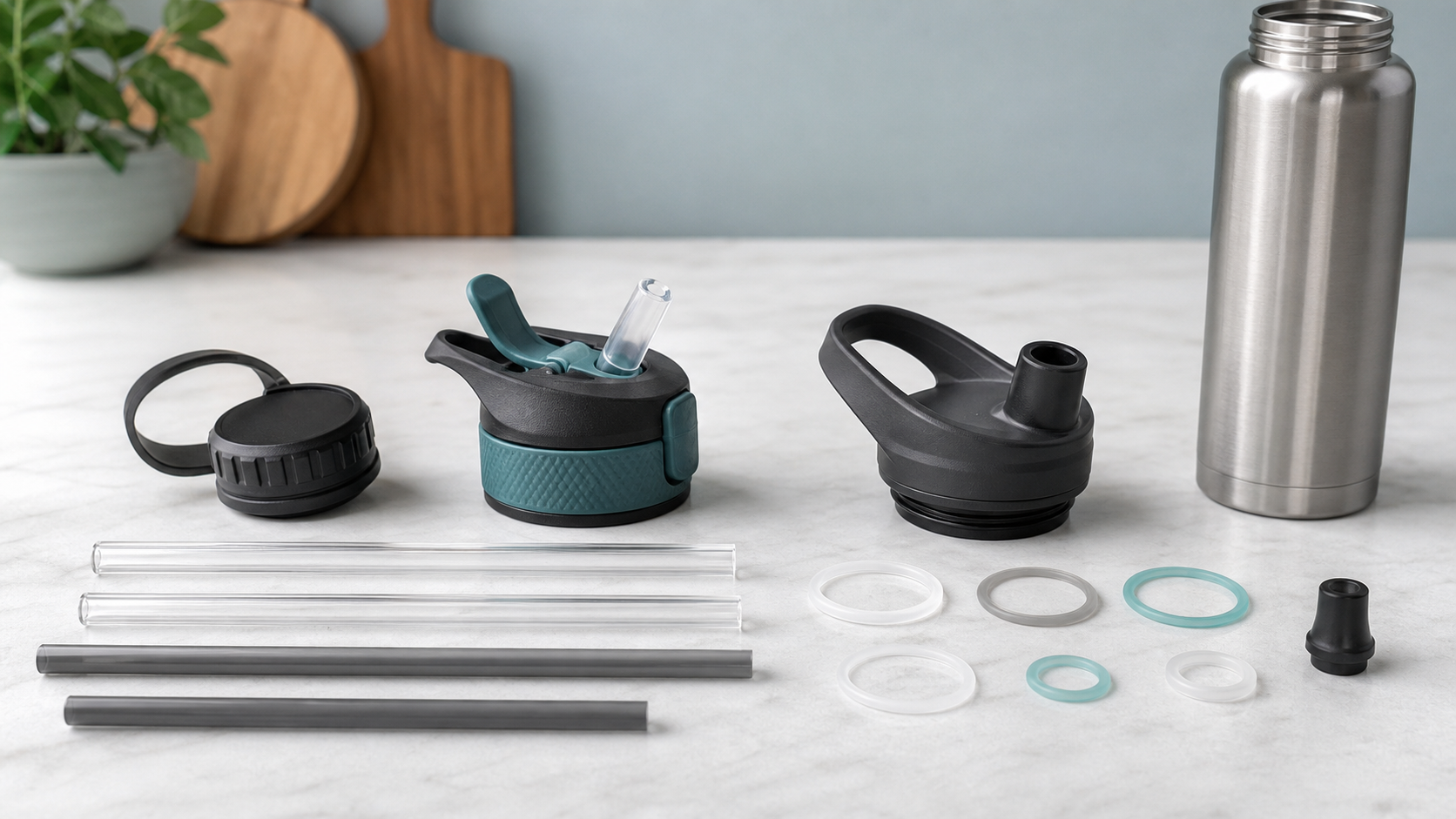
A replacement lid or straw can keep a good bottle in use, but look-alike parts often differ by thread, diameter, bottle generation, and included seals. The best replacement is the one the bottle maker documents for your exact model—not the one that merely looks close.
As an Amazon Associate, GoodWeighFinds earns from qualifying purchases.
Who this guide is for
This guide is for adults whose reusable bottle still works but has a worn straw, missing gasket, damaged mouthpiece, or inconvenient lid. Replacing a documented component may cost less and create less waste than replacing the bottle. It does not make the bottle leakproof, sanitary, or suitable for a beverage beyond the maker’s instructions.
This page maps to the routine-support tools guide. For a bottle that is intact but difficult to wash, compare tools in the bottle-cleaning brush guide before buying new parts.
Best-fit types, not unsupported rankings
- Best first choice for compatibility: A manufacturer-authorized part page that names the bottle line, size, and version and shows a matching part number.
- Best fit for changing drinking style: A maker-approved alternate lid documented for the exact bottle opening and intended beverage use.
- Best fit for a worn straw: A model-specific straw or a cut-to-fit straw with stated diameter, length, material, and trimming directions.
- Best fit for a lost seal: A gasket kit identified by exact lid model or part number, with installation and care instructions.
- Best fit when details are uncertain: Buy through the bottle maker or contact its support team rather than assuming a universal part will fit.
Selection criteria that matter
- Bottle identity: Record the brand, product-line name, capacity, and any model or date code printed on the bottle or lid. A 24-ounce and 32-ounce bottle may share a mouth—or may not.
- Version or generation: Manufacturers sometimes revise threads, hinges, valves, and seals while keeping a familiar product name. Check whether the listing distinguishes old and current versions.
- Opening and thread: Match the stated mouth diameter and thread design. Exterior diameter alone does not prove thread compatibility.
- Straw dimensions: Compare outer diameter, wall thickness, full length, and the length required after trimming. A straw that is too long can prevent closure; one that is too short may not reach the drink.
- Authorized compatibility: Prefer a manufacturer compatibility chart or part-number match. “Fits most,” “universal,” and appearance-based fit claims leave more room for error.
- Parts included: Confirm whether the order contains a full lid, straw, valve, mouthpiece, gasket, brush, or only one component. Product photos can show pieces that are not included.
- Material disclosure: Look for the material of every drinking-contact component and follow the maker’s temperature and beverage restrictions.
- Cleaning and reassembly: Confirm whether small seals and valves are removable, how they should be cleaned, and how their correct orientation is shown.
- Use restrictions: Verify whether the lid is intended for hot, cold, carbonated, or still drinks. Do not infer this from the bottle material.
- Return terms and seller: Check the seller, return window, opened-item restrictions, and who covers a compatibility error before ordering.
- Current availability: Confirm that the part is still supported for your exact bottle version. Marketplace listings and replacement inventories change.
A compatibility-first comparison framework
Write down the following for the bottle and each candidate part. Treat “unclear” as a reason to pause and check the manufacturer’s documentation.
- Exact bottle line, capacity, version, and model or date code
- Replacement part number and explicit compatibility statement
- Bottle opening and thread measurements, when published
- Straw outer diameter and installed length
- Every component included in the order
- Material and beverage-temperature restrictions
- Cleaning, drying, and reassembly instructions
- Seller identity, return window, and opened-part policy
- Date the listing and availability were checked
A documented match on all relevant points is more useful than a large multipack or a “universal” claim. If the lid arrives and binds, rocks, cross-threads, or leaves a seal visibly distorted, stop using it and resolve the fit with the seller or manufacturer.
Original-maker parts or third-party replacements?
Original-maker parts usually provide the clearest model match, but they may cost more, offer fewer colors, or be unavailable for an older bottle. Third-party parts can extend the life of discontinued bottles, yet compatibility statements deserve closer inspection. Look for exact models and measurements rather than lists that group many bottle families together.
A third-party replacement is not automatically poor quality, and an original part is not automatically right for every generation. Documentation for the specific pairing is what matters.
Who should skip this purchase
Skip the part if the bottle body is cracked, badly dented at the opening, corroded, or has damaged threads; a new lid cannot repair the bottle itself. Skip listings that rely only on appearance, omit exact models or dimensions, hide the included-parts list, or offer no usable return route.
Also skip a replacement that would change the bottle’s intended use without explicit manufacturer approval—for example, using an unverified straw lid with hot or carbonated drinks. If several proprietary parts need replacement and the total approaches the price of a simple new bottle, compare the full cost before ordering.
Claims and limits to keep straight
A well-matched replacement can restore ordinary function and reduce the need to discard an otherwise usable bottle. It cannot guarantee leak resistance, hygiene, durability, or compatibility with every drink. “Leakproof,” “BPA-free,” dishwasher-safe, and temperature claims should be checked for the exact replacement and each component, not borrowed from the original bottle listing.
Bottom line
The best replacement lid, straw, gasket, or mouthpiece is documented for the exact bottle line, capacity, and generation; matches the relevant dimensions; includes the pieces you expect; and comes with clear care, use, and return terms. Start with the bottle maker’s part number, then compare price and format only after compatibility is established.