Routine-support buying guide
Best Slim Ice Packs for Compact Lunch Bags
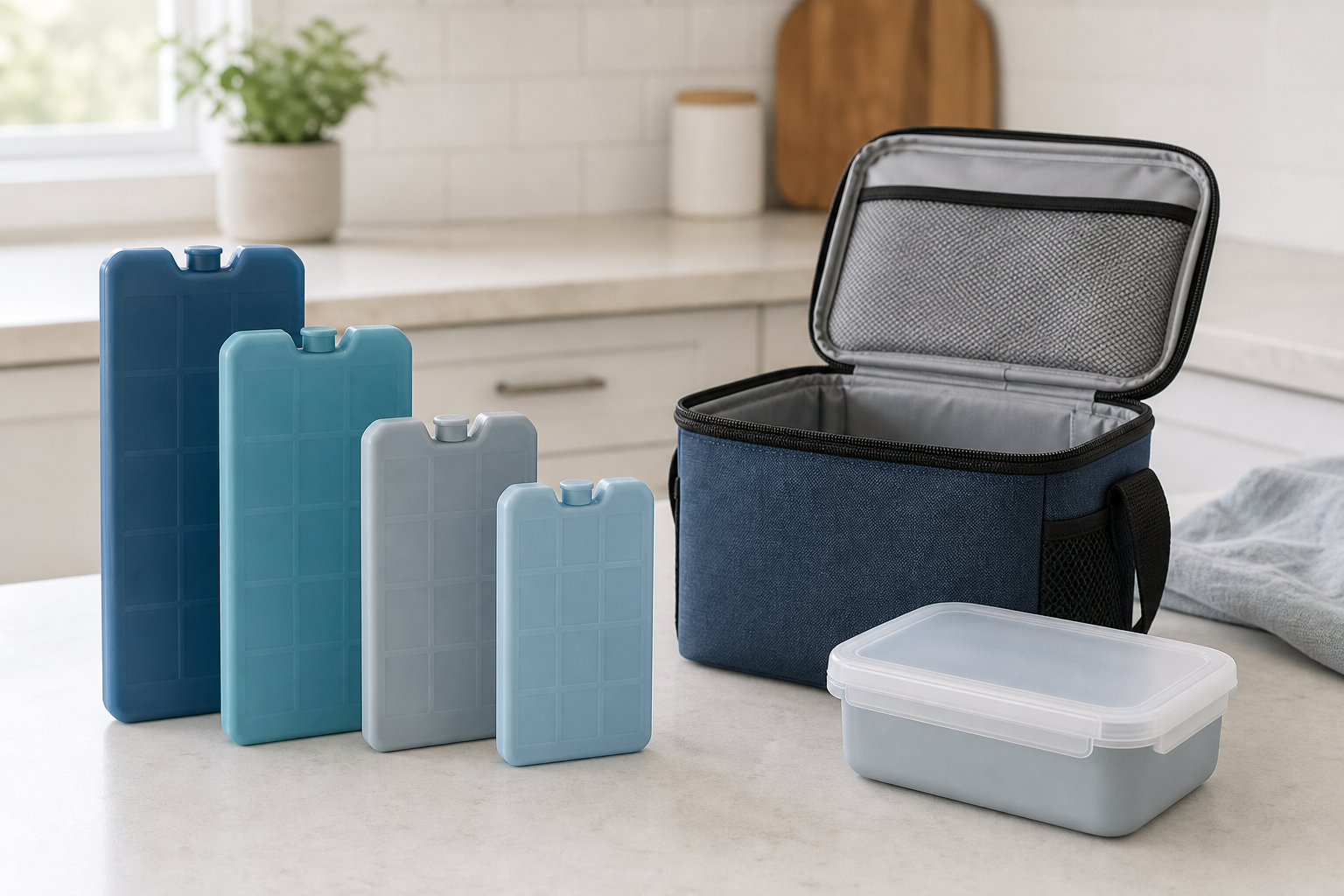
A thin ice pack can preserve room for the lunch instead of consuming half the bag. The useful choice is a fit problem, not a weight-loss product decision: measure the bag and containers, check the manufacturer’s freezing and care directions, and treat cooling-time language as conditional rather than guaranteed.
As an Amazon Associate, GoodWeighFinds earns from qualifying purchases.
Who this guide is for
This guide is for adults who already use a compact lunch bag and need a reusable cold pack that leaves enough room for food and containers. It is especially useful when a bulky gel pack prevents the zipper from closing or forces the food container to tilt.
For the broader low-hype approach to ordinary planning tools, start with the routine-support tools guide. If the bag itself is the problem, compare the work lunch-bag guide or the long-commute meal-prep bag guide before buying more packs.
Best-fit formats, not unsupported rankings
- Best format for an upright compact bag: A tall, flat pack that fits against the broad side without blocking the zipper.
- Best format for a shallow bag: A short rectangular pack that can lie above or below the container without creating an unstable stack.
- Best format for flexible placement: Two or more small packs that can sit around irregular containers, provided the combined size and weight still fit.
- Best format for limited freezer space: Flat-sided packs that stack or stand predictably and do not require an awkward freezing position.
- Best format for simple cleanup: A smooth, sealed casing with explicit washing directions and no deep seams that trap residue.
Selection criteria that matter
- Exact dimensions: Compare length, width, and thickness with the bag’s usable interior—not its advertised exterior size.
- Container fit: Pack the actual lunch container, bottle, utensils, and napkin, then measure the remaining flat spaces. A cardboard template cut to the listed pack size can expose a poor fit before ordering.
- Frozen weight: Thin does not mean light. Check the stated weight per pack and the combined weight of a multipack.
- Freezing directions: Verify the required freezer time, orientation, freezer-temperature conditions, and whether the pack must remain flat.
- Casing and seams: Look for clear material information, sealed edges, inspection guidance, and maker instructions for damage or leakage. “Leakproof” is a claim, not a permanent condition.
- Care: Confirm how the exact pack should be washed, dried, and stored. Do not assume dishwasher compatibility.
- Shape: Rounded corners can be easier on bag lining, while handles, caps, or thick rims may consume the space that a slim profile was meant to save.
- Multipack value: More pieces help only if they fit the bag and freezer. Compare useful total coverage and replacement flexibility, not piece count alone.
A practical comparison framework
Give each candidate a yes, no, or unclear for these questions:
- Are all three dimensions and the weight stated for each individual pack?
- Does a full-size cardboard template fit beside, above, or below the loaded container without bending?
- Can the lunch bag close normally without crushing food or straining the zipper?
- Can the pack freeze in the required orientation within the freezer space available?
- Are washing, storage, damage, and disposal directions stated for the exact model?
- Does the casing avoid sharp corners or protrusions that could rub the bag lining?
- Are cooling claims tied to stated conditions, or are they vague “all day” promises?
- Would the pack still solve a useful lunch-packing problem if it had no effect on weight or body measurements?
Cooling claims have limits
An ice pack can help keep a lunch cold, but its thinness alone does not establish how long food will stay within an appropriate temperature range. Starting temperature, pack size and quantity, freezer conditions, bag insulation, food volume, outdoor temperature, opening frequency, and elapsed time all affect the result. Follow the pack and lunch-bag manufacturers’ current directions plus current applicable food-safety guidance; do not substitute marketplace reviews or an unspecified hour claim.
Inspect reusable packs before each use. Follow the maker’s instructions if a pack swells, cracks, leaks, has a damaged cap or seam, or contains material that cannot be identified. Keep contents away from children or pets as directed, and do not use a damaged pack around food.
Who should skip this purchase
Skip slim packs if the existing pack and loaded lunch already fit, if reliable refrigeration is immediately available, or if the bag has so little insulation or usable space that a different bag is the more direct fix. Skip listings that omit exact measurements, freezing instructions, casing information, or damage guidance.
A very thin pack may also be the wrong tradeoff for a long or unusually warm trip when the manufacturer provides no relevant conditions or test information. For time- or temperature-sensitive foods and individual health needs, use current food-safety guidance or advice from an appropriately qualified professional rather than relying on a product-page promise.
Bottom line
The best slim ice pack is the one that fits the loaded bag, freezes within the available space and schedule, and can be inspected and cleaned easily. Measure with a template, verify the exact maker directions, and choose usable placement over dramatic cooling language or oversized multipacks.