App-free routine-support buying guide
Best Visual Habit Calendars for App-Free Routine Tracking
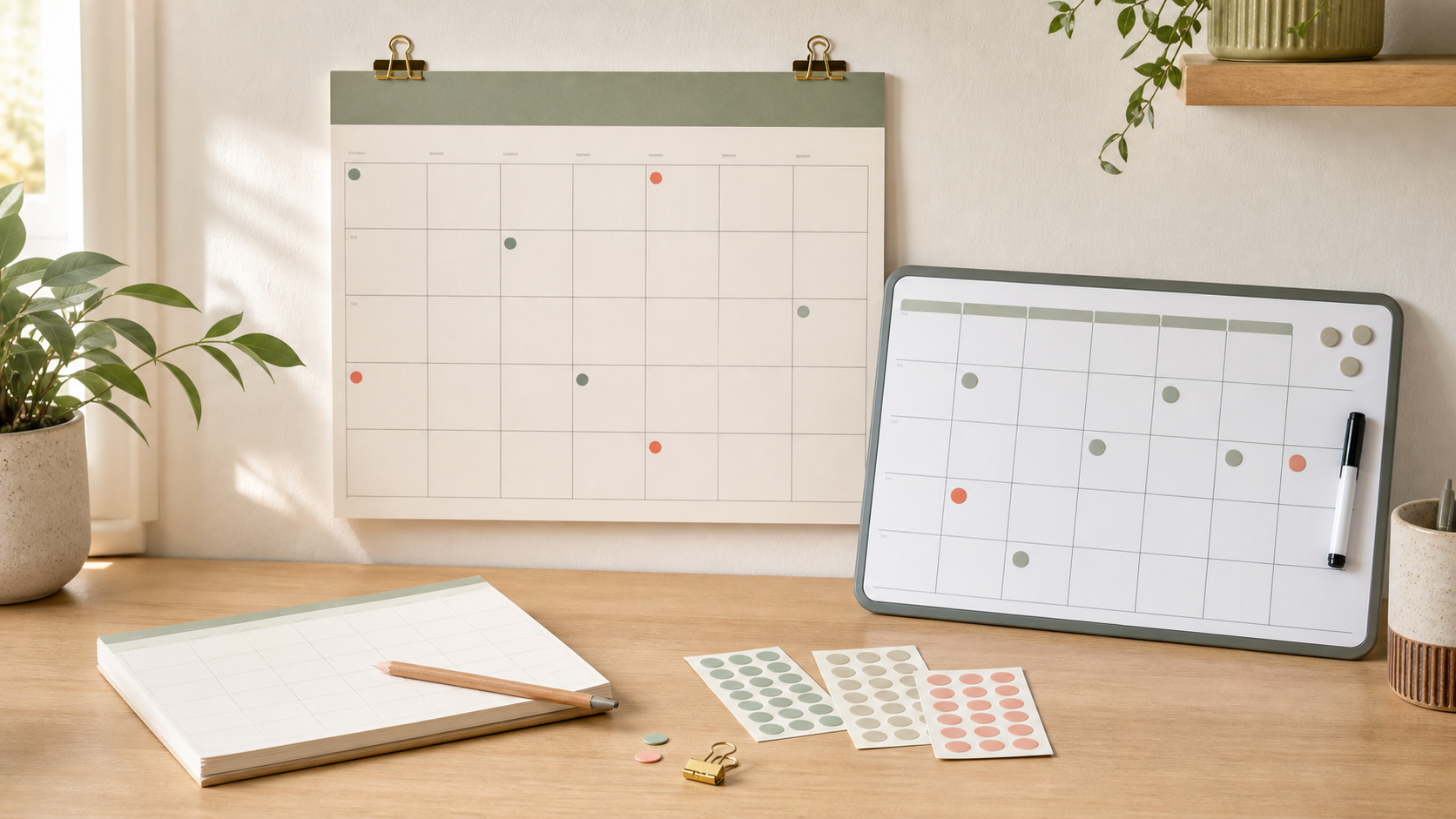
A visual calendar can make ordinary routines easier to see without an account, notification stream, calorie dashboard, or streak score. The best format is the one with enough space for your chosen notes, a comfortable level of visibility, and a layout that lets you restart without treating blank days as failure.
As an Amazon Associate, GoodWeighFinds earns from qualifying purchases.
Who this guide is for
This guide is for adults who want a paper, wall, desk, or reusable calendar to view routines across a month or year without using an app. It compares planning formats, not weight-loss plans, exercise prescriptions, food targets, or health outcomes.
For the broader decision about whether and what to track, use the non-shaming habit-tracking pillar. If you need a weekly planning surface shared with other people, compare dry-erase boards for habit and meal-prep routines. If you want private written context rather than a long view, a flexible routine journal may fit better.
Best-fit calendar formats, not unsupported rankings
- Best fit for a clear monthly view: An undated wall calendar with cells large enough for one short word, symbol, or removable dot.
- Best fit for restarting at any time: An undated paper pad or reusable board that does not leave months of preprinted unused pages.
- Best fit for private tracking: A foldable calendar, desk pad kept in a drawer, or compact paper format rather than a shared-wall display.
- Best fit for household coordination: A larger calendar with separate neutral rows or symbols and enough writing space to avoid confusing one person's plans with another's.
- Best fit for a long view: A year-at-a-glance poster with large enough marks to remain legible from the intended viewing distance.
- Best fit for reuse: A dry-erase or laminated surface whose care instructions match the exact markers and cleaners you plan to use.
Selection criteria that matter
- Time span: Choose monthly, quarterly, or yearly visibility based on the decision you want the calendar to support. More months are not automatically more useful.
- Usable cell size: Check the measured writing area, not just the overall dimensions. Thick borders, headings, and notes panels can shrink each day substantially.
- Dated versus undated: Dated pages reduce setup but can make a late start feel wasteful. Undated formats are easier to pause and restart but require more labeling.
- Neutral prompt language: Avoid preprinted words that moralize food, demand perfect streaks, punish rest, or promise body changes. A blank grid is often more flexible.
- Privacy: Decide who can see the display from doors, windows, video calls, or shared rooms. Use symbols that are meaningful to you without exposing sensitive notes.
- Mounting and placement: Verify wall hardware, magnet requirements, adhesive instructions, surface compatibility, calendar weight, and whether a door or cabinet can still open.
- Writing tools: Confirm whether the surface accepts pencil, pen, dry-erase marker, wet-erase marker, stickers, or removable dots—and how marks are removed.
- Readability: Compare grid contrast, glare, type size, viewing distance, color reliance, and whether marks remain distinguishable without color alone.
- Paper and reusable tradeoffs: Paper preserves past notes and needs no cleaning. Reusable formats reduce replacement purchases but may ghost, glare, or require compatible supplies.
- Replacement cost: Include markers, erasers, dots, mounting strips, and annual refills when comparing the real cost of use.
A practical comparison framework
Measure and write down the answers for each candidate before buying:
- Can one day cell hold the shortest note or symbol I actually plan to use?
- Is a month, quarter, or full year the most useful view for that routine?
- Can I begin on an ordinary day, pause, and restart without wasting most of the product?
- Does the printed language stay neutral about missed days, food, movement, and body size?
- Who will be able to see the calendar in its intended location?
- Will the mounting method work on that exact wall, fridge, cabinet, or desk?
- Are compatible markers, dots, refills, and cleaning instructions clearly identified?
- Can I distinguish the marks in typical room light and from the normal viewing distance?
- Would a calendar already in the home solve the same visibility problem?
What a calendar cannot establish
A calendar can display a mark you choose to record. It cannot prove that a routine caused weight loss, judge whether a food or movement plan is appropriate, measure health progress, or turn a marketing claim into evidence. Treat claims about motivation, adherence, productivity, or results as claims to evaluate—not guaranteed effects of buying a grid.
Keep the tracked item modest and practical, such as whether groceries were planned, walking shoes were packed, a lunch container was washed, or an appointment was scheduled. The product does not need personal weight, calorie, body-measurement, or medical information to function as a reminder.
Who should skip this purchase
Skip a dedicated habit calendar if a calendar you already own, a plain sheet of paper, or a small set of removable notes provides enough visibility. Skip a public wall format if privacy would limit honest use. Skip a year-view product if small cells, visual clutter, or distant placement make it hard to read.
Most importantly, skip routine tracking when marks, gaps, streaks, food notes, movement notes, or body-related data create guilt, anxiety, compulsive checking, or pressure to ignore rest. A calendar should be easy to set aside. It is not a treatment tool or a test of commitment.
Bottom line
The strongest visual habit calendar is easy to read, neutral in tone, private enough for its location, and forgiving when routines change. Compare measured writing space and placement first, then decide whether paper, reusable, monthly, or year-view design creates the clearest low-pressure view for you.