Bottle-care buying guide
Best Wide-Mouth Water Bottles for Easy Cleaning
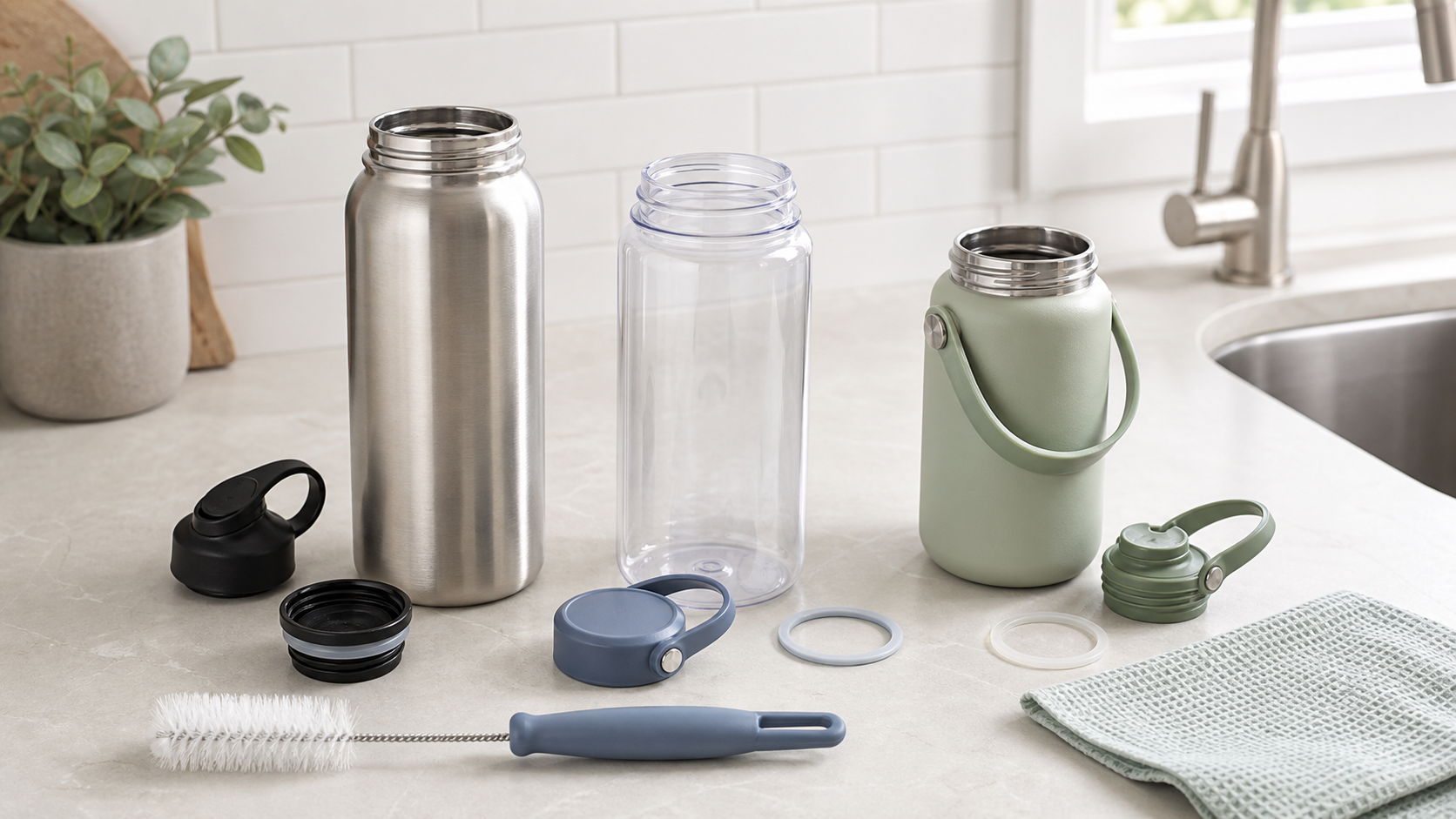
A broad opening can make a reusable bottle easier to reach, rinse, and dry, but the lid and gasket often decide whether cleaning is genuinely simple. Compare the whole bottle—not the “wide mouth” label alone.
As an Amazon Associate, GoodWeighFinds earns from qualifying purchases.
Who this guide is for
This guide is for adults who stopped using a bottle because a narrow neck, complicated straw lid, or hard-to-reach gasket made washing inconvenient. A cleanable bottle can reduce routine friction. It does not improve health or cause weight loss by itself.
For broader low-pressure tools, start with the routine-support tools guide. If an existing bottle is worth keeping, the bottle-brush guide may solve the cleaning problem without replacing it.
Best-fit types, not unsupported rankings
- Best fit for the fewest parts: A plain screw cap with one removable gasket and no hidden valve or straw channel.
- Best fit for seeing residue: A clear bottle whose care label matches the washing method you will actually use.
- Best fit for ice and hand access: A bottle with a stated opening diameter wide enough for the intended ice and cleaning tool.
- Best fit for hot-weather carrying: An insulated model if its added lid parts, weight, and care requirements remain manageable.
- Best fit for limited hand strength: A light bottle with a grippy exterior and a lid that opens without a very tight twist; assess this in person when possible.
Selection criteria that matter
- Opening diameter: Look for an actual measurement. “Wide mouth” has no universal size, and a broad-looking rim may still be too small for a hand or preferred brush.
- Lid complexity: Count caps, spouts, straws, valves, hinges, and seals. Every wet channel needs to be reachable and able to dry.
- Gasket removal: Check whether seals are designed to come out, whether instructions show how, and whether they can be reinstalled without stretching or twisting.
- Dishwasher labeling: Confirm directions separately for the bottle, lid, straw, and gasket. “Dishwasher safe” may apply only to selected parts or a specific rack.
- Interior visibility: A broad neck and lighter interior can make residue easier to spot. Opaque insulated walls make a reliable brush and drying routine more important.
- Drying: Make sure air can reach the base and lid channels when pieces are separated. A bottle that stands steadily upside down may be easier to drain.
- Carry design: Check the closed bottle’s width, empty weight, handle clearance, bag fit, and cup-holder fit. Wide bodies often do not fit standard holders.
- Spill control: Treat “leakproof” as a claim to verify. Check the closure, gasket position, carrying instructions, and whether the maker excludes hot or carbonated liquids.
- Material and use limits: Follow the maker’s temperature, beverage, freezer, microwave, and cleaning restrictions for the exact model.
- Replacement parts: Confirm that the exact lid and gasket are sold separately and match the current bottle version.
A practical comparison framework
For each candidate, mark these points yes, no, or unclear. An unclear specification is a reason to check the manufacturer’s instructions before buying.
- Is the opening diameter stated, and does it fit the intended brush, ice, and cleaning method?
- Can every drinking surface, thread, valve, and channel be reached?
- Are the gasket-removal and reassembly steps documented?
- Are care directions stated for every separate component?
- Can all parts dry fully without balancing awkwardly?
- Does the closed bottle fit the bag, hand, and cup holder used most often?
- Are replacement lids and seals available for the exact model?
- Are the seller, return window, and warranty terms clear?
- Would a better brush or replacement lid make the current bottle usable?
Wide mouth or straw lid?
A plain wide opening is usually simpler to inspect and brush, but drinking from it while moving may feel awkward and can spill more easily. A straw or chug lid can control flow, yet it adds channels, seals, and small pieces that require separate cleaning. Some bottles accept both lid types, but compatibility should be confirmed by exact model rather than appearance.
If the bottle will travel on walks, compare weight when full and carrying style in the walking-bottle guide. Easy cleaning does not compensate for a bottle that is too heavy or awkward to carry.
Who should skip this purchase
Skip a replacement if the current bottle has an accessible interior and only needs the right brush, gasket tool, or compatible new lid. Skip wide-bodied bottles that will not fit the usual bag or cup holder, and skip complicated lids if you already avoid taking seals and valves apart.
Also skip listings that omit opening dimensions, component-level care instructions, material information, or exact replacement-part compatibility. A long feature list is not evidence that the bottle will be easy to maintain.
Claims and limits to keep straight
A reusable bottle can make carrying a drink more convenient. A wider mouth can improve physical access for cleaning, but it does not guarantee that every lid channel is reachable or that the bottle will remain sanitary without regular washing and thorough drying. Hydration, “detox,” appetite, metabolism, and weight-loss language should not decide this purchase.
Bottom line
The best wide-mouth bottle for easy cleaning has a measured opening that suits your tools, a lid with reachable channels, removable seals, component-specific care directions, and replacement parts you can actually identify. Compare those basics with carry fit and spill control, then choose the simplest design you will consistently wash and dry.