Worth-it decision guide
Is an Insulated Grocery Bag Worth It for Car-Free Shopping?
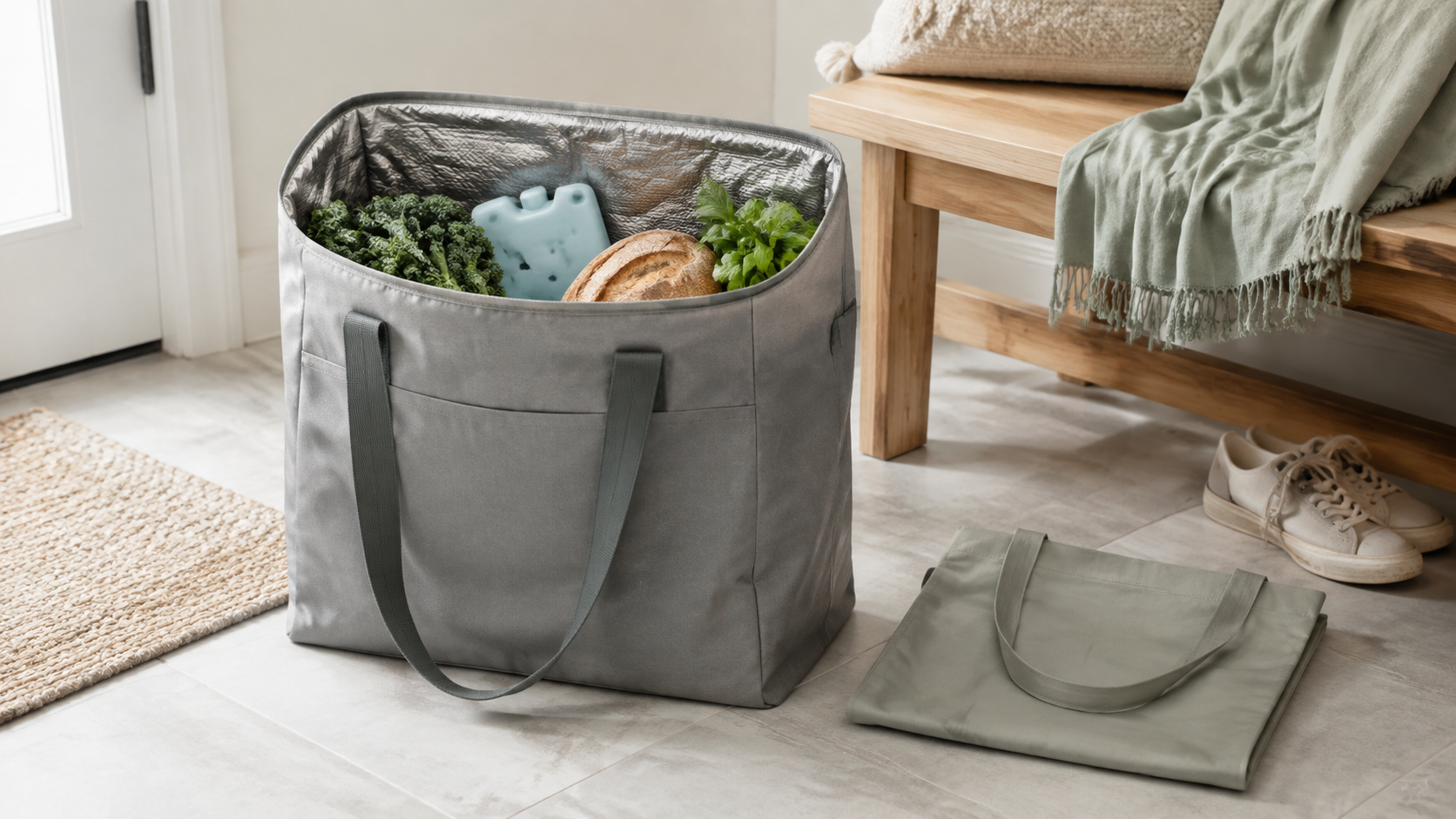
An insulated grocery bag can be worth carrying when chilled or frozen items face a longer walk, a transit wait, or several stops before home. It is less useful when the trip is short, the bag becomes awkward when loaded, or an ordinary tote already handles the job. Start with the route and load—not the promise printed on the listing.
As an Amazon Associate, GoodWeighFinds earns from qualifying purchases.
Quick verdict
- Buy when you regularly carry temperature-sensitive groceries over a longer or stop-and-start route and can keep the loaded bag manageable.
- Use what you own when trips are short and direct, your current tote is comfortable, and you do not need the extra structure.
- Change the trip first when buying fewer chilled items at the end of the shop or taking a more direct route solves the recurring problem.
- Skip when the empty bag is bulky, its full load would be difficult to carry, or you have nowhere to clean, dry, and store it.
Map the entire trip before buying
Count the time from taking a chilled item from the store case until it reaches appropriate storage at home. Include checkout, transfers, platform waits, walking, and other errands. Note the outdoor conditions, how often the bag may open, and whether stairs or crowded vehicles make a wide tote difficult to manage.
This route check cannot establish a universal safe transport time. Insulation performance depends on the bag, starting temperature, contents, cold packs, weather, openings, and packing. Follow current public-health guidance for transporting and storing perishable food rather than relying on a seller headline.
When insulation earns the extra bag
- The need repeats: Chilled or frozen groceries regularly travel beyond a quick trip home.
- The load is defined: You know the typical item sizes and can choose a bag that is not oversized once full.
- The carry works: Handle length, bag width, and loaded balance fit walking, stairs, and transit without forcing an awkward grip.
- The closure stays usable: Groceries fit below the zipper or flap without crushing items or straining the closure.
- Cleanup is realistic: The lining and seams can be reached, cleaned, and dried according to the maker's directions.
When a plain tote or trip change is enough
An existing reusable tote may be the better answer for a short, direct route, especially when you buy few chilled items and unpack immediately. Another option is to put refrigerated and frozen items in the cart last, keep them together at checkout, and make the store the final stop. Those choices cost less and avoid storing another bulky bag.
If the main problem is carrying weight rather than insulation, solve that separately. Two smaller loads, a backpack-style carrier, a compact grocery cart, delivery, or a different shopping schedule may fit better. Do not assume a large insulated tote is comfortable merely because its advertised capacity is high.
What to measure and verify
- Interior dimensions: Compare usable length, width, and height with the groceries you normally buy—not a staged product photo.
- Empty weight and load guidance: Add the bag's weight to the expected contents and any cold packs. Treat a stated maximum as a limit, not a comfortable target.
- Handles: Check length, width, attachment, and whether the bag can sit close to your body without interfering with walking.
- Closure and lining: Look for current construction details and clear care instructions. “Leakproof” or “keeps cold for hours” needs specific support and should not be assumed.
- Transit footprint: Check whether the loaded bag can rest securely at your feet or on your lap without blocking an aisle or rolling away.
- Storage: Confirm folded dimensions and whether folding is compatible with the lining and structure.
- Returns: Verify the seller, inspection rules, deadline, and costs before food use limits the return.
Compare formats only after the yes-or-no decision
If the trip check shows a recurring need, use the insulated grocery bag buying guide to compare structured, collapsible, and zip-top formats. For the broader question of whether any purchase removes enough routine friction to earn its space, see the routine-support tools guide.
What the bag cannot promise
An insulated lining is a transport feature, not proof that food remained within a safe temperature range. The bag also does not make meal planning nutritionally appropriate, guarantee a routine, or cause weight loss. Treat performance claims as manufacturer or seller information to verify, and keep ordinary food-handling decisions separate from marketing language.
Bottom line
An insulated grocery bag is worth it for car-free shopping when a repeated, longer route creates a real temperature-transport problem and the bag still fits your load, body, transit space, cleanup, and home storage. For a short direct trip, use the tote you have or adjust the shopping sequence. Buy only after the complete route—not just the product—passes the practical check.