You are not imagining it: weight-loss product listings can be exhausting to read. Many are built to make a normal, reasonable shopper feel rushed, behind, or one purchase away from finally solving the problem.
A safer way to shop is to slow the listing down. Instead of asking, “Does this work?” start with a better question: “What exactly is this seller claiming, and what would I need to believe before I bought it?”
If you are reading an Amazon page specifically, start with the Amazon weight-loss product red-flag guide, then use this alongside the Amazon weight-loss product page checklist. For lower-risk tools with clearer practical jobs, the routine-support tools guide gives a safer comparison framework.
Start With the Core Claim
Before looking at photos, badges, bundles, or long review sections, identify the central promise. Is the product claiming to help with meal planning, portion control, tracking, hydration, food storage, exercise consistency, or general organization? Or is it hinting at fat loss, appetite suppression, body transformation, detoxing, metabolism changes, or dramatic results?
The first category is easier to evaluate because the product usually performs a visible function. A food scale can measure food weight. A water bottle can hold water. A notebook can help someone track habits. Those tools may support a routine, but they do not create guaranteed outcomes.
The second category deserves more skepticism. When a listing leans on body-composition promises, dramatic language, or vague biological claims, the burden of proof should be much higher.
Selection Criteria That Actually Help
For practical weight-loss-adjacent products, focus on criteria you can inspect before purchase:
- Clear function: The listing should explain what the product physically does without relying on vague transformation language.
- Fit for your routine: A product is only useful if it matches how you already shop, cook, commute, exercise, or track habits.
- Low-friction design: Look for simple cleaning, readable markings, durable materials, realistic sizing, and setup that does not require a complicated system.
- Claim restraint: Prefer listings that describe features over listings that promise outcomes.
- Safety clarity: Be cautious when a product affects intake, exertion, heat, compression, ingestion, or electrical stimulation and the listing does not clearly explain limitations.
These criteria do not prove a product is good, but they help separate useful tools from listings that are mostly selling hope.
Red Flags in Weight-Loss Listings
Some warning signs are worth treating seriously:
- Promises of rapid, effortless, or guaranteed weight loss
- Before-and-after imagery used as the main proof
- Claims that sound medical but do not explain evidence or limitations
- “Secret,” “ancient,” “breakthrough,” “detox,” or “melt” language
- Pressure tactics such as countdowns, limited trials, or hard-to-find cancellation terms
- Products positioned as substitutes for medical care, balanced eating, or sustainable habits
- Claims that customer anecdotes prove the product will work for you
Customer reviews can describe someone’s experience, but they are not controlled evidence. They also cannot tell you whether the product is safe for your health situation.
Separate Tool Claims From Outcome Claims
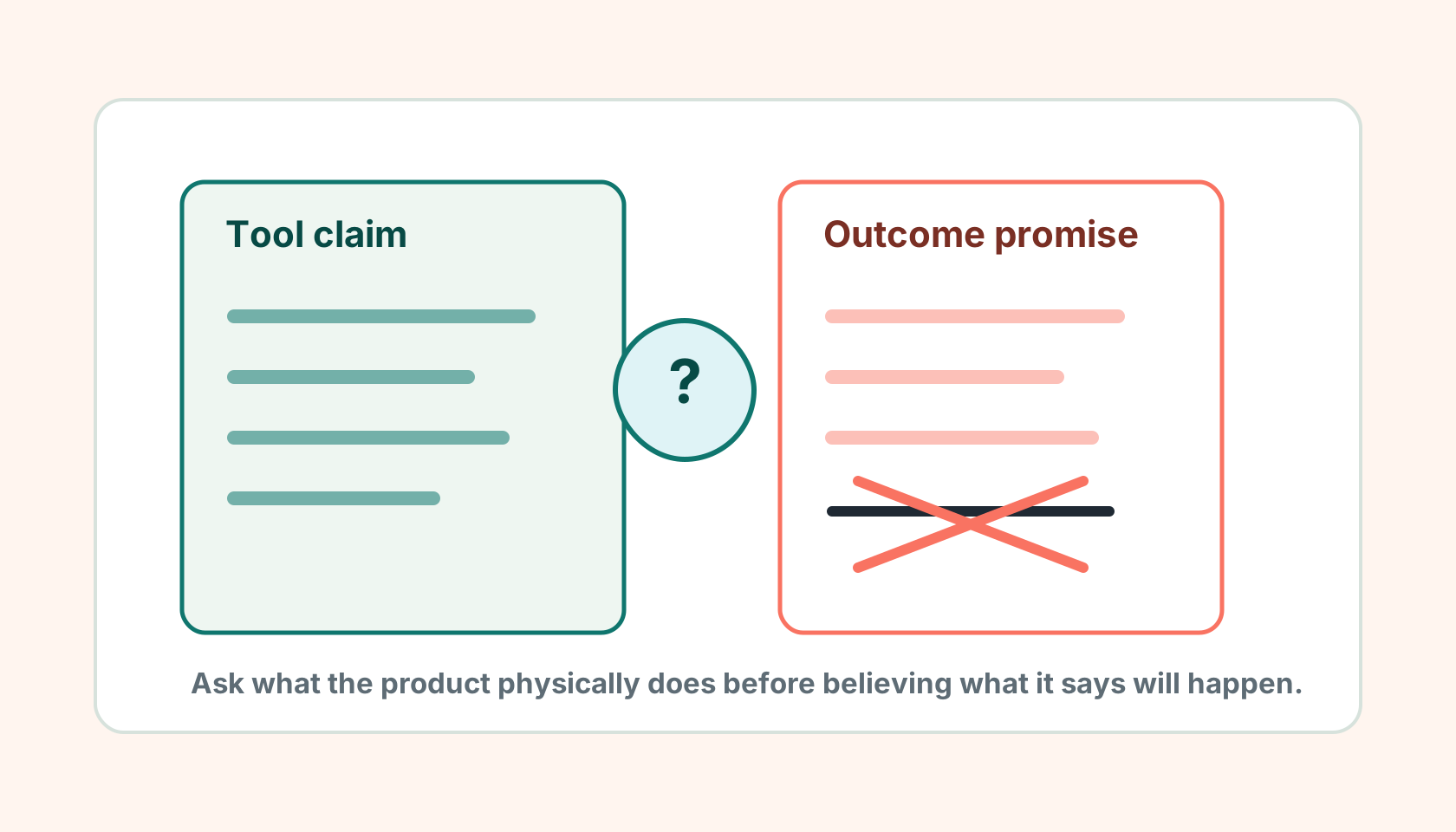
A useful habit tool may make a task easier. That is different from causing weight loss.
For example, a lunch container might make packing meals more convenient. A step counter might make activity easier to notice. A kitchen timer might help with cooking at home. Those are tool claims: visible, limited, and fairly easy to judge.
Outcome claims go further. They suggest that buying the product will lead to fat loss, appetite control, inches lost, or a transformed body. Those claims need stronger evidence than a polished listing page can usually provide.
This distinction keeps expectations realistic. A product can support a routine without being the reason a health outcome happens.
When to Pause Before Buying
Pause if the product asks you to ingest something, restrict food aggressively, sweat or dehydrate yourself, use stimulant-like positioning, apply patches or wraps for body changes, or replace professional advice. Pause again if you have a medical condition, take medication, are pregnant, have a history of disordered eating, or are unsure whether a product is appropriate for you.
That is the point where a qualified healthcare professional is the right next step. A shopping listing cannot evaluate your medical history or tell you what is safe for your body.
A Simple Pre-Buy Checklist
Before adding a weight-loss-adjacent product to your cart, ask:
- What problem am I trying to solve?
- Does this product solve that problem directly?
- Is the listing relying on features or body-result promises?
- Would this still seem useful if the weight-loss language were removed?
- Are there safety concerns I should discuss with a professional?
- Am I buying a practical tool, or am I buying urgency?
The best purchases in this category are usually boring in a good way. They help with a specific task, make a routine easier to repeat, and do not pretend to be a shortcut around health, food, movement, sleep, stress, or medical care.
If a listing cannot explain its value without hype, that is useful information. You do not have to prove it wrong before deciding to walk away.