Comparison guide
Weight-Loss Journal vs Habit Tracker: Which Fits Your Routine?
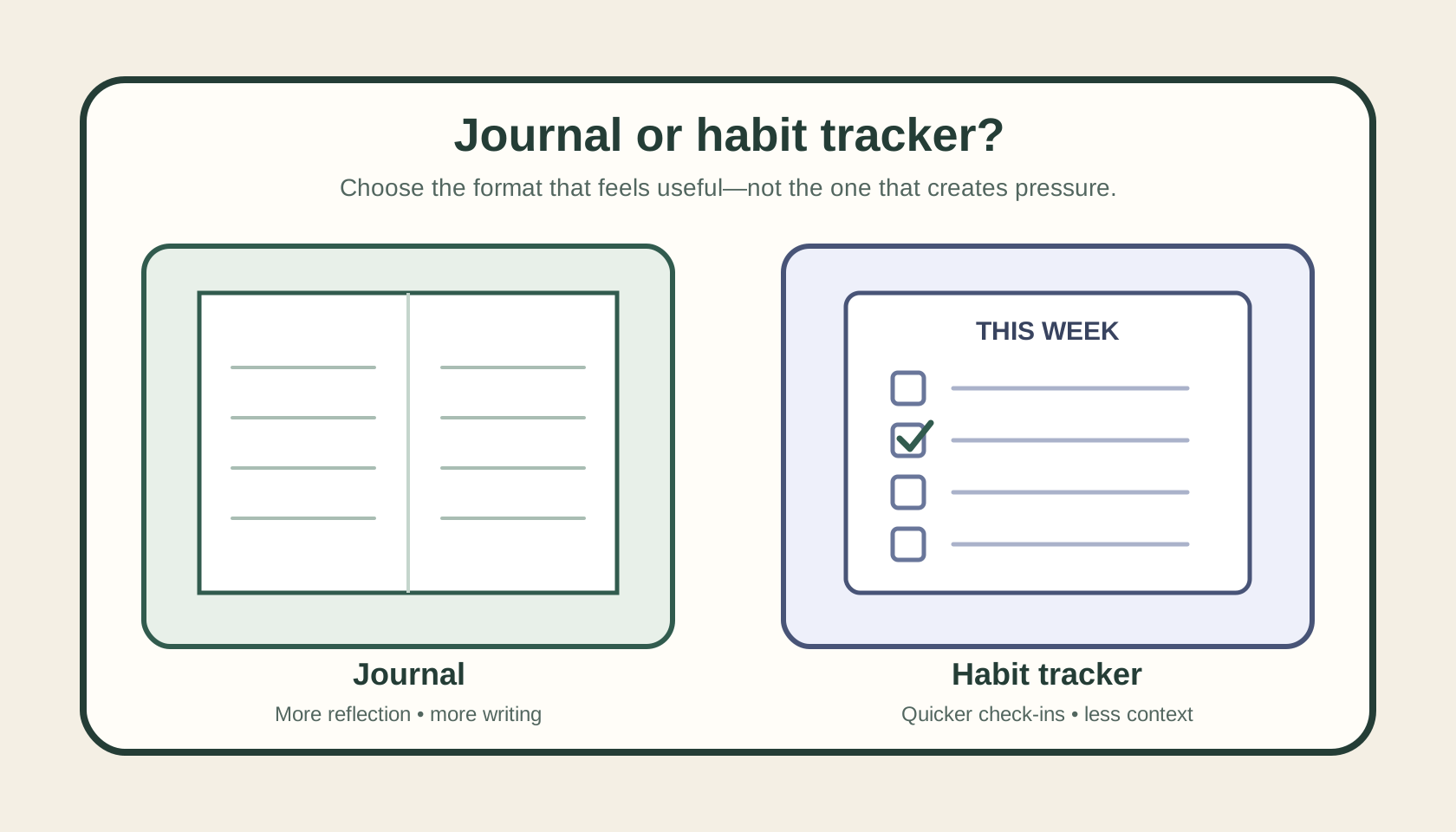
A journal gives you room to explain what happened; a habit tracker gives you a fast way to mark whether something happened. Neither format causes weight loss, and neither deserves a place in your routine if it turns ordinary days into a scorecard. The practical choice comes down to how much context you want, how often you will check in, and how tracking makes you feel.
As an Amazon Associate, GoodWeighFinds earns from qualifying purchases.
Quick decision
- Choose a journal if you want to reflect on context, write freely, or notice why a routine was easier or harder.
- Choose a habit tracker if you want a quick visual reminder and can use checkmarks without treating them as grades.
- Choose neither if tracking increases shame, rigid food rules, compulsive checking, or pressure to ignore rest and changing needs.
What a journal does well
A journal is useful when the story around a routine matters. Instead of recording only “walked” or “did not walk,” you can note weather, schedule, energy, discomfort, work demands, or what made getting outside practical. The same flexibility can support meal planning, grocery notes, sleep observations, appointment questions, and neutral reflection.
The tradeoff is effort. Blank pages can feel inviting or burdensome, guided prompts may not fit your life, and longer entries can make a simple check-in feel like homework. A journal also exposes more detail if another person finds it.
What a habit tracker does well
A habit tracker reduces the check-in to a mark, short note, or color. That makes patterns easier to scan and can keep a small routine visible without requiring a paragraph every day. Paper grids, calendars, dry-erase boards, and simple apps all use this basic format.
The limit is missing context. An empty box cannot show whether you rested appropriately, changed plans, dealt with pain, or chose a different useful action. Streaks and completion percentages can also make a flexible routine feel like a pass-fail test.
Who each option fits
A journal may fit someone who thinks by writing, wants private space for reflection, needs room for changing routines, or plans to bring observations and questions to a qualified professional. A plain notebook can be enough; a weight-loss label does not make a journal more useful.
A habit tracker may fit someone who already knows which small routine they want to remember, prefers a weekly overview, has limited time, or finds open-ended writing difficult. It works best when blank days are information rather than failure.
Neither is automatically appropriate for food, weight, calories, body measurements, or exercise totals. If those numbers feel distressing or compulsive, a tracker with fewer details is not necessarily a safe workaround; skipping tracking may be the better choice.
Tradeoffs to compare
- Context: Journals preserve reasons and observations. Trackers make trends faster to scan.
- Time: Journaling asks for more attention. A checkbox can take seconds.
- Flexibility: Blank pages adapt easily. Preprinted trackers may lock you into fixed habits, dates, or categories.
- Pressure: Journals can invite overanalysis; trackers can create streak pressure. Look for neutral restart language in either format.
- Privacy: Paper avoids an online account but can be found. Apps may collect, share, or retain sensitive entries.
- Cost: A notebook or printable can be inexpensive. Guided planners and apps may add premium pricing or recurring subscriptions.
- Accessibility: Compare print size, writing space, contrast, binding, screen-reader support, reminders, and how easily entries can be corrected.
Setup and maintenance issues
For a journal, decide where it will live, when you will open it, and which two or three prompts are genuinely useful. Check the binding, paper, page size, lay-flat behavior, and whether the printed language stays neutral after a missed day. A complicated daily template is wasted space if you only need a weekly reflection.
For a paper tracker, start with a short trial before buying a year-long system. Use pencil or an erasable format if goals may change. For an app, check account requirements, notification controls, data export and deletion, advertising or data-sharing language, cancellation steps, and which features require payment. Review those settings again after major updates.
Claims and prompts to reject
Treat “proven weight loss,” “guaranteed transformation,” “never miss,” and fixed body-result timelines as marketing claims, not evidence that a notebook or grid will produce an outcome. Customer stories and before-and-after images do not establish what the tracker caused.
Skip formats that moralize food, punish rest, prescribe extreme calorie targets, encourage dehydration or unsafe restriction, or funnel readers toward detox products, appetite suppressants, stimulants, patches, supplements, or GLP-1 alternatives. Those are not ordinary planning features.
Skip criteria
Skip a journal if open-ended writing adds friction, the prompts feel invasive, or privacy is hard to protect. Skip a tracker if streaks and empty boxes become a source of guilt, or if the fixed layout cannot accommodate illness, travel, caregiving, rest, and changing priorities.
Skip both if tracking food, weight, movement, or body measurements increases anxiety, secrecy, unsafe restriction, compensatory behavior, or compulsive checking. A qualified healthcare or mental health professional with relevant eating-concern experience is a more appropriate next step when tracking feels harmful.
Next steps
If reflection is the better fit, use the weight-loss journal buying guide to check prompts, flexibility, privacy, and hype. If a faster format fits, compare options in the non-shaming habit tracker guide and review the habit tracker claim checklist.
This comparison maps to the non-shaming habit-tracking pillar. Start there if the bigger question is whether any tracking belongs in your routine.
Bottom line
Choose a journal when context and reflection are worth the extra writing. Choose a habit tracker when a quick, flexible reminder is enough. Choose neither when tracking creates more pressure than clarity. A useful format supports ordinary routines and restarts; it does not grade your body or promise a result.