Buy, reuse, or skip
Are Reusable Produce Bags Worth It for Grocery Planning?
Reusable produce bags can be worth buying when you regularly purchase loose produce, your store accepts them, and washing and returning them to the grocery kit will actually happen. They are probably unnecessary when you rarely need a bag, already own suitable washable bags, or know they will be forgotten at home.
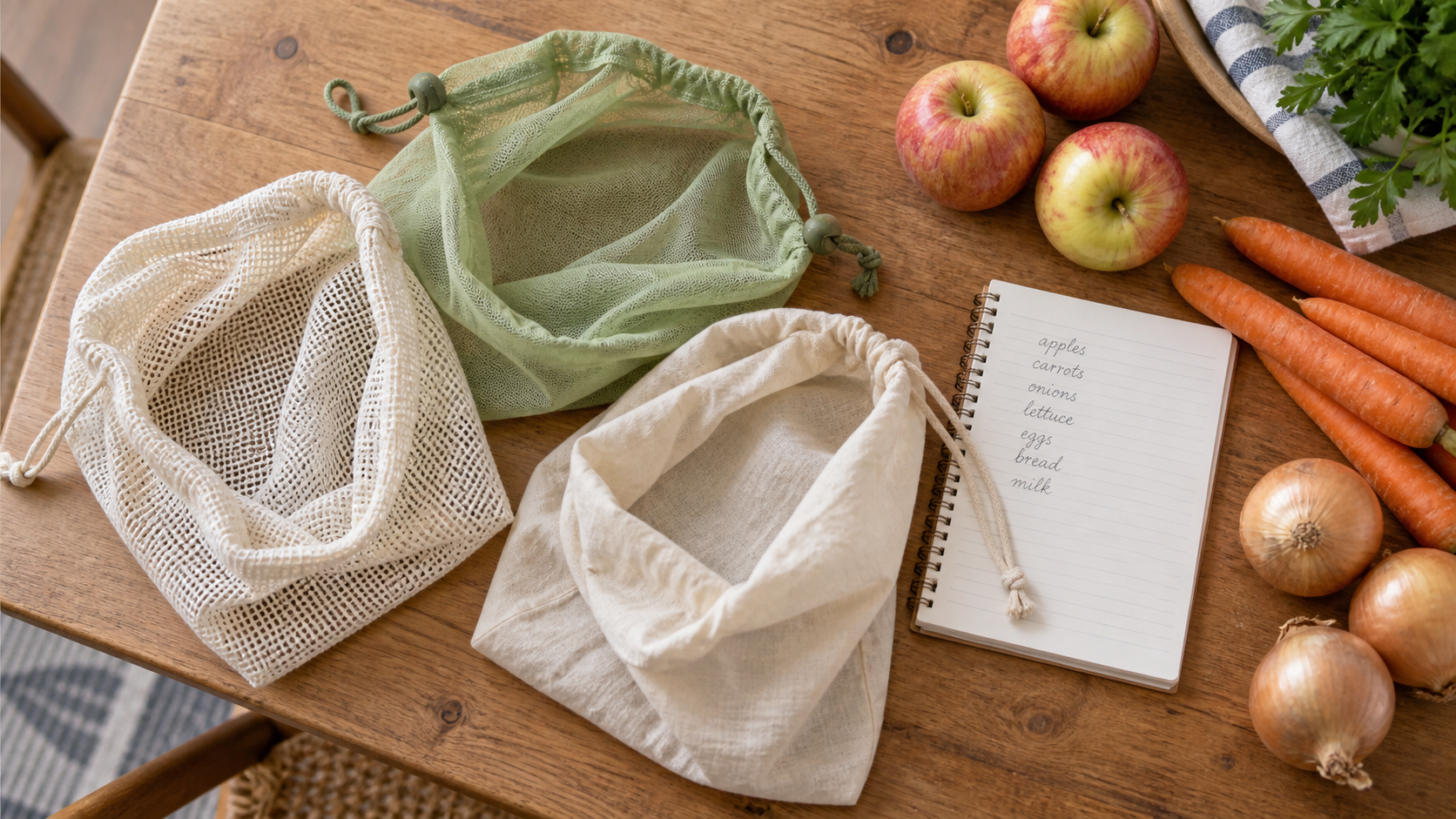
The quick answer
- Likely worth it: loose produce is a regular purchase, accepted bags fit the checkout process, and the bags have a clear place in your shopping kit.
- Test first: carry one clean bag you already own for two or three normal trips and note whether visibility, weighing, closure, washing, or remembering it creates friction.
- Probably skip it: you mostly buy produce that needs no bag, already have suitable bags, or do not want another item to wash and dry.
Start with what you actually buy
Review a few ordinary grocery lists. Count the loose items that you genuinely prefer to contain. Large produce may not need a separate bag, while small items may be easier to keep together. This page does not assume a bag preserves freshness, improves food safety, or changes eating habits.
Also check the store workflow. Policies and checkout systems vary. A visible tare label can help you identify a bag's stated empty weight, but do not assume every store will use it the same way. If the store has specific reusable-container rules, those rules control the decision.
Compare the friction points
- Visibility: open mesh makes contents easier to see; denser fabric may require opening the bag at checkout.
- Closure: inspect the drawstring, toggle, zipper, or fold-over design and whether it suits the produce you usually carry.
- Size: compare complete bag dimensions with typical quantities instead of relying on “large” or “family size.”
- Tare information: look for a clearly stated and readable empty weight, without treating it as proof of store acceptance.
- Care: follow the maker's washing and drying directions; a bag that is awkward to clean is unlikely to stay in rotation.
Plan the trip home—and the next trip out
The routine continues after checkout. Decide where used bags will be emptied, washed if needed, fully dried according to their care labels, and stored. Then choose a trigger for returning them to the grocery tote, backpack, cart, or entryway kit. If that last handoff repeatedly fails, owning more bags will not solve it.
Do not buy a large set before knowing how many bags a normal trip uses. Extra pieces take storage space and add sorting without necessarily improving the routine.
Try a no-buy test
For the next few trips, use no produce bag where the item and store workflow allow it, or bring a clean, suitable washable bag you already own. Record only practical snags: forgotten bags, difficult checkout visibility, awkward closures, slow drying, or no dependable storage spot.
If the test shows a recurring need, use the reusable produce-bag comparison guide to compare formats by measured size, mesh, closure, tare labeling, care, and folded storage. That guide handles product selection; this one decides whether the category belongs in your routine at all.
Reasons to skip or delay
- Your usual store does not accept the proposed format or its weighing process is unclear.
- You rarely buy loose items that benefit from being contained.
- Suitable bags are already sitting unused at home.
- The listing omits dimensions, materials, care directions, or stated tare information you need.
- Washing, drying, and returning the bags would add more friction than the bags remove.
Bottom line
Reusable produce bags are worth considering when one or two well-chosen bags solve a repeated checkout and carrying problem and can reliably make the round trip back into your grocery kit. If the no-buy test reveals little need or too much upkeep, skip the set. For the broader approach to useful, low-hype gear, see the routine-support tools guide.