Not sure this category belongs in your routine? Start with the reusable produce bag buy-or-skip test before comparing formats.
Grocery-planning buying guide
Best Reusable Produce Bags for Grocery Planning Routines
Reusable produce bags can keep loose fruit and vegetables together from cart to kitchen, but the best format depends on what you buy, how the store weighs it, and whether you will actually wash and return the bags to your shopping kit.
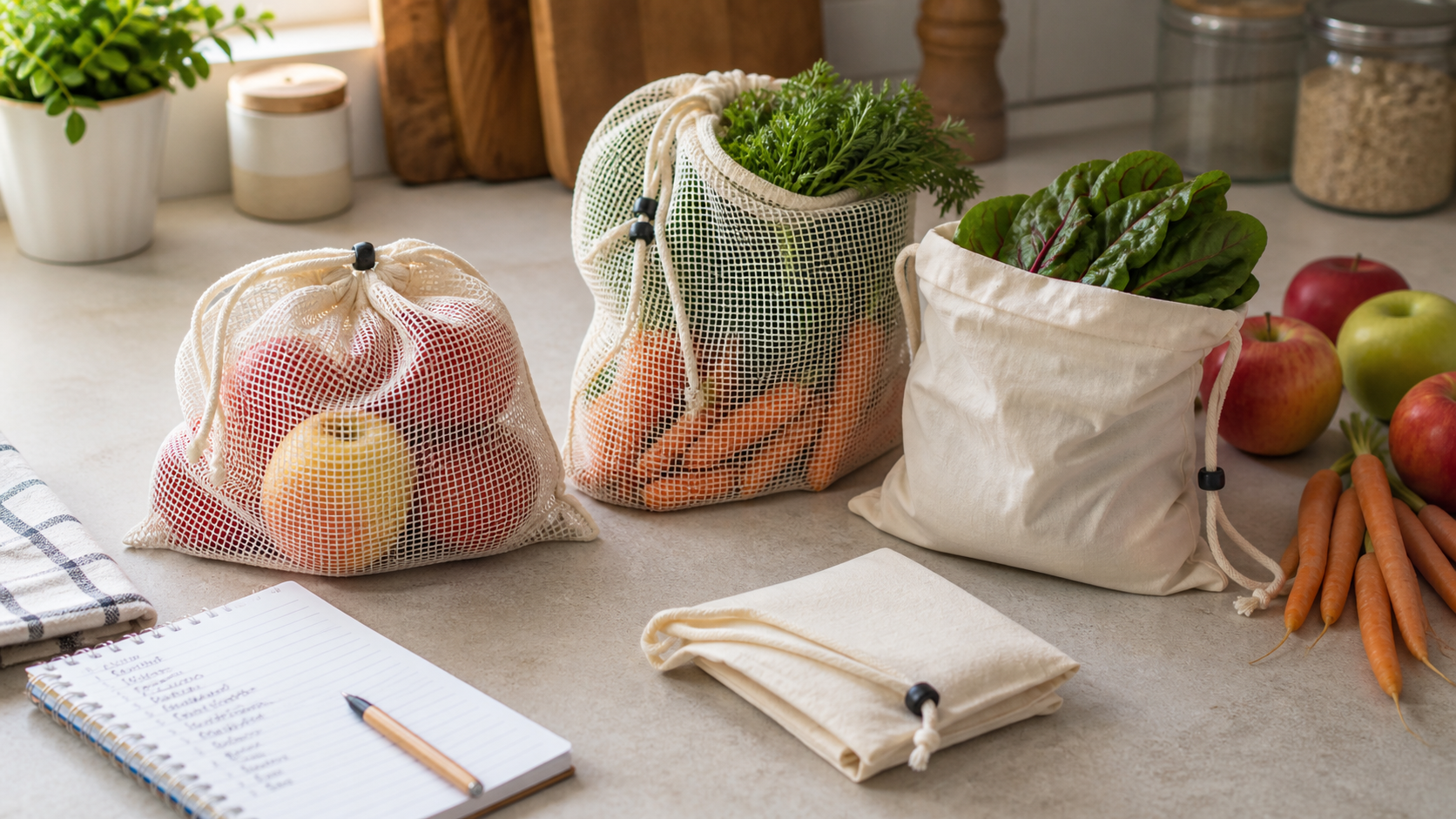
Who this guide is for
This guide is for adults who regularly buy loose produce and want a reusable alternative to single-use produce bags. It covers the small bags used inside a cart or larger shopping bag—not the larger totes that carry the whole grocery load. For that decision, compare reusable grocery bags for public-transit shopping.
This is a routine and organization tool, not a weight-loss product. See the routine-support tools pillar for other practical categories that avoid body-result promises.
Best-fit formats, not unsupported winners
No bags were purchased, washed, weighed, or ranked for this guide. Use these formats as a comparison starting point:
- Fine mesh: Makes contents visible and usually folds small; check whether tiny items can press through the openings.
- Coarse mesh: Offers airflow and easy visibility for larger produce, but may be a poor fit for small items or tender leaves.
- Solid lightweight fabric: Contains small items and may reduce snagging; contents are harder to identify at checkout.
- Mixed-size set: Can match bags to different shopping-list items, provided every size has a real use.
- Structured or boxed-bottom bag: May stand more easily during filling but occupies more space when stored.
Selection criteria that matter
- Measure the usable size: Compare dimensions rather than labels such as small or large. Allow room to close the bag without crushing its contents.
- Check the empty weight: Look for a readable tare label or stated bag weight, and confirm how your store handles customer-supplied produce bags.
- Match mesh to the food: Fine mesh contains smaller items; solid fabric may suit delicate or tiny produce better. Neither format preserves freshness by itself.
- Inspect the closure: Drawstrings, toggles, and zippers should stay out of the way while filling and should not create bulky pressure points.
- Read wash and drying directions: Soil and food residue need a realistic cleaning routine. Check whether the maker supports machine washing and drying.
- Compare folded storage: A bag only helps if it returns to the grocery tote, cart, backpack, or entryway kit after washing.
- Count useful sizes, not pieces: A large bundle is poor value if most bags are too small, too large, or difficult to distinguish.
- Review material claims carefully: Treat durability, food-contact, and environmental language as manufacturer claims unless independently supported.
A simple comparison framework
Mark each listing yes, no, or unclear against the same questions:
- Are exact dimensions and included quantities stated?
- Does each bag size match produce you commonly buy?
- Is the mesh or fabric suitable for those items?
- Is an empty weight or tare label easy to find and read?
- Will the closure be quick to use at the store?
- Are washing and drying instructions specific?
- Does the folded set fit the shopping kit you already carry?
- Are seller identity and return terms clear?
- Would reusing bags already at home solve the same problem?
Routine fit and practical limits
Reusable produce bags reduce the need to take a new bag on each trip only when they are repeatedly washed, dried, stored, and carried back to the store. They do not keep every kind of produce fresh for longer, and a bag suited to checkout may not be the best long-term refrigerator storage. Follow produce-specific storage guidance after unpacking.
Check store policy before relying on a printed tare weight. Checkout systems and staff procedures vary, and a heavier fabric bag may affect the weighed total if the empty weight is not deducted. Do not assume “food safe,” “zero waste,” or durability language establishes a universal result.
Who should skip this purchase
Skip a new set if your store does not accept customer-supplied produce bags, if most produce you buy is sold packaged, or if clean bags are unlikely to make it back into the shopping kit. Existing washable bags may be enough when their material, closure, and condition fit the task.
Skip listings that omit dimensions, fabric or mesh details, care instructions, or bag weight. Replace bags with broken closures, persistent residue or odor, or mesh damage that no longer contains the intended items.
Bottom line
The best reusable produce bag is one sized for the items on your regular list, easy for checkout staff to see and weigh, simple to wash, and compact enough to return to your grocery kit. Compare measurable facts and store fit—not set size or broad sustainability slogans.