Worth-it decision guide
Are Walking Shoes Worth Buying Before Starting a Walking Routine?
You may not need new shoes before your first walk. If a pair you own fits comfortably, stays secure, suits the surface, and shows no obvious damage, a short low-pressure trial can tell you more than shopping first. Buy when the current pair creates a clear fit, traction, or wear problem—not because footwear promises weight loss.
As an Amazon Associate, GoodWeighFinds earns from qualifying purchases.
Quick verdict
- Use what you own when the shoes feel comfortable and secure during a short walk and the upper, laces, and sole look intact.
- Buy before extending the routine when fit problems, worn tread, damaged fastenings, or an unsuitable sole create a repeatable practical problem.
- Delay when you have not yet chosen your usual surface or learned which part of the current shoe bothers you.
- Get qualified help when walking causes persistent pain, numbness, balance problems, or symptoms connected to an injury or medical condition.
Start with a short current-shoe check
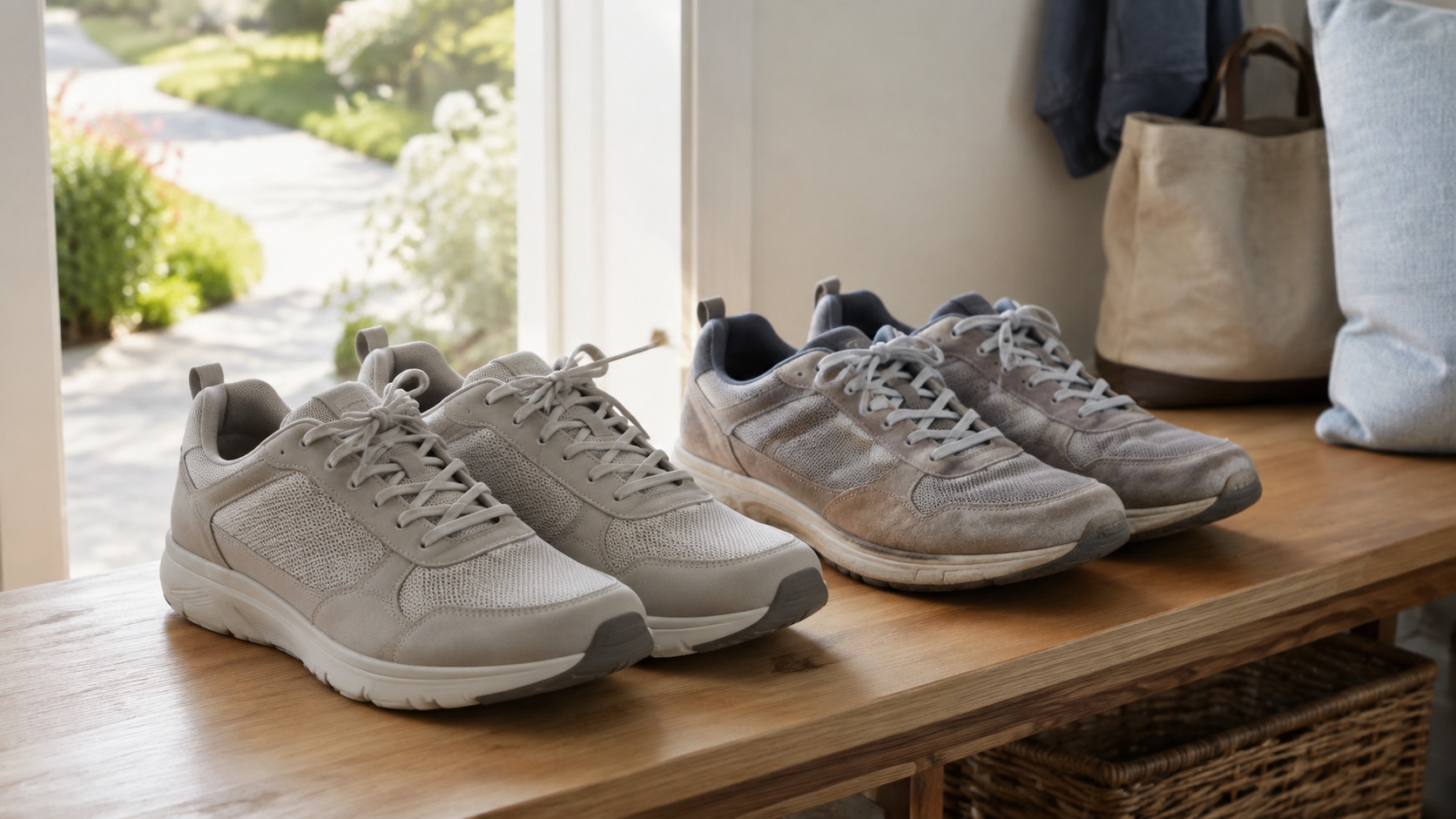
Inspect the outsole for sections worn smooth or unevenly, look for separation between the sole and upper, check that laces or fasteners hold, and make sure the inside has no folded lining or exposed hard edge. Then try a short walk on the surface you expect to use. Stop if discomfort builds rather than treating pain as a break-in requirement.
This is a practical screen, not a diagnosis or a promise that an intact shoe prevents injury. The broader routine-support tools guide uses the same rule: a product should solve a defined routine problem, not stand in for a body-result claim.
When buying now may be worth it
- The fit is clearly wrong: Toes feel crowded, the heel repeatedly slips, or the shoe presses in one spot during ordinary walking.
- The shoe is damaged: The sole is separating, a fastening no longer holds, or the tread is visibly worn where grip matters.
- The surface changed: A shoe that works indoors may not offer the same grip or protection on wet pavement, gravel, or uneven paths.
- Your needs changed: Swelling, an orthotic, or a change in mobility can alter fit; qualified guidance may be more useful than guessing from a listing.
When new shoes can wait
Do not make the purchase a prerequisite when comfortable shoes you already own are suitable for a brief, familiar route. Starting small also reveals whether your real friction is footwear, schedule, weather, route access, or something else. A new pair cannot fix every barrier to a repeatable routine.
Avoid replacing shoes only because of a universal mileage number or calendar deadline. Wear depends on construction, use, surface, gait, storage, and care. Visible condition and comfort are more useful shopping triggers than a one-size-fits-all rule. If the pair has already seen regular use, follow the dedicated walking-shoe replacement check.
What to compare if you shop
- Length and width: Use the maker's current size information and look for actual width choices when needed.
- Heel and toe fit: The heel should feel secure without painful pressure, and toes need room to move without sliding excessively.
- Surface match: Compare outsole tread and the route you actually plan to walk.
- Return terms: Confirm who sells the shoe, whether indoor try-ons are permitted, deadlines, condition rules, and return costs.
- Claim restraint: Skip shoes sold with fat-burning, toning, posture-correction-for-everyone, or guaranteed body-change promises.
For a fuller feature checklist, use the walking shoe buying guide. Socks can also change friction and fit, so compare the walking socks guide before assuming the shoe is the only variable.
Do not expect a shoe to produce weight loss
Walking shoes are routine-support equipment. They may help remove a comfort or traction barrier, but they do not guarantee that someone will walk consistently or experience a particular weight, calorie, posture, or health outcome. Treat seller language and customer anecdotes as claims to evaluate, not results you can expect.
Bottom line
New walking shoes are worth buying before you start only when the pair you own fails a concrete fit, condition, fastening, or surface check. Otherwise, begin with a short current-shoe trial, learn what the routine requires, and shop later with a clearer list. Persistent pain or medical concerns call for qualified guidance, not another product-page guess.