Worth-it decision guide
When Are Walking Shoes Worth Replacing?
Replace walking shoes when their fit, fastening, structure, or grip no longer works for your actual route—not just because a calendar or universal mileage rule says so. A two-minute condition check and a short familiar walk can separate cosmetic aging from a practical reason to shop.
As an Amazon Associate, GoodWeighFinds earns from qualifying purchases.
Quick verdict
- Keep using them when they remain secure and comfortable, the upper and sole are intact, and the tread still suits your usual surface.
- Repair or clean first when the issue is a replaceable lace, removable debris, or care task allowed by the maker's instructions.
- Replace them when the sole separates, fastenings fail, grip is worn where you need it, the shoe has become misshapen, or the fit repeatedly causes friction.
- Get qualified help rather than guessing at another shoe when walking causes persistent pain, numbness, wounds, balance problems, or symptoms connected to an injury or medical condition.
Use condition, not a universal deadline
Walking-shoe wear varies with construction, body mechanics, route surface, weather, frequency, storage, and care. A fixed month or mileage number cannot account for those differences. If you track use, treat the number as a reminder to inspect the shoes—not proof that they are finished or still suitable.
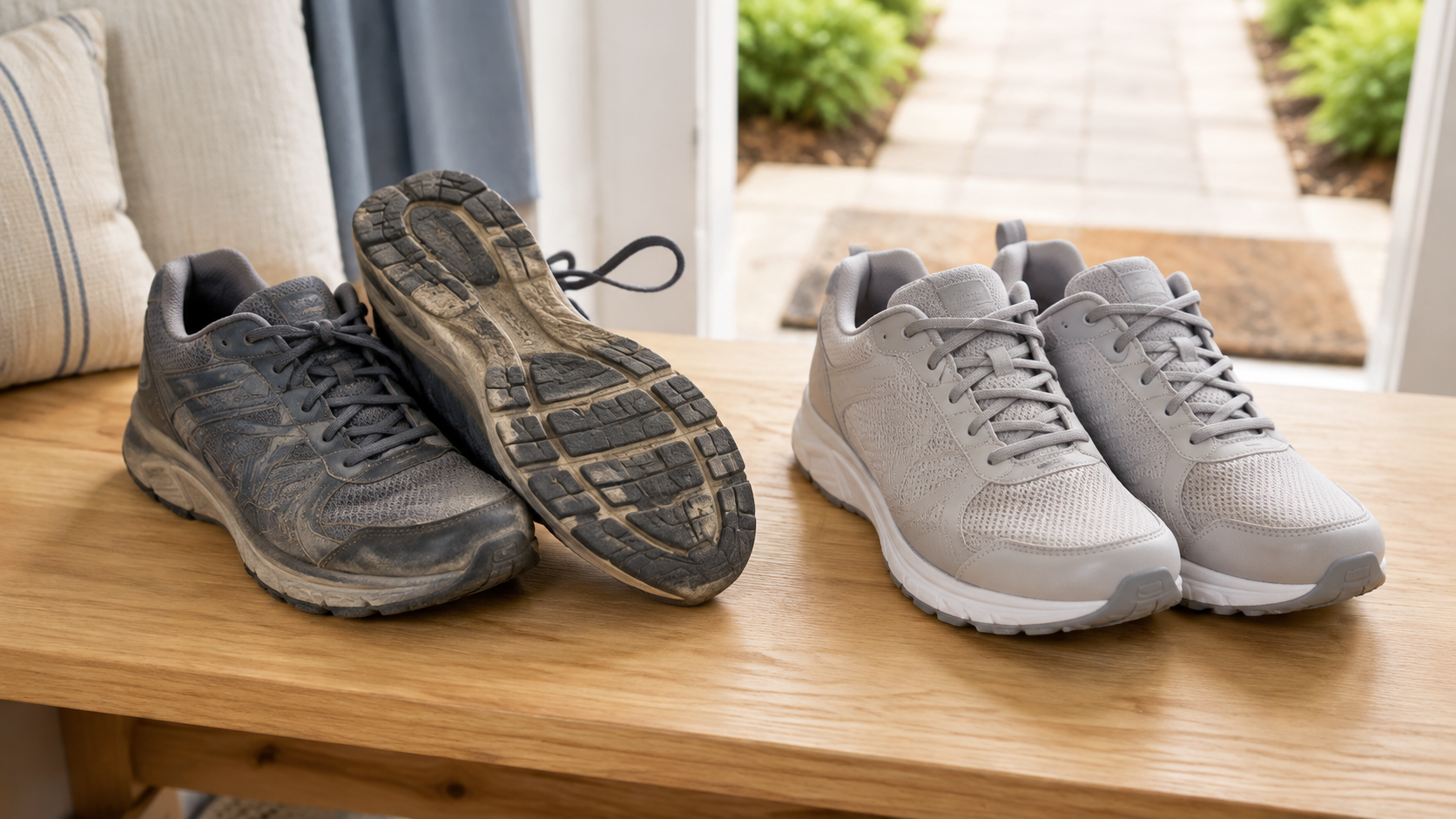
Start with the outsole. Look for areas worn noticeably smoother than the surrounding tread, cracks, or sections separating from the upper. Then check whether the heel counter feels misshapen, the upper has torn near a flex point, the lining exposes a hard edge, or the laces and eyelets no longer hold securely.
Four practical replacement signals
- Grip changed: The outsole has lost useful tread on the surfaces you actually walk, especially where wet or uneven conditions make traction relevant.
- Structure changed: The shoe leans, twists, collapses, or separates in a way it did not before. Appearance alone is not the test; ask whether the change affects secure use.
- Fit changed: Your heel slips, toes crowd, an internal edge rubs, or fastenings cannot keep the shoe stable during an ordinary walk.
- A repeatable problem appeared: The same friction or discomfort returns on short familiar walks after checking socks, lacing, and obvious debris.
What does not prove replacement is needed
Faded color, surface dirt, creasing, and a worn-looking logo can be cosmetic. A new model release is also not a condition test. Clean the shoe only as its care instructions allow, let it dry fully, and inspect it in good light before deciding.
Do not treat pain as automatic proof that a particular replacement shoe will solve the problem. Shoes can be one variable among route, activity change, injury, or a health concern. Persistent or concerning symptoms need appropriate qualified guidance rather than product-page trial and error.
Before buying another pair
- Name the failure. Write down whether the issue is width, length, heel security, grip, fastening, internal friction, or damage.
- Match the usual route. Indoor floors, dry pavement, gravel, and wet paths create different practical needs.
- Check current sizing. Do not assume the same printed size will fit identically across brands or models.
- Read return terms. Confirm the seller, deadline, allowed try-on condition, packaging requirements, return costs, and refund method.
- Ignore body-result promises. Walking shoes can support a routine; they do not guarantee weight loss, calorie burn, toning, posture correction, or injury prevention.
The walking-shoe buying guide offers a fuller feature checklist. If the shoes are still serviceable and the question is whether you need a dedicated pair at all, use the separate guide on buying walking shoes before starting a routine.
Budget for the real constraint
If a current pair is unsafe to use because it will not stay fastened or has active sole separation, delaying replacement to chase a premium feature is not useful. Conversely, replacing an intact comfortable pair for vague promises is not automatically better value. Compare the least expensive option that solves the identified fit, condition, or surface problem and has workable return terms.
This follows the broader routine-support tools framework: buy for a defined routine obstacle, not for a promised body outcome.
Bottom line
Walking shoes are worth replacing when inspection and ordinary use show a specific failure in grip, structure, fastening, or fit. Cosmetic wear and universal mileage rules are prompts to check, not verdicts. Identify the problem before shopping, verify return conditions, and seek qualified help when symptoms—not ordinary product wear—are driving the decision.