As an Amazon Associate, GoodWeighFinds earns from qualifying purchases.
Routine-support buying guide
Best Bento Boxes for Workday Meal-Prep Routines
A bento box can replace a stack of small containers and keep foods separate in one compact package. It cannot create weight loss, and a grid of tiny compartments is not automatically a better lunch. The useful choice is the box that fits your food, workday, bag, cleanup tolerance, and storage space.
Who this guide is for
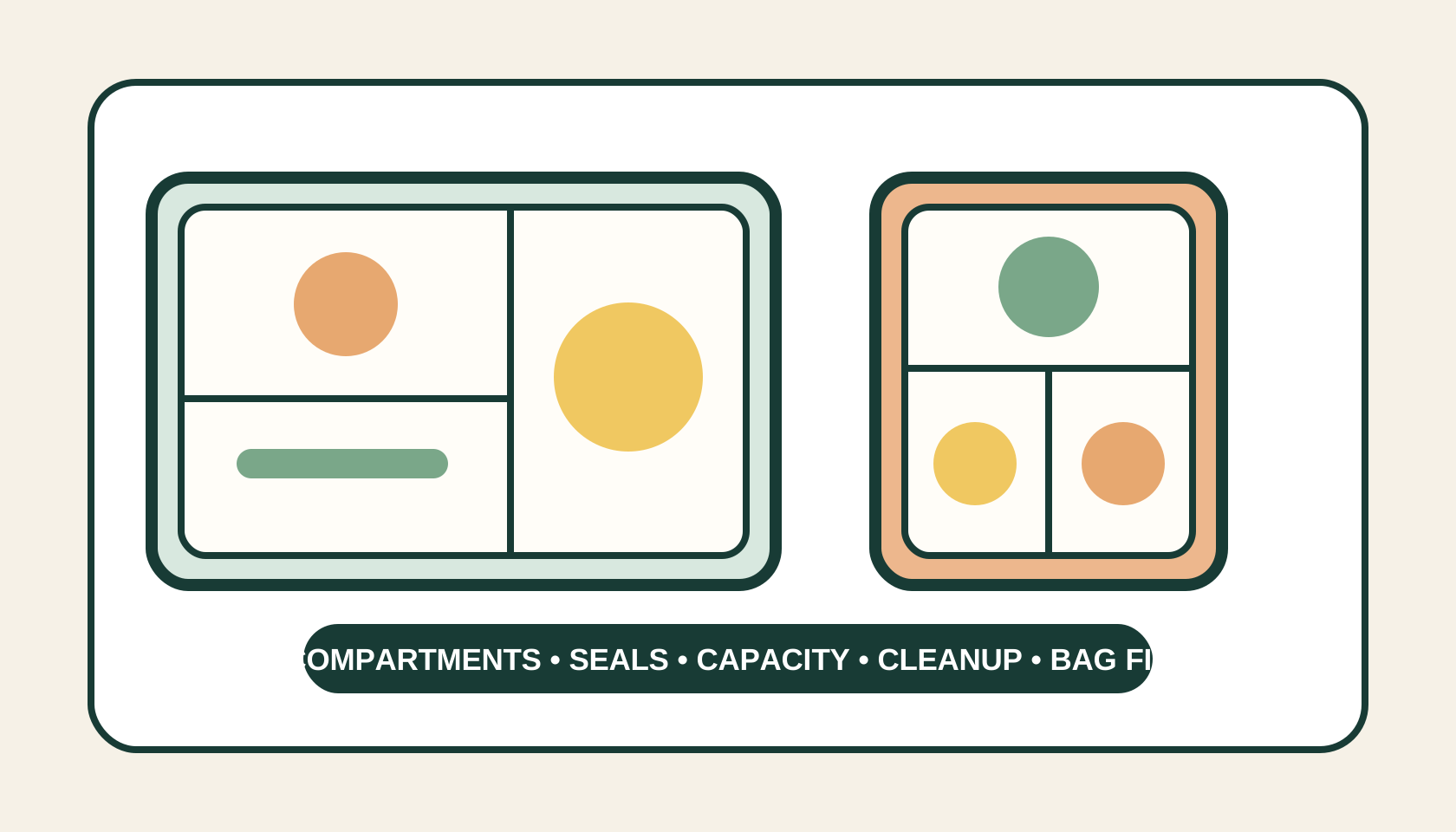
This guide is for adults who pack several foods for work and want one reusable container with integrated separation. If you have not chosen a format yet, first compare a bento box with a simpler sandwich box. This guide is narrower than the broader meal-prep container guide: the deciding issues here are compartment layout, whether dividers truly seal, one-box portability, and cleanup around gaskets and corners.
Start with the routine-support tools pillar if you are still deciding whether a container, planning tool, or carry bag would solve the actual friction.
Best-fit bento formats, not unsupported rankings
- Best for changing lunches: A roomy box with removable dividers, so the layout can change instead of dictating the meal.
- Best for wet and dry separation: A model whose maker explicitly says the compartments seal from one another—not merely that the outer lid is leak resistant.
- Best for compact work bags: A single-level box with verified exterior dimensions and space for any required cold pack.
- Best for simpler cleanup: A design with few lid parts, removable gaskets, rounded corners, and clear dishwasher instructions.
- Best for a no-microwave workplace: A box sized for foods you are comfortable eating cold; an insulated food jar is a different category for temperature retention.
Selection criteria that matter
- Usable capacity: Compare total and compartment capacities, not just the outside dimensions or number of sections.
- Divider behavior: Fixed dividers simplify setup; removable dividers add flexibility but may shift or fail to seal at the lid.
- Seal design: Separate “outer lid closes securely” from “liquids cannot move between compartments.” Treat either as a manufacturer claim until checked for the exact model.
- Work-bag fit: Measure length, width, and height against the bag opening, shelf, refrigerator, and any cold pack—not just the bag floor.
- Appliance labels: Confirm whether the base, lid, insert, gasket, and utensils have different microwave, freezer, or dishwasher instructions.
- Cleaning friction: Count gaskets, valves, corners, removable cups, and utensil channels. More features create more surfaces to wash and dry.
- Replacement parts: A replaceable lid, gasket, divider, or tray may matter more than a large bundle when one part wears out.
- Portion language: Compartments are organization features, not proof of a universally correct meal or promised body result.
A practical comparison framework
Write down one ordinary packed lunch and the storage route from home to work. Then score each candidate yes, no, or unknown:
- Does the main compartment fit the largest food you regularly carry?
- Will wet ingredients stay where intended according to specific product documentation?
- Does the closed box fit the bag with the cold pack and bottle you already use?
- Can every food-contact part be removed, washed, and fully dried without special effort?
- Are reheating and cooling instructions clear for each component?
- Can worn lid parts be replaced, or would one failure retire the whole box?
- Is the return policy usable after you inspect the fit?
- Would this still be useful if it changed no weight or body measurement?
Claims and limits to check
“Leakproof” can describe the perimeter seal while sauces still cross between internal sections. “Meal prep” may be only marketing. “Portion control” markings do not establish an appropriate amount for every person. Product pages, customer anecdotes, and influencer meal photos are not evidence that a box changes eating habits or weight.
Use the maker’s current care and appliance instructions for the exact model. General food-storage guidance cannot establish how long a specific packed meal will remain at a safe temperature; workplace conditions and handling vary.
Who should skip a bento box
Skip one if you mostly carry a single soup or large entrée, need true temperature retention, dislike washing lid parts, or already own containers that fit your bag. Choose ordinary single-compartment containers when flexibility matters more than separation, or read the work lunch-bag guide when carrying and cold-pack space are the real problem.
Avoid diet-coded boxes if fixed portions, tracking, or visible food rules feel stressful or triggering. A neutral container is a routine tool, not a treatment plan or test of discipline.
Bottom line
The best workday bento box has enough usable capacity, a divider layout that matches real lunches, seals described precisely, manageable cleaning, and dimensions that fit the whole commute setup. Buy for portability and organization—not for diet promises, unsupported rankings, or the idea that more compartments automatically make a meal better.