Work-lunch container comparison
Bento Box vs Sandwich Box for Work Lunches
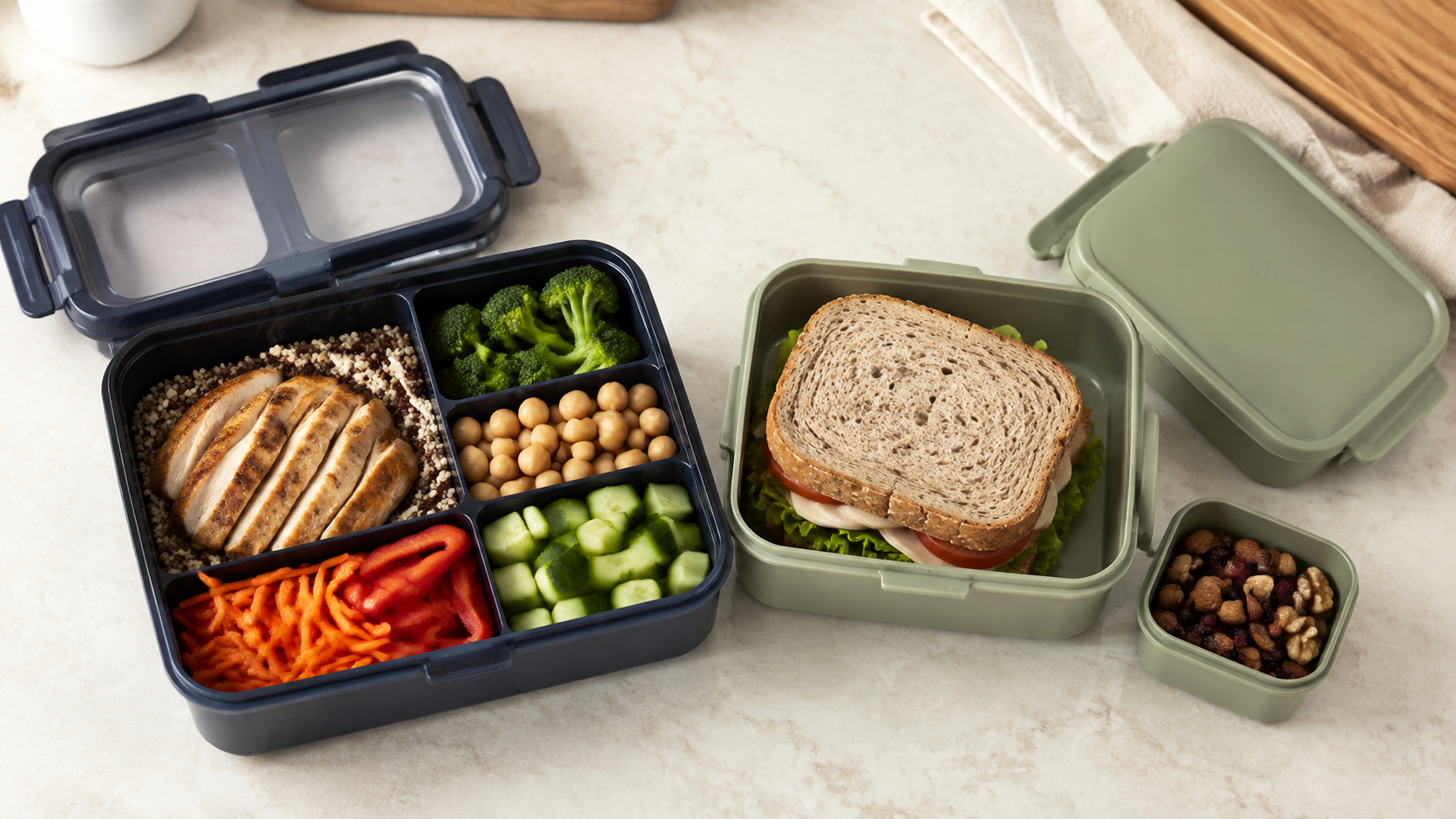
A bento box organizes several foods inside one divided container. A sandwich box protects one main item and leaves sides to separate containers or bags. Neither format improves a lunch by itself; the better choice is the one that fits what you actually pack, carry, wash, and store.
As an Amazon Associate, GoodWeighFinds earns from qualifying purchases.
Quick decision
| Choose a bento box when… | Choose a sandwich box when… |
|---|---|
| You regularly pack several foods and want built-in separation. | Your usual lunch has one sandwich or similarly shaped main item. |
| One larger container fits your bag, refrigerator, and washing routine. | A compact box plus an existing side container is easier to arrange. |
| The compartments match your foods without forcing an awkward layout. | You want open interior space and fewer corners or lid parts to clean. |
| You have checked whether internal sections actually seal from one another. | Wet foods can travel separately rather than beside the sandwich. |
The real difference is packing structure
A bento combines organization and containment. Fixed sections make several components visible at once, but small compartments may not fit a bulky sandwich, whole fruit, or changing leftovers. Removable dividers offer flexibility, although they may add parts and do not necessarily create liquid-tight sections.
A sandwich box gives its interior to one item. That simplicity can make loading and cleaning easier, but fruit, snacks, dressings, or wet foods need another container if they should not touch. Count the whole kit—not just the main box—when comparing bag space and washing.
Measure before choosing
- Largest regular food: Measure the sandwich, wrap, fruit, or container you pack most often. Internal dimensions matter more than a category name.
- Closed exterior: Compare length, width, and height with the lunch-bag opening, cold pack, bottle, and available workplace shelf space.
- Usable sections: Check compartment dimensions and capacity rather than assuming a higher compartment count is more useful.
- Closure: Look for current maker details about latches, gaskets, and whether internal sections seal. An outer lid described as leak resistant does not prove that sauces stay between dividers.
- Care labels: Verify microwave, freezer, and dishwasher instructions separately for the base, lid, gasket, divider, and any small cups.
- Replacement path: Check whether a worn lid or seal is replaceable before buying a large matching set.
Compare total packing friction
Run a three-lunch trial with containers you already own. List every piece used, note whether the packed kit fits through the bag opening, and count the pieces and crevices washed afterward. This exposes whether your actual problem is food separation, sandwich protection, bag layout, or cleanup.
A bento may reduce loose pieces while increasing lid and divider cleaning. A sandwich box may be faster for a predictable lunch while creating several small side containers. Neither is automatically the lower-effort option.
Claims and limits
“Meal prep,” “portion control,” and compartment counts are marketing or design descriptions, not evidence that a box causes weight loss or establishes an appropriate meal for every person. Likewise, customer photos cannot establish usable capacity for your food or bag.
For time- or temperature-sensitive foods, follow current authoritative food-handling guidance and your workplace rules. Do not infer a safe duration from the thickness of a box, a cold-pack photo, or an unsupported listing statement.
When to skip both
- Your current container protects the food and fits the route without recurring friction.
- You mostly carry soup or another food that needs a purpose-suited sealed container or insulated food jar.
- Your lunch changes too often for a fixed layout, and several ordinary containers are easier to rearrange.
- Compartment or portion language creates unwanted pressure. Neutral containers are valid routine tools.
- The listing does not provide enough dimensions, care instructions, material information, or usable return terms to check fit.
Keep researching
Use the routine-support tools pillar to start with the job rather than a body-result promise. If the divided format fits, the workday bento guide explains model-selection criteria. If the bigger issue is carrying the entire kit, compare a lunch bag with a meal-prep backpack.
Bottom line
Choose a bento box for recurring multi-food lunches when its actual compartments, seal behavior, and closed dimensions fit the routine. Choose a sandwich box when one protected main item and a simpler interior solve the problem. Measure the complete packed kit, count cleanup parts, and skip the purchase when what you own already works.