X vs Y comparison
Lunch Bag vs Meal Prep Backpack for Work
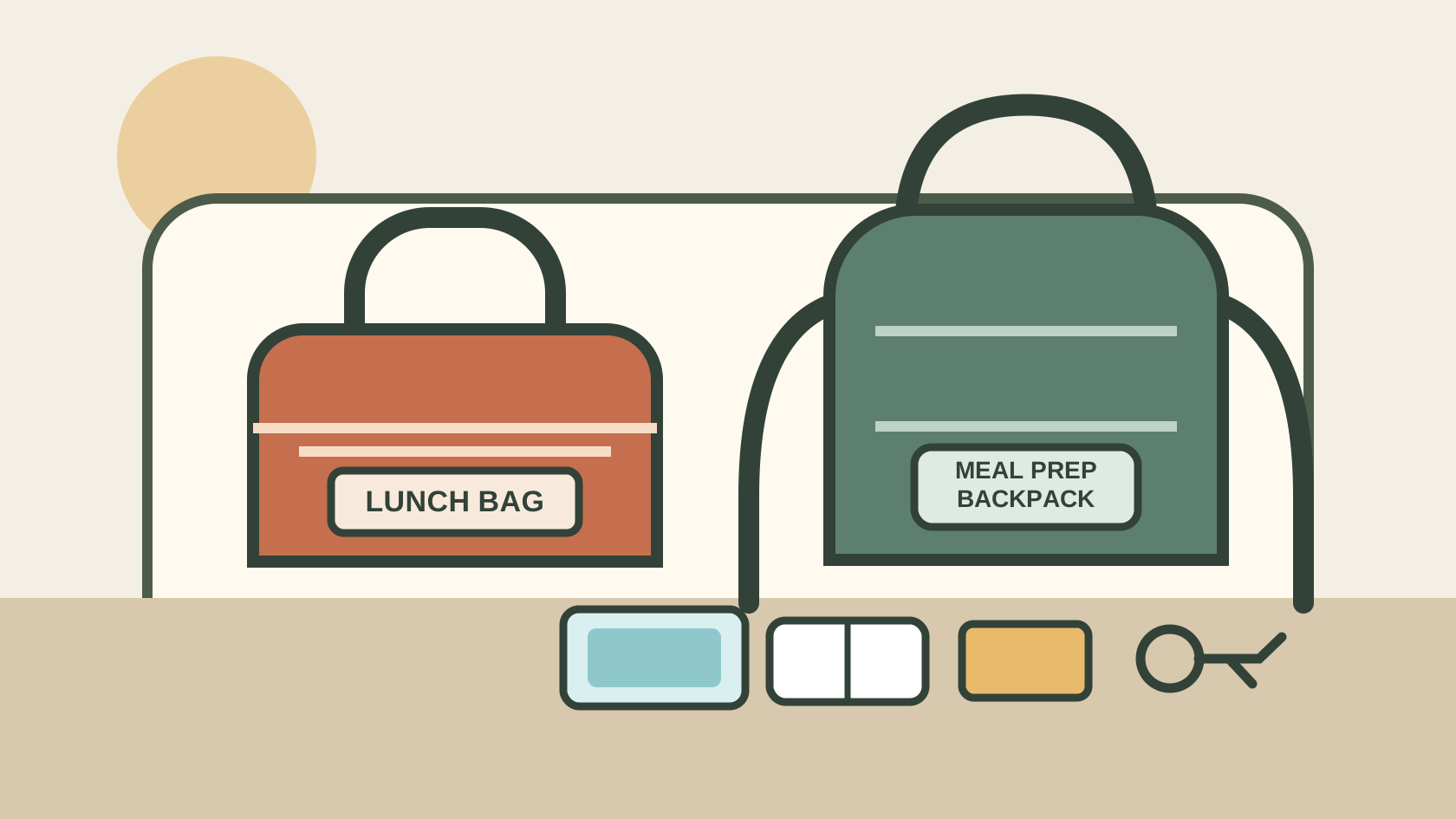
A lunch bag is usually the simpler choice for one meal and a short, predictable trip. A meal prep backpack earns its extra size when you carry several containers, cooling packs, and daily essentials over a longer hands-free commute. Neither format improves a diet or causes weight loss; the useful question is which one carries your actual load with less friction.
As an Amazon Associate, GoodWeighFinds earns from qualifying purchases.
Quick decision
- Choose a lunch bag when you carry one meal, perhaps a snack and small ice pack, and the bag spends little time on your shoulder.
- Choose a meal prep backpack when you carry several containers or a full-shift food load and need two straps for a longer walk or transit ride.
- Use an ordinary backpack plus a small insulated insert when you need one bag for a laptop and lunch but do not want a specialized multi-compartment carrier.
- Buy neither if a bag you own already keeps the load organized and fits your workplace storage.
What a lunch bag does well
A lunch bag keeps the food compartment compact. It is usually easier to place in a shared refrigerator, locker, or desk drawer, and a wide top opening can make packing and wiping the lining straightforward. A short handle or shoulder strap works when the walk is brief and the load is light.
The tradeoff is limited capacity and uneven carry. Adding a bottle, large glass container, snacks, utensils, and an ice pack can crowd the interior or make a narrow shoulder strap uncomfortable. Exterior dimensions alone do not show whether your container will sit flat.
What a meal prep backpack does well
A meal prep backpack spreads a larger load across two shoulders and may separate stacked containers, cooling packs, utensils, and personal items. It can fit long shifts, several meals, public transit, or a walk from distant parking better than a hand-carried bag.
More space also means more empty weight, seams, pockets, and surfaces to clean. A structured insulated compartment may reduce room for a laptop or jacket, and the full backpack may be too large for a shared refrigerator. “Meal prep” describes the layout, not a health outcome.
Who each option fits
A lunch bag fits office workers with refrigerator access, shorter commutes, one main container, and a reliable place to set the bag down. It also suits anyone who values simple cleanup and compact storage more than hands-free carrying.
A meal prep backpack fits longer shifts, several eating breaks, transit or walking commutes, and people who need both hands free. It works best when the loaded weight is comfortable, the straps adjust properly, and there is a suitable place to store the bag at work.
If your food load is small but the commute gear is not, a regular backpack with a removable insulated lunch pouch can be more flexible. Confirm that condensation or a spill cannot reach electronics or papers.
Tradeoffs worth comparing
- Usable capacity: Measure your containers, bottle, ice packs, and utensils together. Ignore serving-count labels that do not give dimensions.
- Carry comfort: Compare loaded weight, handle shape, shoulder-strap width, backpack adjustment, back padding, and how the bag moves while walking.
- Container position: Check whether containers remain flat through turns, stairs, braking, and crowded transit.
- Cooling setup: Insulation is only one part of the routine. Leave room for appropriate cold packs and follow current food-safety guidance for perishable food.
- Workplace fit: Measure the refrigerator shelf, locker, cabinet, or desk space. A bulky backpack may need its food compartment unloaded.
- Cleaning: Wide openings and light-colored, accessible linings make crumbs, condensation, and leaks easier to see and remove.
- Personal-item separation: Keep keys, chargers, medication, documents, and electronics isolated from food and condensation.
- Return friction: Check who pays return shipping, especially for a structured backpack that is expensive to send back.
Setup and maintenance
Pack the normal load on a table before shopping, then measure its width, depth, and height. Add the cold packs you actually use. Compare those measurements with stated interior dimensions and opening size rather than assuming a listed volume will work.
On arrival, test the bag indoors with clean, empty containers. Adjust both backpack straps evenly and confirm that the loaded format does not interfere with balance or movement. Follow the maker's cleaning directions; air-dry the lining and pockets fully before closing the bag.
Inspect seams, zipper areas, straps, lining, and removable inserts regularly. Treat “leakproof” and cooling-time statements as claims with conditions, not guarantees. Damaged insulation, trapped odors, mildew, a failing strap, or a lining that cannot be cleaned are reasons to follow replacement guidance.
Skip criteria
Skip a lunch bag that forces containers sideways, lacks space for the cooling setup, or becomes awkward at the normal loaded weight. Skip a meal prep backpack when one compact meal is the usual load, the workplace has nowhere to store it, or the added compartments would make cleaning harder.
Skip either format when the seller hides interior dimensions, makes unsupported all-day food-safety promises, or markets an ordinary carrier as a guaranteed weight-loss system. Avoid bundles tied to supplements, detox products, appetite suppressants, stimulants, patches, or GLP-1 alternative claims.
Next steps
For a compact work setup, use the work lunch bag buying guide. For longer travel and multiple containers, compare the meal prep bag guide for long commutes. If cooling space is the unresolved issue, see the compact ice-pack guide.
This comparison maps to the routine-support tools pillar. If the carrier is not the real bottleneck, start with the meal prep versus freezer container comparison instead.
Bottom line
Choose a lunch bag for a lighter, simpler one-meal routine and compact workplace storage. Choose a meal prep backpack for a larger load and longer hands-free commute. Measure the complete packed setup, verify the care and storage fit, and keep using what you own when it already solves the job.