Buying guide
Best Bottle-Drying Racks for Reusable Bottles and Straws
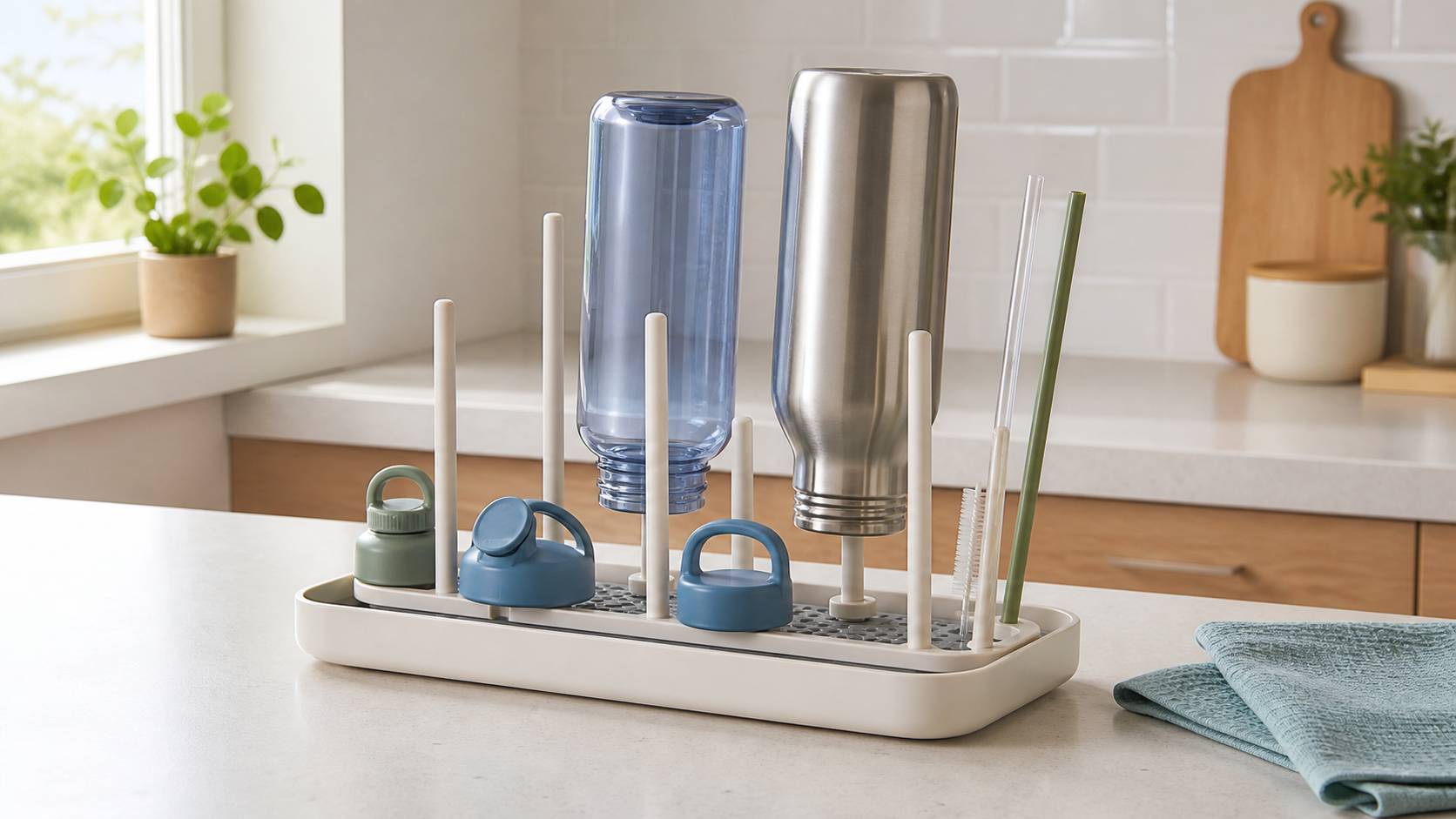
A reusable bottle can be easy to wash and still awkward to dry. The useful rack is not the one with the most pegs. It is the one that holds your bottles steadily, keeps lids and straws separated, drains without pooling, and fits the counter space you can spare.
As an Amazon Associate, GoodWeighFinds earns from qualifying purchases.
Who this guide is for
This guide is for adults who wash several reusable bottles, travel mugs, lids, or straws and need a defined place for them to air-dry. It covers ordinary countertop organization, not sterilizing equipment, medical sanitation, or products that make hydration or body-result promises. If you have not chosen a rack type yet, first compare a dedicated bottle drying rack with a general dish rack by the real wash load and counter-space tradeoffs.
For the broader routine decision, start with the routine-support tools guide. If reaching the inside of a bottle is the problem, use the bottle-brush comparison instead. For containers and broad lids, the meal-prep dish-rack guide covers a different drying layout.
Useful formats to compare—not ranked winners
GoodWeighFinds did not test current racks or verify named-product inventory. These categories organize the main design tradeoffs without inventing winners:
- Vertical peg rack: Usually the clearest fit for tall bottles, provided the pegs are long enough and spaced widely enough to prevent contact.
- Rack with a small-parts tray: Useful when lids, valves, seals, and caps otherwise disappear between larger pieces.
- Rack with straw posts: Worth comparing when the posts are thin and tall enough for your straws without stretching soft parts.
- Compact folding rack: Can reduce stored footprint, but hinges and narrow bases deserve extra stability and cleaning checks.
- Modular rack: Offers flexible spacing, but only if removable pegs lock securely and do not create hard-to-clean sockets.
Selection criteria that matter
- Loaded dimensions: Measure the rack with your tallest and widest bottles on it, not just the empty base. Check cabinet clearance above.
- Peg height and spacing: A peg should support a bottle without touching a mouthpiece or forcing neighboring pieces together.
- Bottle stability: Compare base width, peg position, stated limits, and whether a heavy stainless-steel bottle could make the rack tip.
- Drainage: Look for a removable tray or a clearly directed drain path. A textured tray can add grip but also add corners to scrub.
- Small-parts control: Lids, gaskets, and valves need airflow without falling through slots or sitting in pooled water.
- Material and care: Verify dishwasher claims for the exact components. Mixed materials may have different cleaning instructions.
- Storage: If the rack will not remain on the counter, compare folded or disassembled size and whether loose pegs stay together.
A practical comparison framework
List every bottle part that must dry, measure the available counter and cabinet clearance, then mark each rack yes, no, or unclear for these questions:
- Can it hold the heaviest bottle without rocking or tipping?
- Can bottles sit without touching each other or blocking airflow around lids?
- Is there a secure place for every straw, cap, valve, and removable seal?
- Can water leave the contact area instead of collecting under small pieces?
- Can the tray, pegs, and joints be reached for routine cleaning?
- Does the loaded rack fit under cabinets and away from the sink edge?
- Are replacement pieces or return terms clear if the fit is wrong?
Drying claims have limits
A rack can separate parts and provide space for drainage and airflow. It does not prove that an item is sterile, kill every contaminant, or fix residue left by incomplete washing. Follow the current cleaning and drying instructions supplied with each bottle, lid, straw, and rack.
Marketing phrases such as “germ-free,” “medical grade,” or “sanitizes while drying” need specific support and should not be inferred from an ordinary passive rack. Replace damaged bottle parts according to their maker’s guidance rather than relying on longer drying time.
Who should skip this purchase
Skip a dedicated rack if your existing dish rack holds every bottle and small part securely, if you use only one easy-to-dry bottle, or if the rack would permanently crowd a small counter. A clean towel or existing rack may be enough when parts can drain without rolling, nesting, or sitting in pooled water.
Also skip any listing that omits measurements, cannot explain how the tray drains, or leans on detox, appetite, weight-loss, immunity, or unsupported sanitation claims. Those promises do not improve the physical fit of the rack.
Bottom line
The best bottle-drying rack is a measured fit for your heaviest bottle, smallest loose parts, available clearance, and cleaning tolerance. Compare the loaded footprint and drainage path first; extra pegs matter only when they hold real parts securely.