Packed-lunch buying guide
Best Condiment Containers for Leak-Resistant Packed Lunches
A small reusable container can keep dressing, dip, or sauce separate until lunch, but “leakproof” is not a promise to trust without limits. Compare the closure, capacity, opening, care directions, and how the container will sit inside your actual lunch bag.
Who this guide is for
This guide is for adults who pack small amounts of dressing, dip, salsa, or another condiment separately from a meal. It focuses on truly small vessels rather than general food-storage sets. If you need a full lunch with a dedicated dressing cup, compare salad containers with separate dressing storage.
For products that make planned meals easier without promising body results, use the routine-support tools pillar.
Best-fit formats, not unsupported winners
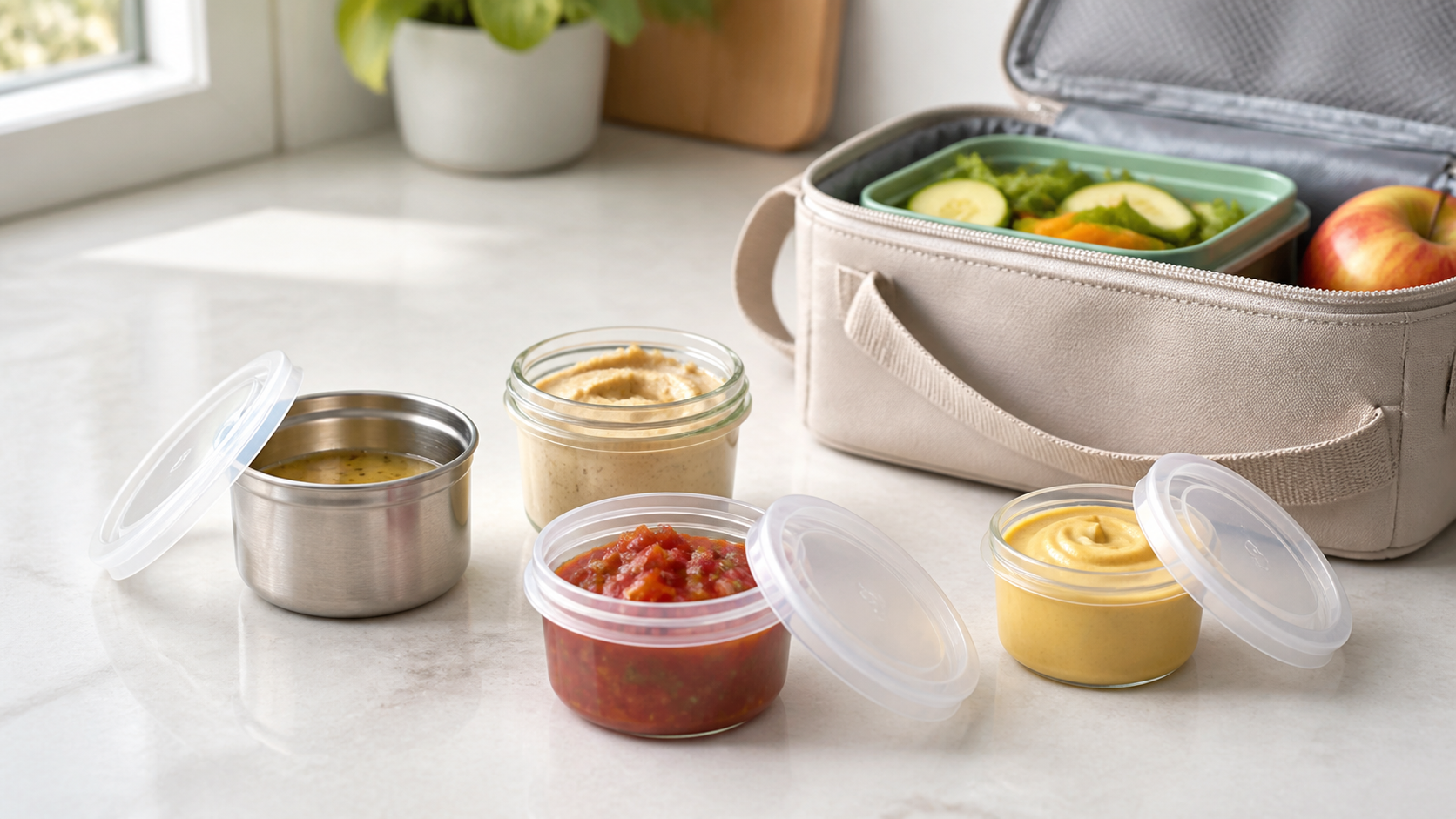
No containers were purchased, filled, inverted, or ranked for this guide. These formats are starting points for comparing current listings:
- Plastic cup with snap or screw lid: Light and easy to pack; check whether every lid fits consistently and whether staining guidance is stated.
- Stainless-steel cup: Useful when low breakage risk matters; confirm capacity because contents are not visible.
- Small glass jar: Easy to see and often stain-resistant, but heavier and breakable.
- Soft silicone cup: May nest for storage; inspect how the lid engages and whether the rim stays supported.
- Stacking set: Keeps several condiments together, but only helps when the combined size fits the lunch routine.
Selection criteria that matter
- Choose capacity from a real use: Measure what you normally pack. A larger vessel adds bulk and lets contents move.
- Inspect the closure: Look for clear details showing threads, tabs, clamps, or a gasket. A tight-looking lid is not proof against leaks.
- Check the opening: It should be wide enough to fill, scrape out, and clean without a special brush.
- Compare exterior dimensions: Confirm the cup fits upright beside the lunch box, ice pack, and utensils.
- Read component labels: Verify material, dishwasher, freezer, and microwave directions for the cup, lid, and seal separately.
- Count loose parts: Removable gaskets must be cleaned, dried, and reinstalled correctly. Check whether replacements exist.
- Check intended-food limits: Follow maker guidance for hot, oily, acidic, or thin liquids rather than assuming every condiment is suitable.
- Review returns: Current terms matter when dimensions are incomplete or lid fit is inconsistent.
A simple comparison framework
Mark each listing yes, no, or unclear against the same questions:
- Does the usable capacity match the amount normally packed?
- Do the exterior dimensions fit upright in the lunch bag?
- Is the closure visible and are leak claims paired with conditions?
- Can the opening, lid channel, and gasket be reached for cleaning?
- Are material and care directions stated for every component?
- Can all parts dry fully, and are replacement seals available?
- Are the food limits, seller, and return terms clear?
- Would a suitable container already owned solve the same problem?
What “leak-resistant” can and cannot mean
A well-fitted closure may reduce spills during ordinary upright transport. It cannot guarantee containment when the cup is overfilled, packed sideways, squeezed, dropped, heated incorrectly, or closed with food on the seal. Treat “leakproof” as a manufacturer claim to verify, not an independently established result.
Before the first commute, follow the maker's instructions and test the closed container with water over a sink. Keep it upright and inside a washable secondary pouch until its fit in your bag is understood. This category supports packing convenience; it does not control portions or produce weight-loss results.
Who should skip this purchase
Skip a new set if a small container you own closes securely, fits upright, and is approved for the intended use. Skip listings that omit capacity, dimensions, component materials, cleaning directions, or a clear view of the closure. A dedicated cup also may not help if the lunch container already has a suitable sauce well.
Avoid damaged cups, cracked lids, warped threads, or seals that no longer sit correctly. Do not improvise with a container whose maker does not support the intended food, temperature, appliance, or transport use.
Bottom line
The best condiment container is the smallest practical vessel that fits upright, has a closure you can inspect and clean, and comes with clear use limits. Measure the routine first, compare facts instead of leakproof slogans, and buy only if an existing container does not already do the job.