Meal-prep storage buying guide
Best Container Organizers for Meal-Prep Lids
A lid organizer can make reusable containers easier to match and put away, but only when it fits the lids, cabinet or drawer, and way you reach for them. Compare the storage job and measured dimensions—not a promise that one organizer works with every container set.
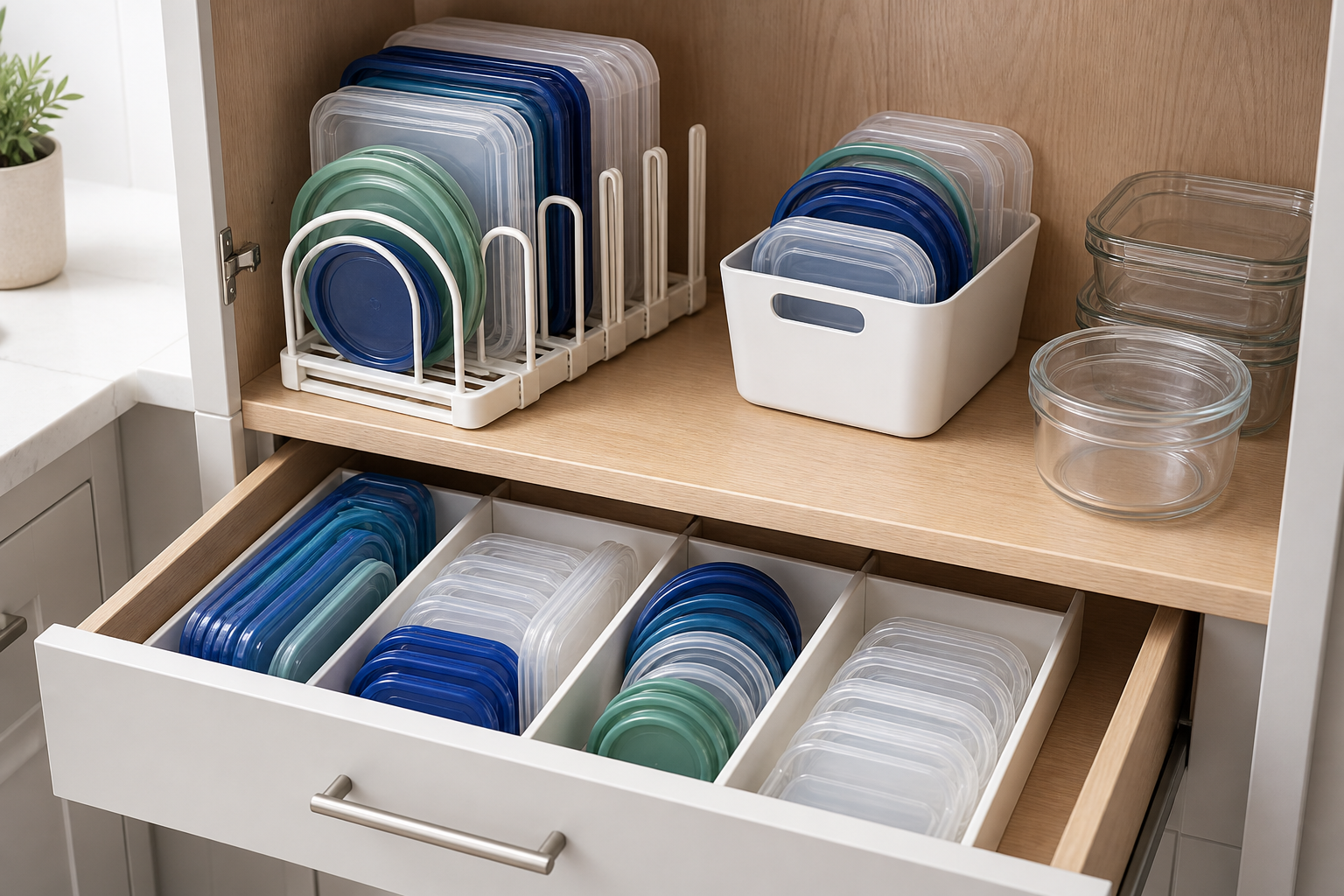
Who this guide is for
This guide is for adults who already have reusable food containers and want a simpler place to store their loose lids. It covers organizers, not replacement parts or new container sets. If lids are cracked, missing, or no longer seal, use the replacement-lid guide instead. Cookware lids have different rim, handle, load, and cabinet-clearance constraints; compare pot-lid organizers for small kitchen cabinets for that storage job.
For the wider decision about products that remove friction without promising body results, start with the routine-support tools pillar. If the tools themselves are cluttering a drawer, compare drawer dividers for meal-prep tools.
Best-fit formats, not unsupported winners
No organizers were purchased, capacity-tested, or ranked for this guide. These formats are useful starting points for comparing current listings:
- Adjustable upright rack: Best fit when lid sizes vary and removable dividers can be spaced around the actual stack thickness.
- Open bin with sections: Best fit for deep cabinets where the whole organizer can be pulled forward, provided the bin remains stable when loaded.
- Fixed-slot rack: Best fit for a small, consistent lid collection when each slot is wide enough for rims, tabs, and locking flaps.
- Shallow drawer dividers: Best fit when the drawer has enough internal height for lids to stand without catching on the cabinet frame.
- Door-mounted organizer: Consider only after confirming the mounting method, door thickness, hinge clearance, loaded weight guidance, and whether stored lids strike shelves.
Selection criteria that matter
- Inventory the lids first: Group them by shape and measure the widest point, tallest edge, and thickness of a typical stack. Count only lids you actually use.
- Measure the storage space: Record usable width, depth, and height with hinges, shelf lips, drawer hardware, plumbing, and door swing included.
- Check usable slot width: Listing photos can hide the space taken by dividers. Locking tabs and thick silicone rims may need more room than flat lids.
- Compare adjustability: Check the number of dividers, available positions, minimum section width, and whether unused pieces have a storage place.
- Look for stable access: A rack should not tip or slide when one lid is removed. Treat nonslip and stability language as claims to verify, not guarantees.
- Plan for shape differences: Round, rectangular, glass-container, and snap-lock lids may be easier to find when separated rather than forced into one slot.
- Read cleaning guidance: Choose a format you can empty, wipe, and dry without dismantling the entire cabinet.
- Check assembly and returns: Verify whether pieces snap together, require tools or adhesive, and can be returned if the measured fit is wrong.
A simple comparison framework
Mark each listing yes, no, or unclear against the same questions:
- Do the exterior dimensions fit the measured cabinet or drawer?
- Do the usable sections fit the lids' rims, tabs, and stack thickness?
- Can the largest lid be removed without pulling out every smaller one?
- Will the organizer stay stable during normal access?
- Are material, cleaning, assembly, and mounting instructions stated?
- Can the layout change if a container breaks or a set is replaced?
- Would organizing or reducing the current lid collection solve the problem without buying anything?
What an organizer can and cannot do
An organizer can keep compatible lids upright, separated, and easier to scan. It cannot make mismatched lids fit containers, restore a damaged seal, prove that a lid is safe for a particular appliance, or guarantee that a crowded cabinet stays tidy. Follow the container maker's use and care instructions for the exact lid and base.
Be skeptical of “universal” compatibility and capacity photos without usable measurements. A product may technically hold many thin lids while fitting far fewer thick locking lids.
Who should skip this purchase
Skip an organizer if matching lids can already nest on their container bases, a small existing bin works, or removing broken and duplicate pieces solves the clutter. Skip fixed slots when the collection changes often, drawer formats that reduce safe closure clearance, and mounted designs when the cabinet maker does not support the attachment method.
This purchase is also unlikely to help if the real problem is missing replacement lids or too many incompatible container systems. Consolidating the collection may be more useful than adding another storage product.
Bottom line
The best container lid organizer is the smallest format that fits the measured storage space, separates the lid shapes you use, stays stable, and makes everyday access easier. Count and measure first, compare usable—not advertised—capacity, and keep the option to skip the purchase.