Routine-support buying guide
Best Divided Glass Containers for Make-Ahead Work Lunches
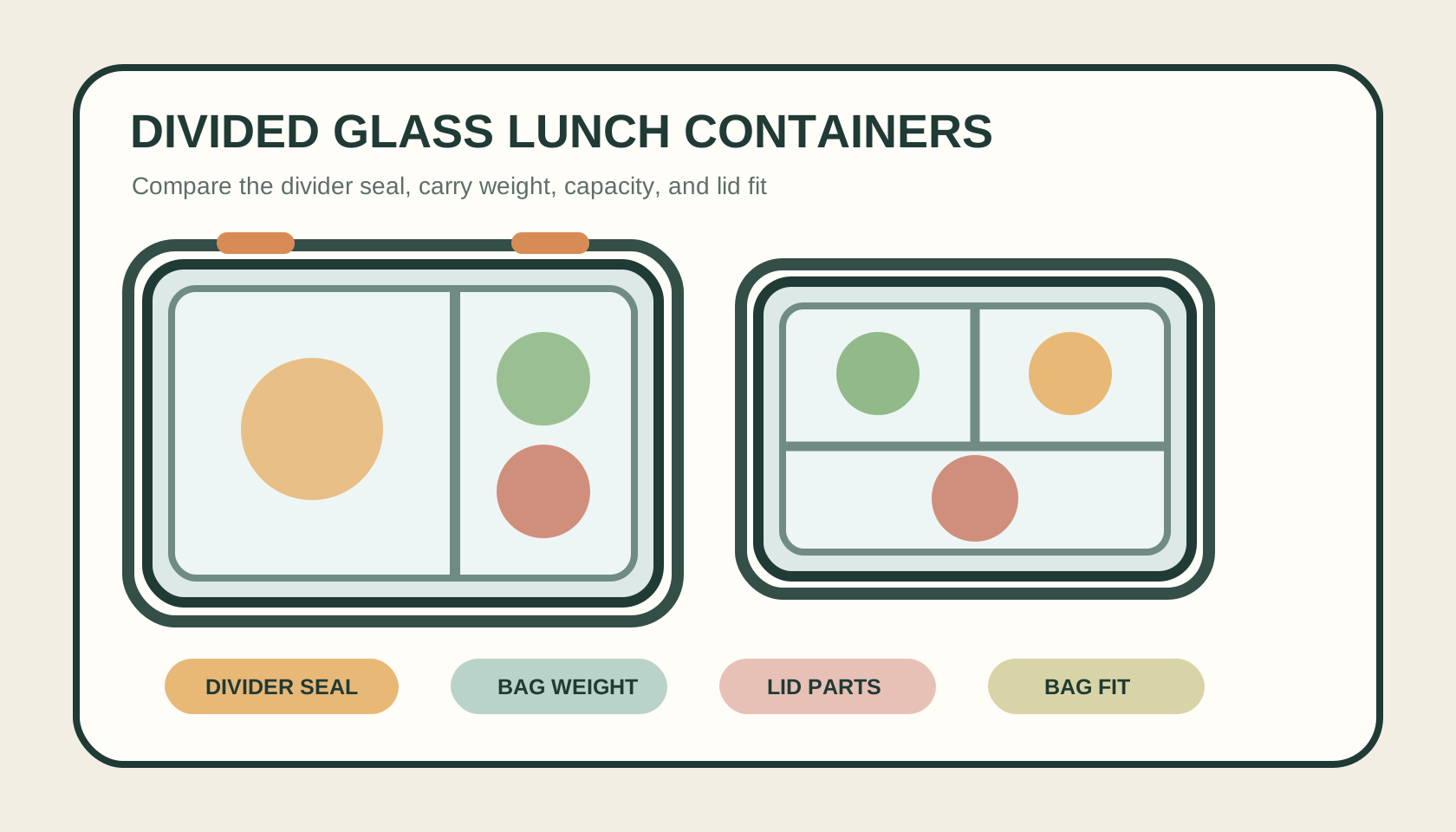
A divided glass container can keep a main food and sides in one sturdy base, but the useful details are easy to miss: some internal dividers do not seal against the lid, some sets are heavy enough to make a commute awkward, and one broken lid can sideline the whole container. The best fit is about separation, carry weight, care, and dimensions—not diet rules or promised weight loss.
As an Amazon Associate, GoodWeighFinds earns from qualifying purchases.
Who this guide is for
This guide is for adults who prefer a glass base, make lunches ahead, and want fixed separation without carrying several small containers. It is deliberately narrower than our workday bento box guide, which covers several materials and removable layouts, and our glass-versus-plastic comparison, which helps with the broader material decision.
Start with the routine-support tools pillar if you are still deciding whether storage, planning, or carry gear would remove the most friction.
Best-fit formats, not unsupported rankings
- Best for a main food plus one side: A two-compartment base with one genuinely useful large section and a divider that meets the lid seal.
- Best for several dry foods: A three-compartment layout, provided the small sections fit foods you actually pack and remain reachable for cleaning.
- Best for sauce separation: A model whose maker specifically describes seals between compartments; an outer leak claim alone is not enough.
- Best for a walking or transit commute: The lightest suitable set after comparing published empty weight and the real packed meal—not merely glass thickness.
- Best for longer ownership: A model with separately available, exact-fit lids or gaskets and stable model identification.
Selection criteria that matter
- Internal seal design: Look for a gasket or raised lid channel aligned with every divider. Fixed glass walls can separate dry foods while sauces still cross over during movement.
- Empty and packed weight: Add the listed container and lid weight to the likely food, cold pack, bottle, and bag. Glass may be manageable in a car and annoying over a long walk.
- Usable compartment capacity: Total volume can hide a tiny side section or a main section too narrow for an ordinary sandwich or entrée.
- Closed dimensions: Measure length, width, and height against the lunch-bag opening, refrigerator shelf, and cold-pack layout.
- Glass labeling: Record the exact material description rather than assuming all glass bases have the same resistance to heat or temperature change.
- Component-level instructions: Check microwave, oven, freezer, dishwasher, venting, and cooling directions separately for the base, lid, gasket, and any removable valve.
- Lid mechanics: More latches may distribute pressure, but hinges and clips can also become wear points. Check how the lid aligns without forcing it.
- Storage footprint: Fixed dividers prevent nesting inside the base. Confirm whether the bases stack securely and how much space the lids require.
- Replacement path: Search the exact model for lids and gaskets before buying a large set; a generic lid with similar dimensions is not automatically compatible.
A practical comparison framework
Pack one typical lunch in containers you already own, then score each candidate yes, no, or unknown:
- Do the individual compartment dimensions fit the foods, not just the advertised total capacity?
- Does product documentation explicitly address movement between internal sections?
- Is the full packed weight comfortable for the actual commute?
- Will the closed container fit upright with the cold pack and bottle?
- Can every divider corner, gasket channel, and latch area be washed and fully dried?
- Are instructions clear for each component and for avoiding sudden temperature changes?
- Can the exact lid or gasket be replaced without buying another full set?
- Would the container remain useful if it changed no weight or body measurement?
Claims and material limits
“Leakproof” may refer only to the perimeter. “Meal prep” describes a use case, not verified durability. “Portion control” markings do not establish an appropriate amount for every person, and customer photos do not prove that compartments stay separate through every commute.
Glass is breakable and material labels do not erase the risk of chips, cracks, drops, or thermal shock. Follow the current instructions for the exact model, avoid abrupt temperature changes unless explicitly permitted, and stop using a base that is chipped or cracked. A container also does not keep food at an appropriate temperature by itself; follow applicable food-storage guidance for the commute and workplace.
Who should skip divided glass containers
Skip this category if bag weight, drop risk, limited storage, or washing lid channels will make the routine harder. Choose lighter plastic after reviewing its care instructions if portability matters most, or use separate containers when lunch components change from day to day.
Skip fixed compartments if they feel restrictive, encourage food rules that are stressful, or do not match the meals you enjoy. A neutral single-compartment container may offer more flexibility. For soups or mixed dishes, the divider adds little; compare the work-lunch soup container criteria instead.
Bottom line
The best divided glass work-lunch container has compartments sized for real foods, a lid designed to seal along the dividers, a manageable packed weight, clear component-care instructions, and replaceable lid parts. Measure the bag and an ordinary lunch first, then buy for repeatable workday fit—not portion-control pressure or unsupported leak claims.