GoodWeighFinds is for general information only and is not medical advice. Readers should talk with a qualified healthcare professional before starting weight-loss products, supplements, diets, or exercise changes.
Routine-support buying guide
Best Grocery List Pads for Weight-Loss Meal Planning Routines
A grocery list pad can make planned meals easier to shop for, especially when the list lives near the fridge or pantry. It cannot make a diet safe, guarantee weight loss, or fix a stressful food routine. The useful version is a simple capture tool: what you have, what you need, and what is realistic to buy this week.
Start with the shopping friction
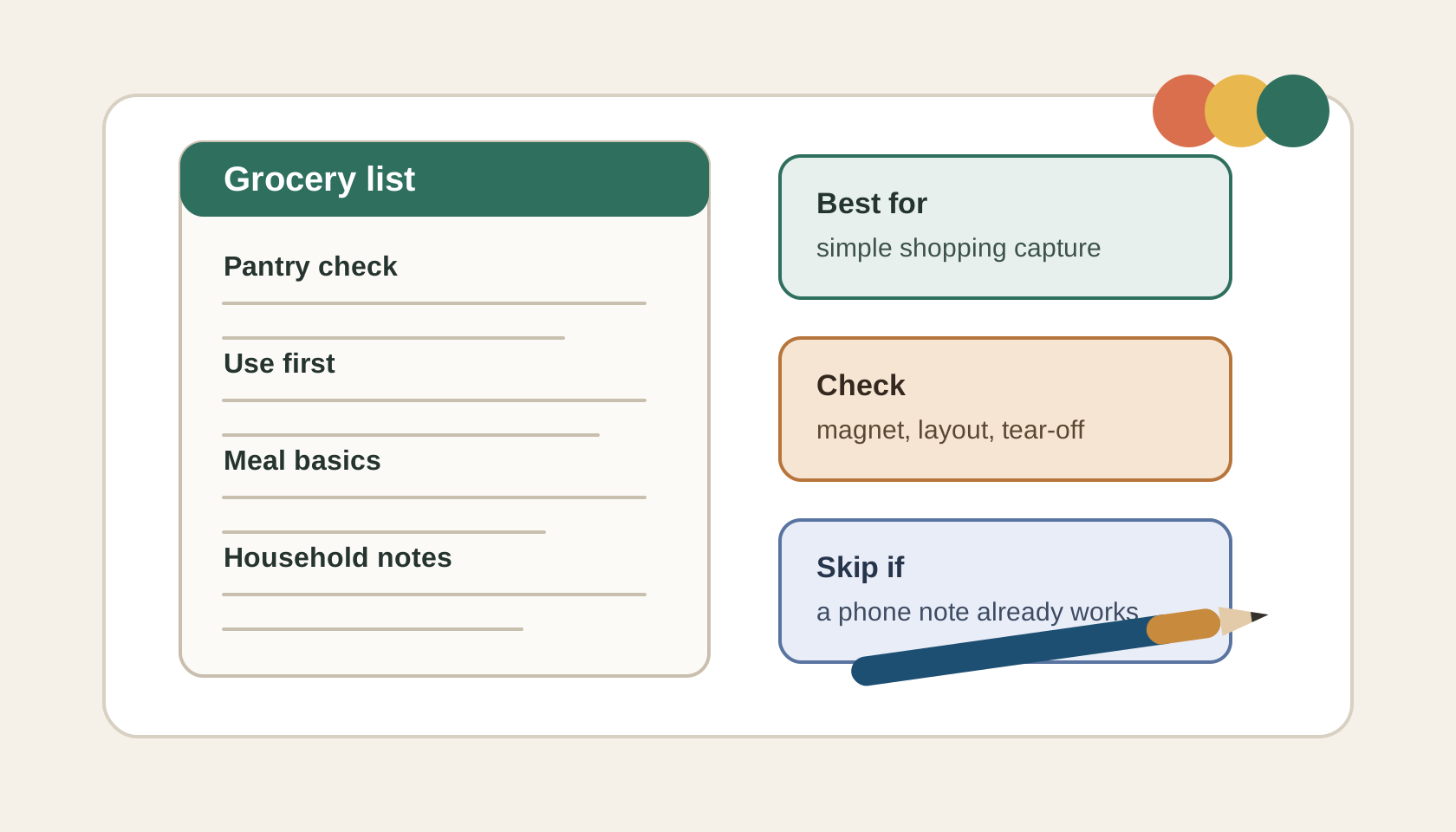
This guide is for adults who want a paper grocery list, magnetic fridge pad, or tear-off meal planning list without a full diet app or strict planner. The goal is not a perfect cart. It is a lower-friction way to notice empty staples, plan a few usable meals, and avoid buying duplicates that disappear in the pantry.
If you need a broader planning system, the meal planning notebook guide is a better fit. For the wider category of low-risk kitchen and habit helpers, start with the routine-support tools guide.
Best grocery list pad types by routine fit
GoodWeighFinds has not tested specific grocery list pads hands-on for this page, and this is not a ranked review list. Use these best-fit categories to compare listings without relying on fake testing claims, unverified review language, or weight-loss promises.
- Best for fridge capture: Magnetic pads that stay visible where household members can add items as they run out.
- Best for categorized shopping: Pads with sections for produce, frozen, pantry, protein, household items, and extras so the list is easier to scan in the store.
- Best for pantry checks: Layouts with a short "already have" or "check first" area to reduce duplicates and forgotten staples.
- Best for household coordination: Larger pads with clear writing space, simple categories, and room for notes from more than one person.
- Best for app-avoidant shoppers: Plain tear-off sheets that work without accounts, notifications, calorie dashboards, or data sharing.
Selection criteria that actually matter
A grocery pad is only useful if it fits the way you already shop. Decorative checkboxes matter less than placement, list space, and whether the page helps you make fewer decisions when the week gets busy.
- List layout: Choose categories that match your real store route or shopping style. Overly detailed sections can slow the list down.
- Magnet strength and placement: If it is meant for the fridge, check whether the backing is a full magnet or a small strip, and whether your fridge surface works with magnets.
- Page count and tear-off quality: Compare how many usable sheets you get, whether pages remove cleanly, and whether the backing stays intact.
- Writing space: Tiny lines look neat in photos but can be frustrating for large handwriting, shared lists, or quick additions.
- Pen compatibility: Smooth paper may smear with gel pens. Very thin paper may bleed through with markers.
- Refill and cost: A cheap pad can become wasteful if the format encourages rewriting lists or if you need frequent replacements.
Comparison framework
Before buying, run the pad through a practical scorecard. The best grocery list pad is the one that helps you shop with less friction, not the one with the most diet-coded prompts.
- Where will the pad live: fridge, pantry door, counter, bag, or desk?
- Can people add items quickly without opening an app or finding a notebook?
- Does the layout support a pantry check, leftovers, or "use first" ingredients?
- Will the page still be readable in a store, at a curbside pickup screen, or during a quick errand?
- Can you use it without recording calories, weight, body measurements, or strict food rules?
- Would the pad still be worth buying if it caused no change in weight at all?
Weight-loss claim red flags
Most grocery list pads are ordinary paper tools. Slow down when a listing claims that a shopping pad will control cravings, create rapid weight loss, force discipline, reset metabolism, or guarantee a transformation. A list can support planning, but it cannot prove a health or body-result claim.
Be especially cautious with bundles that attach the pad to supplement plans, detox prompts, appetite-suppression language, stimulant products, patches, GLP-1 alternative claims, or hidden-ingredient style promises. Those categories need warning-first review and should not be treated as casual meal-planning accessories.
Meal planning still is not medical advice
A shopping list can help organize groceries, but it cannot decide what eating pattern is appropriate for your body, health history, medications, budget, culture, or schedule. Avoid pads that include extreme calorie targets, one-size-fits-all meal plans, fasting rules, detox language, or moral labels for food.
If food planning feels stressful, punitive, obsessive, or tied to unsafe restriction, a grocery pad is not the right fix. A qualified healthcare professional, registered dietitian, or mental health professional with eating-concern experience may be the safer next step.
Who should skip this purchase
Skip a grocery list pad if a phone note, shared grocery app, whiteboard, plain notepad, or store pickup list already works. Also skip it if the categories do not match how you shop, the magnet will not work on your fridge, or the pad mainly adds another object to manage.
It is also reasonable to skip any planning tool that turns food choices into a pass-fail system. A grocery list should make errands easier. It should not become a private scorecard for restriction, guilt, or ignored hunger.
Bottom line
The best grocery list pads for weight-loss meal planning routines are simple, readable, easy to place, and useful for pantry checks, household coordination, and realistic shopping. Buy one for planning friction, not because a product listing implies paper can deliver a body outcome.