GoodWeighFinds is for general information only and is not medical advice. Readers should talk with a qualified healthcare professional before starting weight-loss products, supplements, diets, or exercise changes.
Buying guide
Best Meal Planning Notebooks for Weight-Loss Routines Without Diet Hype
A meal planning notebook can make groceries, leftovers, and busy nights easier to think through. It cannot make a diet medically appropriate, guarantee weight loss, or turn a rigid food rule into a safe plan. The useful version is a low-pressure planning tool: enough structure to reduce friction, not so much structure that meals start feeling like a scorecard.
Who this guide is for
This guide is for adults who want a paper planning system for meals, grocery lists, batch cooking, and leftovers without calorie-pressure prompts or shame-based language. It is a buying framework for notebook formats, not a personalized meal plan.
If you want a broader view of journals, habit trackers, scales, and reminder tools, start with the non-shaming habit tracking guide. If you are comparing practical kitchen and routine tools more broadly, the routine-support tools guide gives the wider context.
Best fit categories, not product rankings
GoodWeighFinds has not tested specific meal planning notebooks hands-on for this page, and this is not a ranked review list. Use these best-fit categories to compare product listings without relying on fake testing claims, unverified reviews, or weight-loss promises.
- Best for grocery planning: Notebooks with clear shopping-list sections, pantry check prompts, and space to group items by store area.
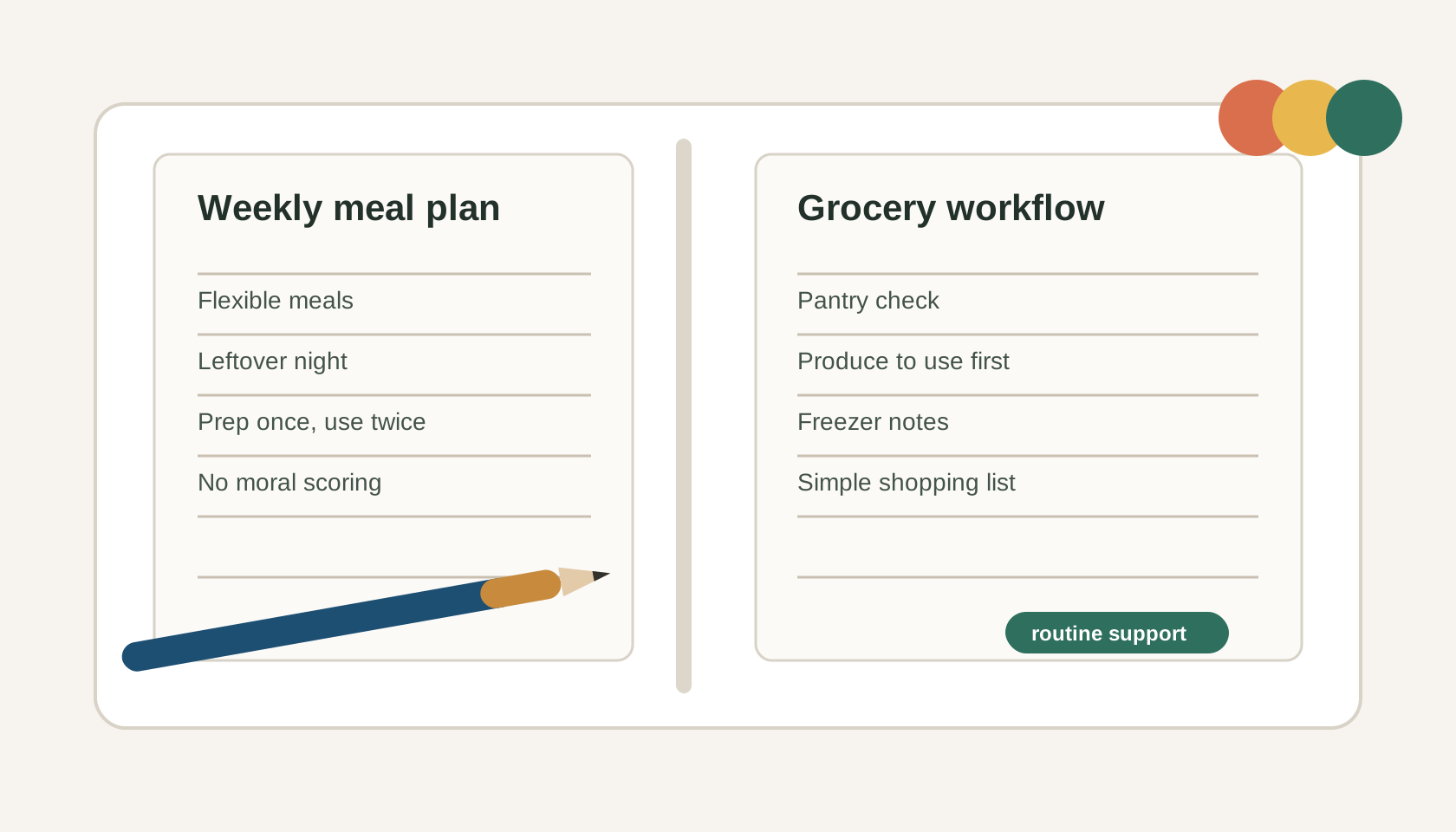
- Best for batch cooking: Weekly layouts that leave room for prep notes, leftovers, freezer meals, and planned reuse across several days.
- Best for small kitchens: Compact planners that can sit on a counter, fit in a bag, or stay near the fridge without taking over the workspace.
- Best for privacy: Plain-cover notebooks or subtle layouts that do not announce weight-loss goals in shared homes, offices, or public spaces.
- Best for flexible routines: Undated pages that let readers skip weeks, restart calmly, and avoid the wasted-page pressure of dated planners.
Selection criteria that actually matter
The best meal planning notebook is not the one with the strictest system. It is the one that helps you decide what needs buying, what needs using, and what is realistic this week.
- Prompt language: Avoid planners that use moral labels for food, aggressive countdowns, body-transformation promises, or punishment-style accountability.
- Weekly and daily layouts: Weekly pages help with grocery planning; daily pages can help with details, but they should not require constant tracking to feel useful.
- Grocery-list support: Look for enough list space, category sections, pantry checks, and tear-out or perforated pages if you shop with paper lists.
- Batch-cooking workflow: Useful planners leave room for prep sessions, leftovers, freezer notes, and "use first" ingredients.
- Portability and binding: Spiral binding may lay flat; stitched or glued binding may feel cleaner in a bag. Choose for where you actually plan.
- Cost per year: Compare page count, dated versus undated formats, replacement frequency, and whether a plain notebook would do the same job.
Comparison framework
Before buying, run the notebook through a practical scorecard. A planner should reduce decisions, not create a new set of rules to fail.
- Can you plan a normal week with leftovers, takeout, schedule changes, and low-energy nights?
- Does the grocery section help you shop, or is it mostly decorative?
- Is there room for notes about what is already in the pantry, fridge, or freezer?
- Can you use it without recording calories, weight, body measurements, or "good" and "bad" food labels?
- Would the notebook still be useful if it caused no change in weight at all?
- Does the listing describe planning features instead of promising appetite control, fat loss, detox results, or body transformation?
Meal planning is not the same as medical nutrition advice
A notebook can help organize meals, but it cannot tell you what eating pattern is safe for your body, health conditions, medications, history, budget, culture, or schedule. Be especially careful with planners that include extreme calorie targets, rigid meal plans, fasting rules, supplement prompts, detox language, or one-size-fits-all macros.
If you have diabetes, pregnancy, a history of disordered eating, unexplained weight changes, medication side effects, digestive concerns, heart concerns, or any condition affected by food intake, individualized guidance from a qualified healthcare professional or registered dietitian matters more than a planner template.
Weight-loss claim red flags
Most meal planning notebooks are ordinary paper tools, but some listings borrow the language of high-pressure diet marketing. Slow down when a planner promises rapid results, a specific number of pounds lost, belly-fat changes, "no excuses" discipline, detox benefits, metabolism resets, or guaranteed transformation.
Also avoid bundles that use the notebook as a funnel into supplements, stimulant products, appetite suppressants, patches, GLP-1 alternative claims, or hidden-ingredient style promises. Those categories need warning-first review and should not be treated as casual planner accessories.
Who should skip this purchase
Skip a meal planning notebook if a phone note, calendar, shared grocery app, whiteboard, or plain notepad already works. A dedicated planner is only worth it when the layout makes decisions easier enough to justify the cost and space.
It is also worth skipping if food planning makes meals feel stressful, punitive, obsessive, or tied to unsafe restriction. A notebook should support a livable routine. It should not become a private rulebook for ignoring hunger, cutting out food groups without guidance, or measuring your worth by how neatly a week went.
Bottom line
The best meal planning notebooks for weight-loss routines are practical, flexible, and low-drama. Look for grocery support, batch-cooking space, durable binding, privacy, and neutral prompts. Leave behind planners that sell shame, rigid food rules, or body-result promises.