Hand-carry walking bottle guide
Best Lightweight Water Bottles for Walking Without a Backpack
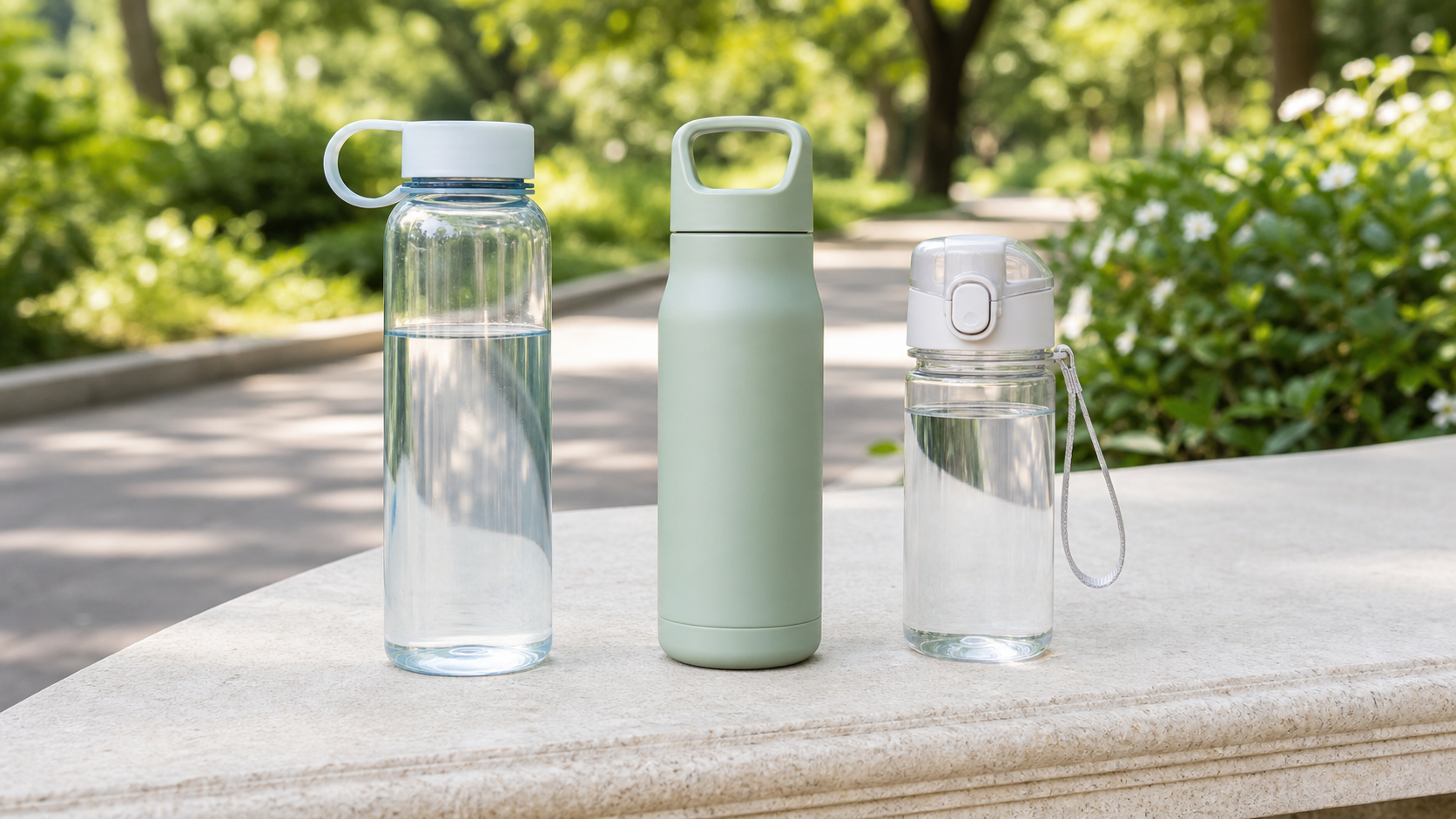
When a bottle stays in your hand for an entire walk, empty weight, grip, and lid shape matter more than insulation hype. The best fit is a simple bottle whose filled weight and carry point feel manageable for your route—not the bottle with the longest feature list.
As an Amazon Associate, GoodWeighFinds earns from qualifying purchases.
Who this guide is for
This guide is for adults who take short or moderate walks without a backpack, vest, or bottle belt and want a reusable bottle that is less cumbersome to carry. It focuses on non-insulated plastic and similar low-weight formats; insulation-led bottles are covered in our walking bottle guide.
A bottle can make carrying a drink more convenient, but it does not improve walking performance or cause weight loss. For other low-pressure walking and meal-planning tools, use the routine-support tools pillar.
Best-fit formats, not unsupported winners
- Best fit for lowest empty weight: A simple, single-wall bottle with a plain screw lid and published product weight.
- Best fit for a relaxed finger carry: A broad rigid loop with enough clearance for the intended fingers, checked against measurements rather than photos.
- Best fit for a smaller filled load: A compact bottle whose capacity suits the route and refill access.
- Best fit for quick drinking stops: A secured flip or chug lid that can be opened comfortably and positively locked before walking again.
- Best fit when drops are likely: A wrist loop sized for the user, provided it does not interfere with opening, washing, or safe movement.
Selection criteria that matter
- Empty weight: Look for a stated product weight and check whether it includes the lid and strap. “Lightweight” is not a standardized measurement.
- Filled weight: Water adds roughly one kilogram per liter, so capacity often affects hand comfort more than a small difference between empty bottles. Compare candidates at the amount you expect to carry.
- Capacity: Choose around the route, weather, refill options, and your own established needs. Avoid marketing that turns bottle size into a universal hydration target.
- Handle clearance: Check the inside length, width, thickness, edge shape, and whether the handle rotates or stays fixed. Listing photos rarely establish a comfortable fit.
- Bottle grip: Compare body diameter, surface texture, condensation, and whether squeezing the bottle can force liquid toward the lid.
- Lid security: Treat “leakproof” as a claim to verify. Check the locking sequence, gasket position, carrying instructions, and exclusions for hot or carbonated drinks.
- One-hand use: A flip lid can be convenient at a stop, but extra hinges and locks add cleaning steps. Do not operate a fiddly lid while crossing streets or navigating uneven ground.
- Materials and limits: Follow the exact maker’s instructions for beverage temperature, freezing, dishwasher use, and replacement intervals. Do not infer material details from appearance.
- Cleaning: Count lid channels, seals, valves, and strap attachment points. Every wet surface should be reachable and able to dry.
- Replacement parts: Check whether the exact cap, gasket, or strap is identifiable and currently sold separately.
- Return terms: Handle comfort is personal. A realistic return window matters when dimensions do not settle the fit.
A practical comparison framework
Use the same small scorecard for each candidate rather than comparing seller adjectives:
- Stated empty weight, including lid and carry hardware
- Expected filled weight at the amount normally carried
- Capacity and refill plan for the usual route
- Handle opening measurements, edge shape, and finger clearance
- Body diameter, texture, and grip with damp hands
- Lid closing sequence, lock, gasket, and carry instructions
- Number of parts and whether every surface is reachable
- Component-specific care directions
- Exact replacement-cap or gasket availability
- Seller, warranty, and return window
If weight or handle measurements are missing, mark them unclear instead of guessing from photos. A kitchen scale can check empty and filled weight after purchase while the bottle remains returnable.
Lightweight or insulated?
Single-wall bottles are usually lighter and make the water level easier to see, but they do not keep drinks cold like vacuum-insulated designs and may collect condensation. Insulated bottles add convenience in warm conditions but also add empty weight and often have wider bodies. Neither format is universally better; choose the tradeoff that removes the most friction from the walks you actually take.
If cleaning is the reason an existing bottle stays unused, compare lid parts and opening access in the wide-mouth bottle guide before replacing it.
Who should skip this purchase
Skip a new bottle if the one you own becomes comfortable with less liquid, a compatible strap, or a different route plan. Skip hand-carrying when it changes your balance, irritates your hand or wrist, distracts you near traffic, or makes a mobility aid harder to use. A belt, small pack, planned refill stop, or leaving the bottle behind on a brief route may fit better.
Skip listings that omit product weight, material, care instructions, lid details, or return terms. Also skip complicated lids if you already avoid disassembling gaskets and valves. Persistent pain, numbness, weakness, or swelling while carrying is not a bottle-shopping problem; a qualified healthcare professional can help assess it.
Claims and limits to keep straight
A lighter bottle may reduce the amount of equipment carried, and a suitable handle may feel more convenient. That does not establish better hydration, longer walks, improved fitness, appetite control, or weight loss. Treat those outcomes as unsupported when a bottle listing implies them.
Bottom line
Start with verified empty and filled weight, then compare handle clearance, body grip, capacity, lid security, cleaning, and replacement parts. The strongest choice is the simplest bottle you can carry comfortably and maintain—without paying for insulation or features you do not need.