Lunch bag repair-fit guide
Best Lunch Bag Replacement Shoulder Straps and Handles
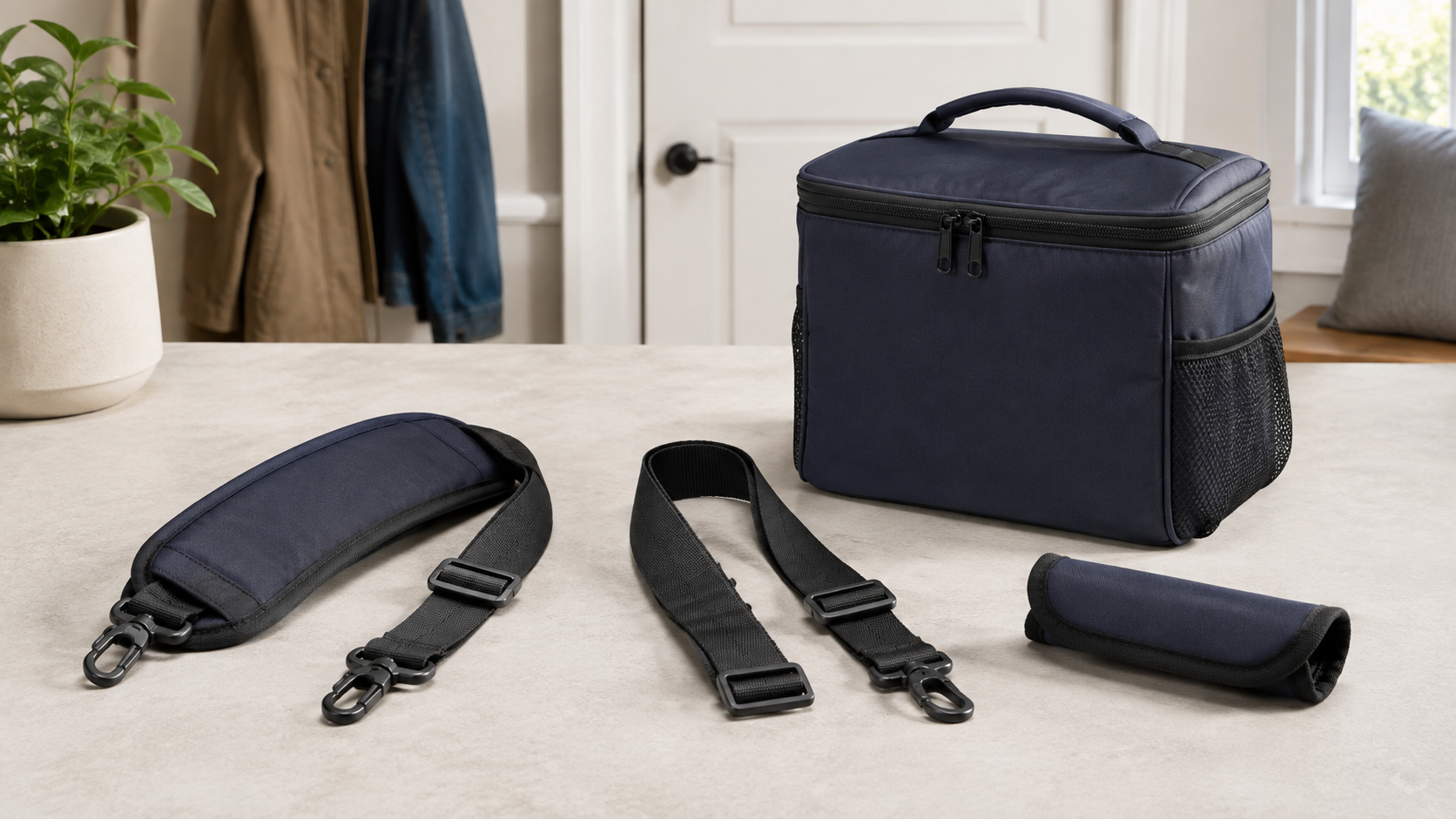
A replacement strap can keep an otherwise useful lunch bag in service, but “universal” is not a measurement. Start with the bag’s intact attachment points, then compare clip clearance, adjusted length, strap width, padding, and any stated load guidance.
As an Amazon Associate, GoodWeighFinds earns from qualifying purchases.
Who this guide is for
This guide is for adults whose lunch or meal-prep bag is still usable but has a missing, worn, or uncomfortable detachable strap or grip. It covers clip-on shoulder straps, simple webbing straps, and wrap-around handle pads. It does not cover repairing torn fabric, broken zippers, damaged insulation, or failed anchor loops.
If the whole carrier needs replacing, use the lunch bag buying guide. If capacity and commute comfort are the real decision, compare a lunch bag with a meal-prep backpack. This guide maps to the broader routine-support tools guide.
Useful formats—not unsupported winners
- Padded adjustable shoulder straps: Padding can spread pressure and adjustment can suit different carry heights, but thicker pads and larger clips add bulk.
- Plain webbing straps: These are usually slimmer and easier to store, but a narrow strap may feel less comfortable with a loaded bag.
- Wrap-around handle grips: A hook-and-loop wrap can join two intact handles or cover a rough grip, but it cannot restore a torn handle or anchor.
- Bag-specific replacement parts: A part named for the exact bag model may reduce guesswork, but verify the model number and current manufacturer guidance rather than trusting title keywords alone.
Selection criteria that matter
- Attachment-point condition: Inspect both rings, loops, or tabs. A new strap is only sensible when the bag-side anchors and surrounding seams are intact.
- Clip opening and clearance: Measure the anchor’s thickness and width, then compare them with the clip gate opening and inside space. A clip can open wide enough yet bind after attachment.
- Hardware orientation: Swivel clips may reduce twisting, while fixed clips may sit awkwardly on anchors facing the wrong direction. Check how the loaded bag will hang.
- Adjusted length: Compare the stated minimum and maximum length with a comfortable strap you already own. Include the clips in the full end-to-end measurement.
- Strap width and pad position: Check whether the pad can sit on the shoulder at the needed length and whether buckles or seams land in a high-pressure spot.
- Handle-wrap fit: Measure the combined circumference of the handles. Confirm the wrap’s usable closure area, not merely its outside dimensions.
- Load guidance: Look for manufacturer guidance tied to the complete strap and hardware. Do not treat a claim about metal strength as a safe load for the bag’s fabric anchors.
- Materials and care: Verify webbing, padding, hardware finish, cleaning directions, and drying instructions—especially for parts exposed to spills or condensation.
- Returns: Because small hardware differences decide compatibility, check the seller identity and current return terms before ordering.
A practical comparison framework
Mark each candidate yes, no, or unclear:
- Are both attachment points and their seams intact?
- Are clip gate opening and inner dimensions stated?
- Will the clips sit freely without pinching the bag fabric?
- Does the full adjusted range suit the intended carry height?
- Is the strap wide enough, and does the pad land in the right place?
- Are load statements for the complete assembly clearly explained?
- Are materials, cleaning, and drying directions available?
- Would professional repair or replacing the bag be safer or more economical?
Compatibility and claim limits
“Universal,” “heavy duty,” and “comfortable” are seller or manufacturer descriptions, not proof of fit. Compatibility depends on the bag’s anchor shape, the clip’s real dimensions, the strap adjustment, and the condition of every connection. A replacement strap does not increase the safe capacity of the lunch bag.
Before routine use, attach the strap to an empty bag and check that both gates close fully. Add the normal contents while the bag is supported over a low surface, then look for slipping, twisting, opening clips, strained seams, or damaged anchors. Stop using any part that bends, cracks, opens unexpectedly, frays, or pulls at the bag fabric.
Who should skip this purchase
Skip a replacement strap when the bag lacks attachment rings, the anchors or surrounding seams are torn, the insulation or lining is damaged, or the listing omits clip and length measurements. Also skip handbag straps chosen only for appearance when their hardware and intended load are unclear.
A handle wrap is not a structural repair. If a sewn handle or anchor is separating from the bag, use a qualified repair service if the bag is worth repairing, or replace the carrier. If a basic tote already carries the load comfortably and keeps the lunch upright, an extra strap may add clutter without solving a real problem.
Bottom line
The best-fit replacement is the simplest strap or handle wrap that matches intact bag hardware by measurement, reaches the needed carry length, has understandable material and care details, and stays within the bag maker’s guidance. Skip vague universal-fit claims and any accessory that tries to cover structural damage.