Fridge-side grocery capture guide
Best Magnetic Notepads for Fridge Grocery Lists
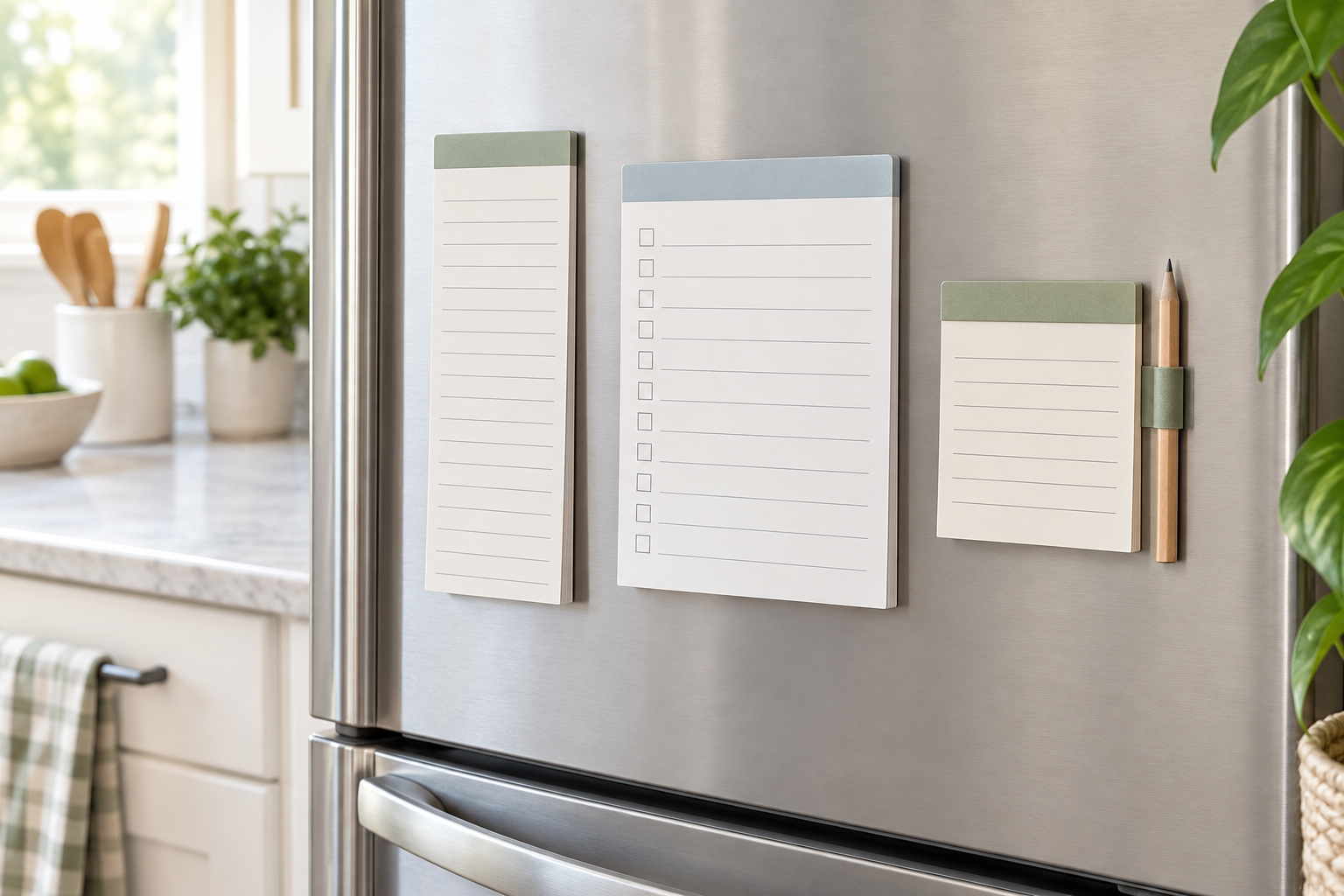
A magnetic paper pad can keep grocery capture visible and let the finished list travel to the store without copying. The best fit is not the pad with the most decorative sections; it is the one that stays on the intended surface, leaves enough room for the household's usual list, tears off cleanly, and has a refill cost you accept.
As an Amazon Associate, GoodWeighFinds earns from qualifying purchases.
Who this guide is for
This guide is for adults who want an always-visible paper capture point on a refrigerator and normally carry the same sheet while shopping. It covers disposable magnetic notepads, not dry-erase boards, phone apps, meal-planning notebooks, or portable pads that live in a bag or drawer.
If you are still choosing between paper handoff and a reusable shared surface, start with magnetic fridge notepad versus dry-erase board. For a broader view of routine tools, use the non-shaming habit-tracking pillar.
Best-fit formats, not universal winners
- Short running list: A narrow lined pad that uses little door space and tears off at the top.
- Larger grouped shop: A wider checklist or divided layout, provided its sections match how the household shops.
- Writing tool kept nearby: A pad with a usable pencil loop that does not obstruct writing or door clearance.
- Occasional list: No new pad. Keep an ordinary paper sheet where groceries are normally noticed.
Start with the complete surface test
Confirm that the intended refrigerator panel holds a magnet; some stainless-steel finishes and nonmetal panels do not. Measure a flat area away from handles, displays, trim, door edges, and the sweep of an adjacent door. A pad that attaches in one product photo is not proof that it suits every appliance surface.
Check the loaded setup rather than only the backing. A thick pad, attached pencil, or decorative header may rub a cabinet or catch a hand when the door opens. Follow the appliance maker's surface-care guidance, especially if a listing uses adhesive as well as magnets.
Selection criteria that matter
- Usable writing area: Subtract titles and decorative sections, then compare what remains with a typical week's entries.
- Magnet coverage: Look for clear backing images or dimensions. A small magnet may let the lower pad lift during writing; full backing can still vary in grip.
- Writing support: Decide whether the pad must stay mounted during one-handed writing. Holding it against the door adds friction.
- Tear-off design: Check the binding and perforation and whether a full list comes away without removing the pad. “Clean tear” is a claim to verify.
- Layout: Narrow lines fit more entries but may be cramped. Printed categories help only when they match your stores and list order.
- Paper and tool: Verify the recommended pen or pencil and whether ink shows through. An included pencil helps only if its holder is accessible.
- Sheets and replacements: Use current listing details to compare sheet count and whether the backing accepts refills or must be replaced.
- Readability: Check contrast, writing height, and placement so the pad does not require awkward reaching or tiny handwriting.
- Seller and returns: Confirm current terms because magnet grip, paper feel, and tear behavior cannot be proven by listing copy.
A no-buy test before ordering
Magnet an ordinary sheet at the proposed location for one shopping cycle, using a method appropriate for the surface. Record groceries, carry the sheet to the store, and note the actual friction: too few lines, no pencil, poor visibility, awkward reach, or an incompatible surface.
If the test works, you have useful dimensions and layout requirements. If no one uses it, a specialized pad is unlikely to fix the placement or handoff by itself. A phone list, portable pad, or existing dry-erase board may be simpler.
Paper, refill, and cleanup tradeoffs
A disposable pad makes store handoff direct, but every trip consumes a sheet and a replacement pad may add another magnetic backing. A refillable holder reduces repeated hardware only when compatible paper remains available. Check whether proprietary refills are required and whether ordinary pads block the magnet.
Keep magnets and small writing accessories away from children and follow product and appliance warnings. Do not cover controls, ventilation, safety information, or door seals.
Who should skip this purchase
Skip a magnetic pad when the refrigerator surface is incompatible, the list must be shared remotely, groceries are usually added away from the kitchen, or an existing workflow already reaches the store. Also skip listings that hide the dimensions, backing, usable layout, or replacement details.
Choose a reusable board when the list normally stays home. Choose a portable pad when the list needs to live in a bag rather than remain on the fridge.
Claims and limits
A magnetic notepad can provide a visible place to capture and carry a list. It does not guarantee household use, reduce food waste, improve nutrition, change eating habits, or cause weight loss. Treat “strong magnet,” “premium paper,” “smudge-free,” and “easy tear” as exact-product claims to verify rather than category facts.
Bottom line
The best magnetic fridge notepad fits a confirmed magnetic surface, offers enough usable writing space, supports writing while mounted, tears off as needed, and has acceptable replacement requirements. Test the location, measure a real list, and skip the purchase if ordinary paper or a shared digital list already handles the handoff.