Small-cabinet buying guide
Best Pot-Lid Organizers for Small Kitchen Cabinets
A pot-lid organizer can make cookware lids easier to reach, but only when the slots fit the rims and handles and the loaded rack clears the cabinet. This guide compares practical formats and measurements—not named winners, hands-on tests, or unverified capacity claims.
As an Amazon Associate, GoodWeighFinds earns from qualifying purchases.
Who this guide is for
This guide is for adults whose cookware lids already fit their pots but are awkward to stack, retrieve, or store in a small cabinet. It covers cookware lids—not the flexible lids used on food-storage containers. For those, use the meal-prep container lid organizer guide.
This page supports the broader routine-support tools guide. A lid rack is storage hardware; it does not change food quality, nutrition, or weight-loss outcomes.
Best-fit formats, not unsupported rankings
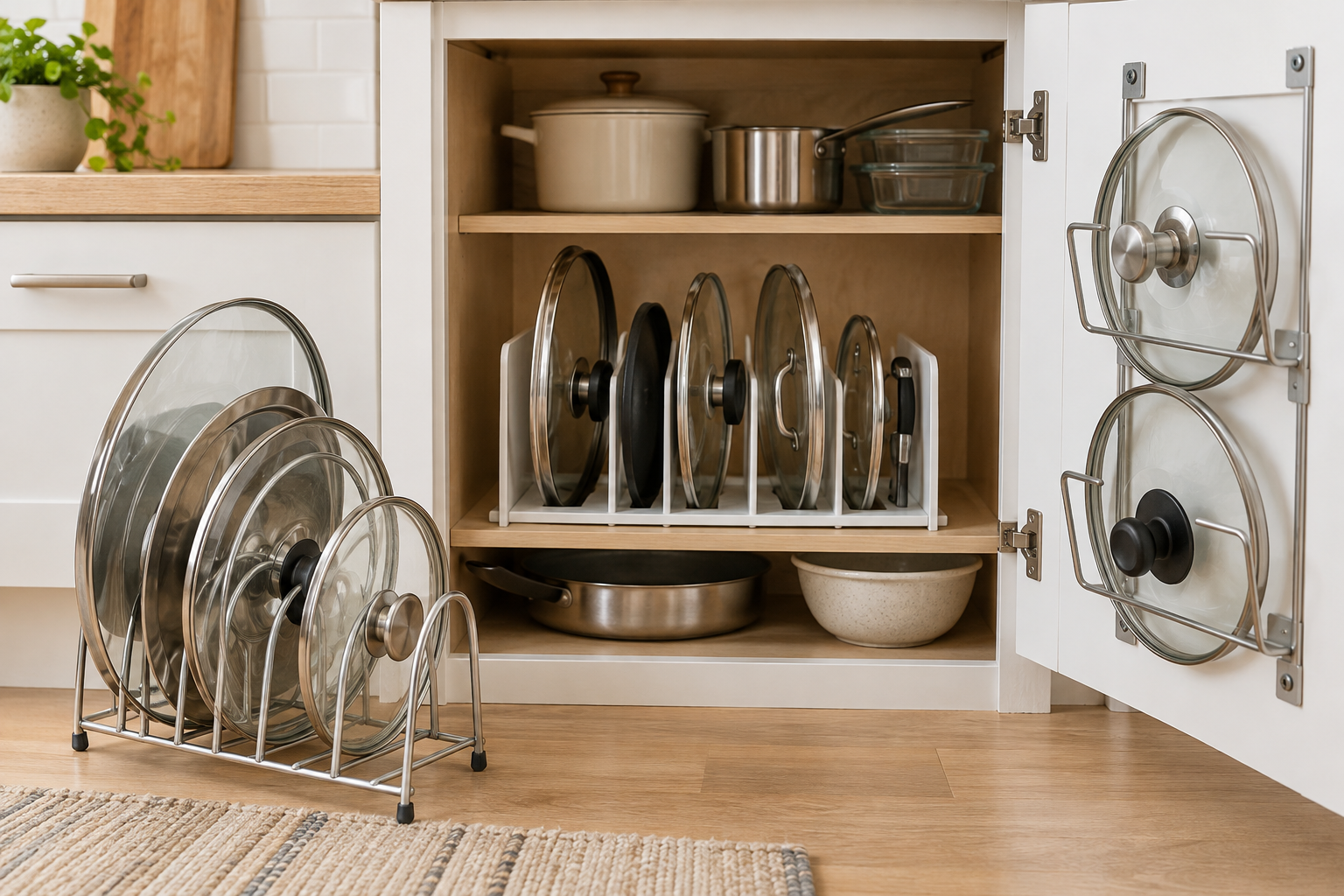
- Freestanding wire rack: A low-commitment option for a shelf or deep drawer when its fixed slots fit the lid rims and knobs.
- Adjustable-divider rack: Useful for mixed lid diameters and handle profiles when the divider positions and locked footprint are documented.
- Cabinet-door holder: Moves lids off the shelf but adds mounting, hinge, door-closing, shelf-edge, and loaded-clearance questions.
- Wall-mounted rail or rack: Can keep lids visible when the permitted mounting surface, fasteners, and loaded path are known.
- Vertical pan-and-lid rack: May combine cookware storage, but wider slots and heavier loads can take more cabinet space than a lid-only solution.
Measure every lid and the cabinet first
List the diameter, rim thickness, total depth, and handle shape of every lid that needs a place. Include loop handles, tall knobs, steam vents, silicone rims, and any edge that makes the lid wider than the glass or metal center. The narrowest slot has to accept the thickest part that actually passes through it.
Then measure the cabinet opening, interior width and depth, usable shelf height, hinge sweep, door hardware, and the angle needed to lift each lid out. For a door-mounted organizer, close the door slowly with a temporary cardboard outline at the proposed loaded depth; do not attach weight or hardware for this fit test.
Selection criteria that matter
- Slot geometry: Compare the narrowest clear width, divider height, and spacing with the real rim and handle profile—not a generic lid diameter.
- Loaded footprint: Add the largest lid’s overhang and handle projection to the rack’s listed exterior dimensions.
- Removal path: Confirm each lid can tilt or lift free without unloading the rack, striking the shelf above, or catching a hinge.
- Base and load: Keep every foot on a level supported surface. Treat stability and load statements as claims to verify, never guarantees.
- Mounting: Check the allowed surface, required fasteners, pilot-hole instructions, door thickness, stated load, and complete closing clearance.
- Lid contact: Look for obvious sharp edges or narrow pressure points and follow the cookware maker’s storage and care instructions.
- Cleaning access: Prefer a rack that can be emptied and wiped without trapping crumbs, grease, or moisture around feet, joints, or hardware.
- Seller and returns: Re-check the exact item, included parts, assembly instructions, seller identity, and return terms before ordering.
Run a no-buy fit test
Place clean, fully dry lids upright in a stable dish rack or file sorter you already own, only if its slots and base can hold them without forcing or tipping. For several cooking sessions, note whether each lid is visible, removable with one hand, clear of the cabinet opening, and easy to return without rearranging the group.
If the test fails because handles collide, look for adjustable or wider spacing. If it fails because the cabinet opening is too low, a shallow drawer, wall location, or a simple nested stack may be a better answer than another rack.
Who should skip this purchase
Skip a dedicated organizer when two or three lids already nest securely, an existing dish rack passes the fit test, the cabinet cannot provide a stable loaded footprint, or the only workable option requires mounting you cannot verify or are not permitted to do. Also skip a door rack when lids would hit shelves, pans, hinges, or the cabinet frame while closing.
Do not buy around lids that no longer match cookware you use. Confirm the keep list first, then size storage for that smaller set.
Bottom line
The best pot-lid organizer is the simplest format whose documented slots accept your actual rims and handles and whose complete loaded shape clears the cabinet. Measure the lids, opening, shelf, hinges, and removal path; then compare cleaning, mounting, seller terms, and returns. If a stable holder you own passes the same test, keep it.