GoodWeighFinds is for general information only and is not medical advice. Readers should talk with a qualified healthcare professional before starting weight-loss products, supplements, diets, or exercise changes.
Routine-support buying guide
Best Produce Containers for Meal Prep Routines
Produce containers can make washed greens, berries, chopped vegetables, and planned snacks easier to see and use. They do not make a diet medically right for you, guarantee weight loss, or turn produce into a rule. The useful question is whether the container reduces prep friction without creating clutter, spoilage, or pressure.
Who this guide is for
This guide is for adults who already buy or prep produce and want storage that makes planned food easier to rinse, dry, find, and use. It is a kitchen-tool comparison, not a nutrition plan or a promise that eating from a certain container changes body weight.
For the broader decision, start with the routine-support tools guide. If your main problem is organizing the whole refrigerator, the fridge organizer guide is a better first stop. If you are comparing full meal containers, use the meal prep container guide.
Best fit categories, not product rankings
GoodWeighFinds has not tested specific produce containers hands-on for this page, and this is not a ranked product review. Use these best-fit categories to compare listings while ignoring weight-loss promises, idealized refrigerator photos, and claims that a storage bin can fix meal planning by itself.
- Best for washed greens: Larger clear containers with a removable drain tray or basket, enough headroom, and a lid that does not crush leaves.
- Best for berries: Smaller vented containers that make rinsing and draining easy without hiding the fruit in an opaque box.
- Best for chopped vegetables: Stackable containers with visible contents, practical date labels, and shapes that fit normal fridge shelves.
- Best for snack prep: Compact containers that are easy to grab, clean, and refill without turning snacks into strict portion-control rules.
- Best for mixed produce weeks: Modular sets with a few sizes rather than a giant kit that only looks good in a product photo.
Selection criteria that actually matter
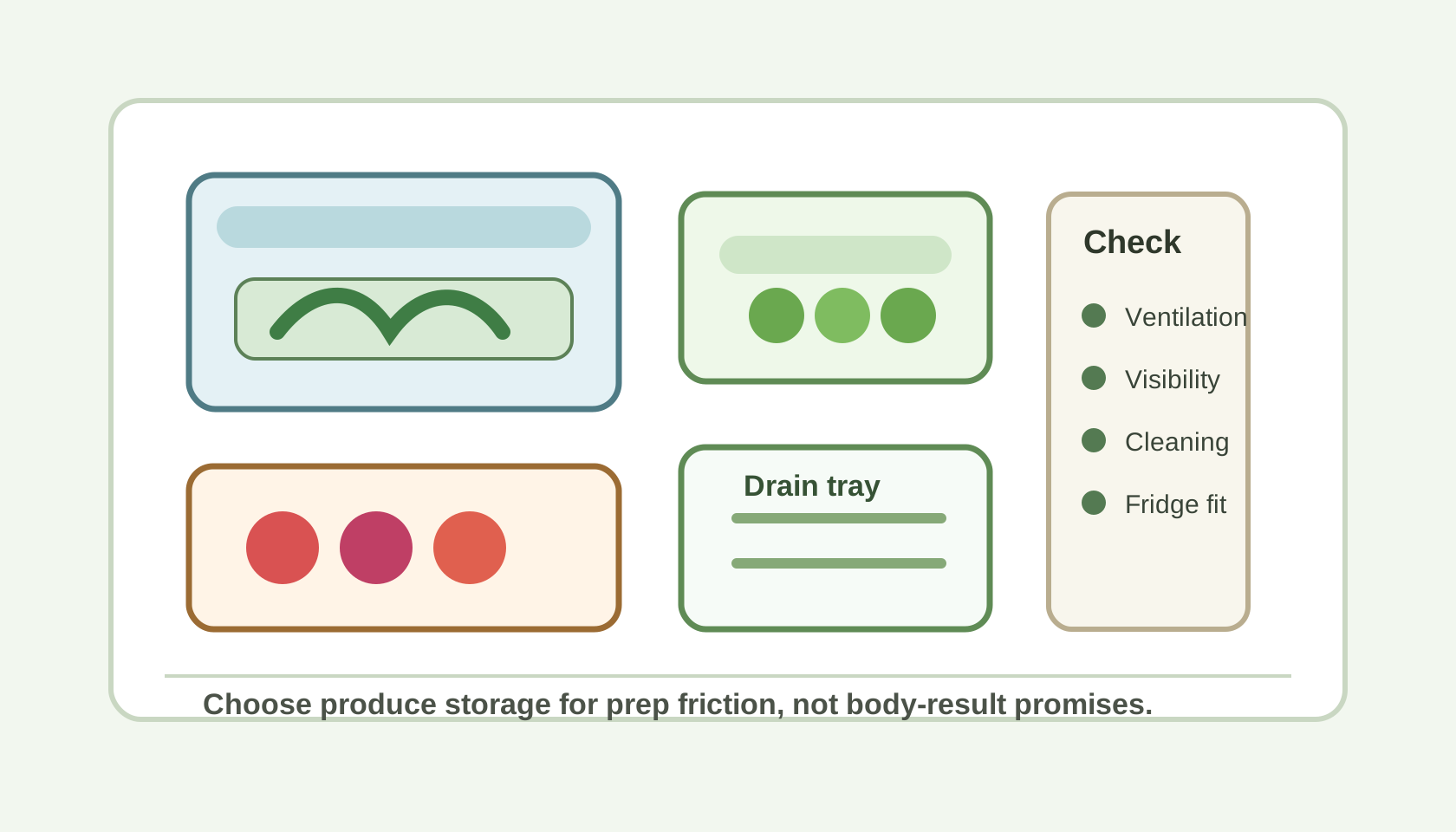
Produce storage is about moisture, airflow, visibility, cleaning, and fridge fit. A listing that skips those details is less useful than one that clearly explains how the container is meant to be used and cleaned.
- Ventilation design: Adjustable vents can be useful, but the listing should explain them clearly instead of promising freshness for a fixed number of days.
- Drain tray or colander insert: Removable trays can keep food from sitting in water, but they also add parts to wash and store.
- Clear sides: Visibility matters because hidden produce is easier to forget, especially in a crowded fridge.
- Fridge footprint: Check dimensions against your shelf height and drawer space before buying a large set.
- Cleaning friction: Vents, baskets, seals, and corners should be easy enough to clean that the container will not sit unused.
- Labeling surface: Smooth lids or sides make date labels easier, especially when several people use the fridge.
- Care instructions: Look for manufacturer guidance on dishwasher use, lid care, freezer limits, and microwave restrictions if those matter to your routine.
Comparison framework
Before buying a produce container set, picture a normal grocery week instead of a perfectly staged fridge. The right container should make one real workflow easier: wash, dry, store, see, use, clean, and repeat.
- Which produce do you actually prep ahead: greens, berries, carrots, peppers, herbs, grapes, or mixed leftovers?
- Will the container fit your fridge when it is full, stacked, and sharing space with other food?
- Can you see the contents and date without opening the lid?
- Does the container solve a specific problem, or is it just replacing bins you already own?
- Are the vents, trays, baskets, and seals simple enough to wash after a busy week?
- Would the set still be worth buying if it had no effect on body weight at all?
Freshness claims need careful reading
Some produce container listings promise longer freshness windows. Treat those claims as manufacturer-provided marketing unless the seller gives clear, relevant evidence and use conditions. Actual storage life depends on produce type, ripeness, washing and drying, fridge temperature, moisture, airflow, handling, and how quickly the food is used.
A container may help reduce waste if it makes produce easier to see and store well, but it cannot make food safe by itself. Use current food-safety guidance for washing, storage, spoilage, and higher-risk situations instead of relying on a seller's shortcut claims.
Weight-loss claim red flags
Produce containers are routine-support tools. They should not be sold as fat-loss devices, appetite-control systems, detox tools, or proof that a strict meal plan is right for everyone. Pause when a product page uses before-and-after language, shame-based food rules, "no excuses" framing, or promises that organized produce will make weight loss automatic.
Also be cautious with bundles or listings that drift into supplements, detox products, stimulant products, appetite-suppression language, patches, or GLP-1 alternative claims. Those categories require warning-first review and should not be treated as ordinary kitchen storage purchases.
When another tool is a better fit
If your main issue is that leftovers get lost, clear bins and labels may matter more than produce-specific vents. If you batch cook full meals, freezer containers or meal prep containers may be more useful. If you already prep produce successfully with a salad spinner, towels, jars, or basic containers, a specialty set may not add much.
The most useful purchase is the one that removes a real bottleneck. More containers can create more washing, more lid clutter, and more pressure to maintain a perfect fridge.
Who should skip this purchase
Skip produce containers if your current storage works, if the set would crowd your fridge, if the cleaning steps feel unrealistic, or if the purchase is mostly driven by a product photo rather than a real storage problem.
Also skip tools that make food planning feel punitive, obsessive, or tied to unsafe restriction. If meal planning, food rules, or weight-loss routines are connected to anxiety, guilt, medical nutrition questions, medication concerns, or a history of disordered eating, a qualified healthcare professional, registered dietitian, or mental health professional with eating-concern experience is a better next step than another product.
Bottom line
The best produce containers for meal prep routines are clear, cleanable, correctly sized, and honest about their limits. Buy for ventilation, drain trays, visibility, fridge fit, and low-friction reuse. Do not buy a produce bin because it promises weight-loss results.