Commuter lunch buying guide
Best Reusable Sandwich Boxes for Commuter Lunches
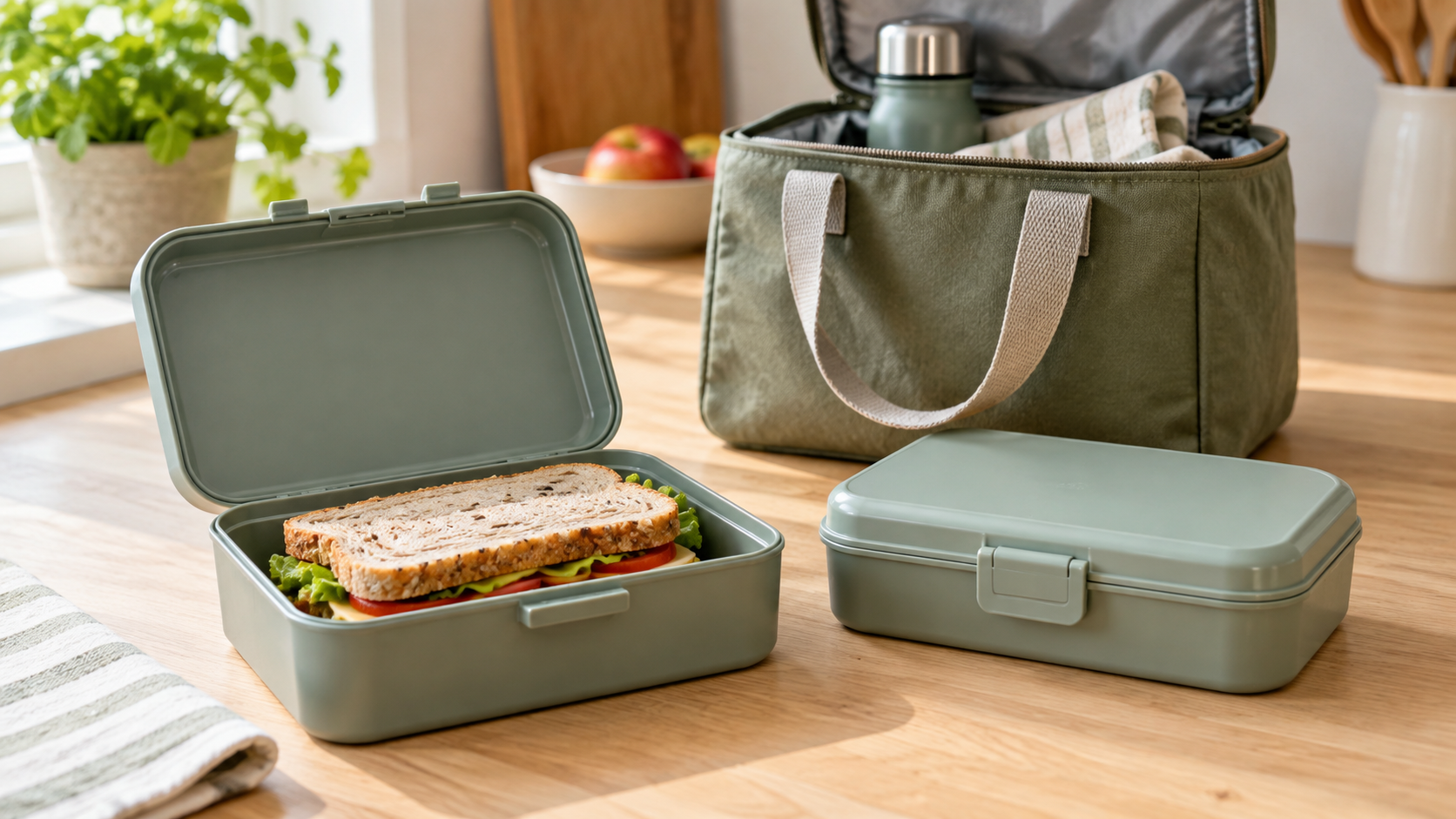
A rigid sandwich box can protect a simple packed lunch without the compartments and bulk of a full bento. The best fit is not a named winner: it is a washable box whose measured interior suits your usual bread, whose exterior fits your lunch bag, and whose closure and hinge match how often you will use it.
As an Amazon Associate, GoodWeighFinds earns from qualifying purchases.
Start with the sandwich, not the box
Measure the width, length, and typical finished height of the sandwiches you actually pack. Include thicker bread, fillings, and any reusable wrap you expect to leave around the food. Compare those measurements with listed interior dimensions; exterior measurements alone cannot show usable food space.
A box that is too shallow can compress a sandwich before the commute begins. One that is much larger can let it shift and consume unnecessary bag space. Product photos are poor scale references, so skip listings that omit the dimensions needed for this check.
Check the whole bag fit
Measure the lunch bag's usable interior after accounting for an ice pack, bottle, fruit, utensils, and seams that narrow the base. Make a paper rectangle matching the box's listed exterior footprint and a folded strip matching its height. Test whether the layout closes without forcing the zipper or pressing the box against other items.
A thin clamshell can suit a flat tote, while a deeper box may stack better in a tall bag. Neither layout guarantees protection; the surrounding load and exact construction still matter.
Compare closure and hinge formats
| Format | Potential advantage | Check before buying |
|---|---|---|
| Hinged clamshell | Lid stays attached during packing | Hinge flex, opening clearance, latch alignment, and cleaning around the fold |
| Separate fitted lid | Lid and base can be washed separately | Usable depth, nesting dimensions, corner access, and replacement options |
| Single front latch | One obvious closing point | Positive closure wording and whether the latch crowds the bag |
| Tabs on several sides | Several closure points | Added exterior width, finger effort, seals, and wash access |
Do not turn closure into a leak promise
A sandwich box is not automatically suitable for loose dressing, soup, cut fruit that releases liquid, or another wet food. “Snap,” “locking,” and a visible gasket do not by themselves establish leak resistance. Use only the exact maker's intended-use and closure language, and pack wet components in a container designed for that job.
Likewise, a rigid shell may reduce direct pressure on a sandwich, but it cannot guarantee that food will not be crushed. Check construction, load placement, and how the packed bag is handled.
Read material and temperature labels literally
Verify the exact material statement and maker directions for food contact, refrigerator, freezer, microwave, and dishwasher use. One permitted use does not imply the others. If reheating is part of the routine, confirm directions for the lid and base separately and consider whether transferring food is simpler.
This guide does not set food-storage times or temperature rules. Follow applicable public-health guidance for packing and holding perishable foods, and use an insulated bag or cold source only according to current directions.
Audit washing and drying
Look closely at corners, latch joints, hinge folds, rims, and removable seals. Each area should be reachable under the stated cleaning method. A one-piece hinge can eliminate a loose lid but may create a narrow fold; a gasket adds another part that needs removal only if the maker instructs it.
Plan where the box can remain open and fully dry before storage. Nesting claims should show the complete closed or separated stack, not just several bases placed together.
Who should skip a sandwich box?
- Keep using a container you own when the sandwich fits, arrives in acceptable condition, and the container is easy to clean and carry.
- Choose a wrap or reusable snack bag when bag space matters more than rigid structure and the food does not need protection.
- Choose a compartment container when foods must stay separated; use the bento box versus sandwich box comparison to make that format decision.
- Skip any listing that omits usable dimensions, material information, intended uses, or care directions.
- Skip designs whose latches, hinges, or small removable pieces add more daily friction than the box solves.
Keep the product claim modest
A sandwich box can organize and carry lunch; it does not cause weight loss, set an appropriate portion, improve nutrition, or make a commute safer. For wider container and routine-fit criteria, use the routine-support tools guide. If the real need is a complete temperature-managed carry system, compare insulated lunch bags separately.
Bottom line
Choose a reusable sandwich box only after matching its interior to the sandwich and its exterior to a realistically packed commuter bag. Favor complete dimensions, explicit material and use labels, a closure you can operate consistently, reachable wash surfaces, a workable drying position, and clear seller and return terms. A basic container you already own is better when it passes those same checks.