Narrow-cabinet buying guide
Best Sheet-Pan Organizers for Narrow Cabinets
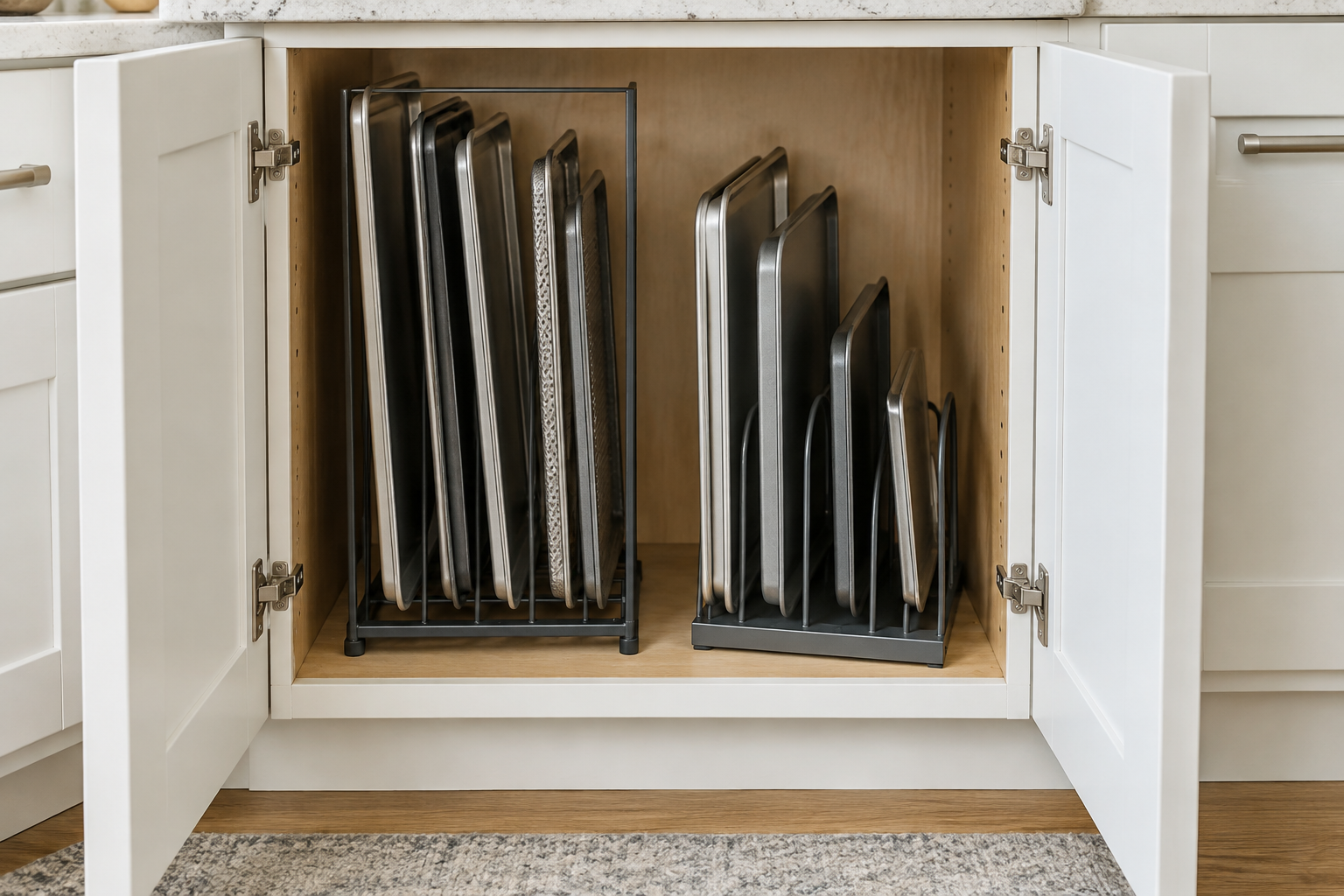
Upright storage can make a sheet pan easier to pull out without unstacking every pan and cooling rack, but the organizer must fit the bakeware and the cabinet as one loaded unit. This guide compares formats and measurements—not named winners, hands-on tests, or unverified load claims.
As an Amazon Associate, GoodWeighFinds earns from qualifying purchases.
Who this guide is for
This guide is for adults who already use sheet pans, rimmed baking sheets, or flat cooling racks and want to store them vertically in a narrow cabinet or pantry section. It is about storage between uses. For tools that divide food on a pan during cooking, see the separate sheet-pan divider guide.
This page supports the broader routine-support tools guide. An organizer may change access to equipment; it does not change nutrition, cooking results, or weight-loss outcomes.
Best-fit formats, not unsupported rankings
- Freestanding fixed-slot rack: A simple option when every pan rim, handle, and rack foot fits the documented spacing.
- Adjustable-divider organizer: Useful for a mixed set when divider positions, locked dimensions, and the complete base footprint are clear.
- Solid divided holder: Can separate thin pieces while hiding crumbs, but the walls may reduce usable slot width and add surfaces to clean.
- Mounted vertical divider: Keeps the base area open but adds fastener, surface, permission, stated-load, and removal questions.
- Pull-out bakeware rack: May improve access in a deep cabinet, but hardware, track clearance, installation, and total pulled-out space require exact verification.
Measure the bakeware as a set
Record each item's length, width, rim height, handle or lip projection, and thickness at the widest point. Include cooling-rack feet, rolled pan rims, grips, and warped edges. A slot must accept the thickest part that passes through it—not just the flat center of a pan.
Next measure the cabinet opening, usable interior width and depth, shelf height, face-frame overlap, hinge sweep, and nearby plumbing or hardware. Add the organizer's exterior dimensions to the tallest and deepest loaded pieces. Confirm there is room to tilt or lift each item free without striking the shelf above.
Selection criteria that matter
- Usable slot width: Compare the narrowest clear opening with real rims, handles, rack feet, and any stacked pair you intend to store together.
- Divider height: A short divider may not guide a tall pan far enough; treat stability as something to evaluate in the exact loaded setup, not a promise.
- Loaded footprint: Count pan and handle overhang beyond the rack's listed base dimensions.
- Access order: Check whether frequently used pans can be removed without shifting heavier or wider pieces.
- Base and surface: Keep every foot on a level, supported shelf and follow the maker's placement and assembly directions.
- Mounting: Verify the allowed surface, fasteners, pilot-hole instructions, cabinet thickness, stated load, and permission before drilling.
- Cleaning: Look for access around slots, feet, welds, tracks, or panels where crumbs and grease can collect.
- Seller and returns: Re-check the exact listing, included pieces, assembly instructions, seller identity, and return terms before ordering.
Run a no-buy fit test
Empty the proposed cabinet section and mark the organizer footprint with removable painter's tape or a cardboard template. Stand clean, dry pans upright in a stable file sorter or rack you already own only when its base and slots accept them without forcing. Do not lean an unsecured group where it can fall out of the cabinet.
For several cooking sessions, note the space the handles occupy, whether the cabinet closes, whether the largest item can clear the opening, and whether returning a pan requires rearranging everything. If upright storage consumes too much width, a shallow horizontal stack with the most-used pan on top may be the better answer.
Who should skip this purchase
Skip a dedicated organizer when two or three flat items already stack neatly, the cabinet is too low for safe removal, the shelf cannot hold the complete base, or a fixed rack would waste more width than it saves. Also skip a mounted or pull-out format when installation instructions, cabinet construction, permission, or full travel clearance cannot be verified.
Do not size new storage around pans or racks you no longer use. Confirm the keep list first, then measure the smaller working set.
Bottom line
The best sheet-pan organizer is the simplest format whose documented slots fit the widest rims and rack feet and whose full loaded shape clears the cabinet. Measure every item, the opening, hinges, shelf, and removal path; then compare installation, cleaning, seller terms, and returns. If a stable holder you already own passes the same test, keep it.