Practical walking-routine buying guide
Best Shoe Bags for Commuters Who Walk Before Work
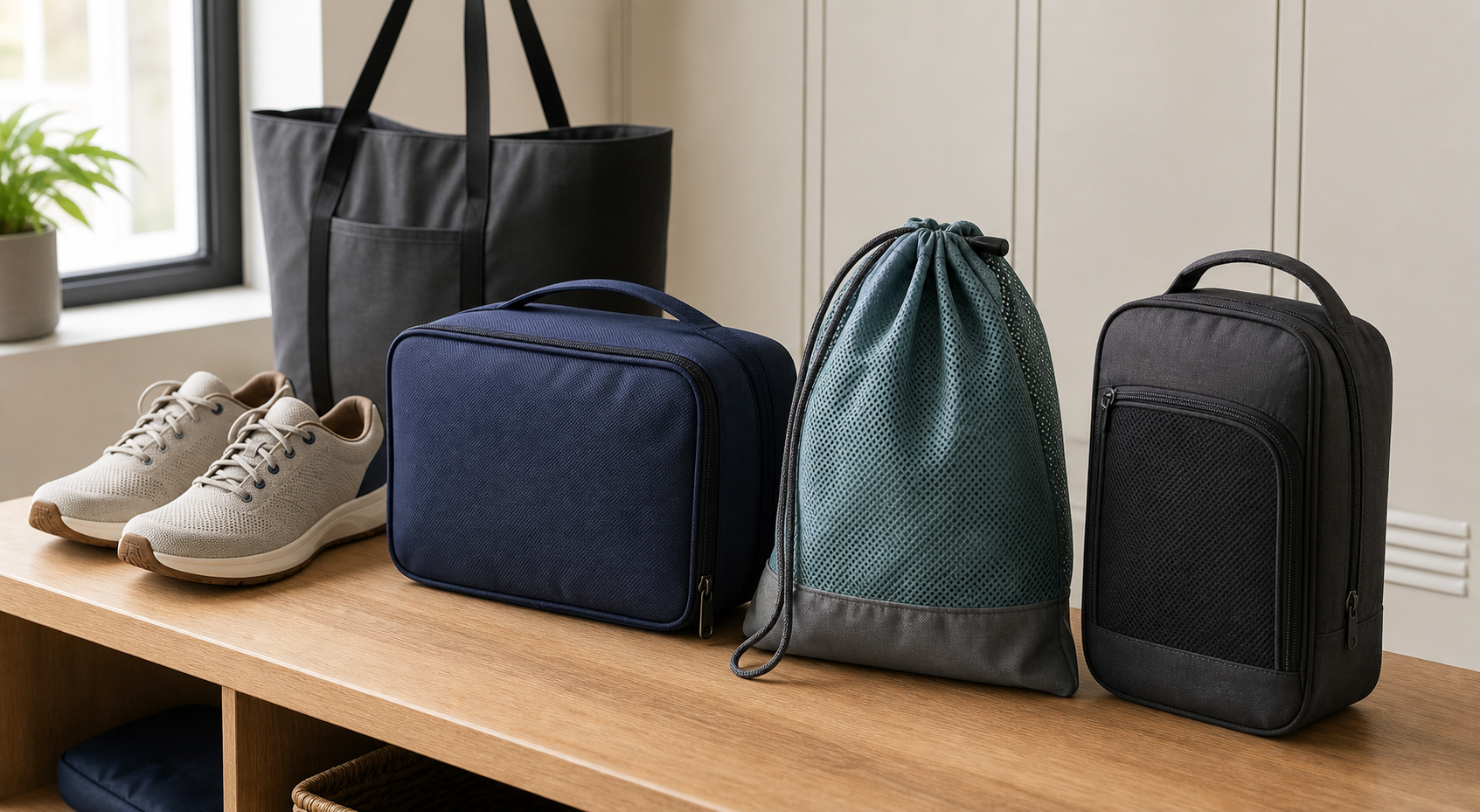
If you change from walking shoes into work shoes, the useful bag is the one that fits the exact pair, contains ordinary dirt, and packs without taking over your commute bag. “Fits most shoes” is not a measurement, and a ventilated panel does not make a closed bag suitable for storing wet footwear all day.
As an Amazon Associate, GoodWeighFinds earns from qualifying purchases.
Who this guide is for
This guide is for adults who walk part of the way to work, change shoes after arriving, or carry a separate pair for the trip home. A shoe bag can keep soles away from a laptop sleeve, lunch container, or clothing; it does not improve shoe fit, prevent injury, or create weight-loss results.
For the footwear decision itself, use our walking-shoe buying guide. For other low-pressure tools that can make a routine easier to repeat, see the routine-support tools pillar.
Best-fit formats, not unsupported rankings
- Best fit for a crowded work tote: A lightweight zip pouch with just enough depth for the exact pair and no bulky exterior pockets.
- Best fit for a backpack or locker: A vertical handled bag that keeps soles together and is easy to lift out without unpacking everything.
- Best fit for shoes that are slightly damp: A bag with meaningful mesh area for the trip, followed by removing and air-drying the shoes promptly at the destination.
- Best fit for nicer clothing: A fully enclosed, easy-to-wipe pouch that separates dry soles from fabric.
- Best fit for occasional travel: A compressible bag with a secure closure and a shape that works in both commuter luggage and a suitcase.
Selection criteria that matter
- Usable interior dimensions: Measure the longest, widest, and tallest points of both shoes together in the way you plan to pack them. Compare those numbers with interior—not exterior—bag dimensions.
- Claimed shoe-size fit: Treat “up to size 13” as a rough claim. Shoe length, sole width, heel height, and upper volume vary widely at the same labeled size.
- Closure: A zipper gives fuller containment but can snag when the bag is overfilled. A drawstring is quick and compressible but may leave a gap around the opening.
- Ventilation: Check the size and position of mesh panels. Small eyelets may offer little airflow once the bag is packed tightly inside another bag.
- Material and care: Look for specific washing or wipe-clean instructions. “Washable” without a method, temperature, or drying direction is incomplete.
- Moisture limits: Water-resistant fabric may slow a small transfer; it does not make a sealed bag a good long-term place for wet shoes. Check seams and zippers as well as the main fabric.
- Carry handle: A handle can help with locker retrieval or carrying the shoe bag separately. Check its attachment and whether it lies flat when packed.
- Empty weight and bulk: A structured case protects shape but consumes space even when empty. A thin pouch packs down but offers less containment and structure.
- Cleaning details: Light-colored linings make dirt easier to see. Dark interiors hide marks but can make it harder to tell when the bag needs cleaning.
- Return terms: Product photos can hide tapered corners and narrow zipper openings. A reasonable return window matters when the actual fit is uncertain.
A simple comparison framework
Pack the shoes as you would for work, measure the bundle, and record these details for each candidate:
- Published interior length, width, and depth
- Zipper opening or drawstring opening width
- Full mesh panel, small vents, or no ventilation
- Fabric, lining, seam, and zipper care instructions
- Handle type and attachment points
- Empty product weight and folded size
- Fit inside your tote, backpack, locker, or suitcase
- Seller identity, return window, and replacement options
Give more weight to measured fit and an explicit care label than to a long list of vague benefits. Customer comments can reveal questions to investigate, but they do not verify fit for your shoes or prove odor, moisture, or durability claims.
Dry, dirty, and wet shoes need different handling
For dry shoes with ordinary street dust, an enclosed wipe-clean pouch may offer the simplest separation. For slightly damp shoes, ventilation can help during a short trip only if air can reach the panel; mesh pressed against the side of a stuffed backpack has limited value. Remove damp footwear when you arrive and follow its care instructions.
A shoe bag is not a substitute for cleaning heavily soiled footwear, managing a soaked pair, or allowing shoes and the bag to dry fully. Avoid storing moisture next to electronics, papers, or food, even when a listing uses “waterproof” language.
Who should skip this purchase
Skip a dedicated shoe bag if a washable tote you already own fits the pair and keeps it sufficiently separate. Skip a structured model if storage space is the main constraint, and skip a thin drawstring sack if you need full containment around dusty soles. If your shoes regularly arrive soaked, solve the drying and packing workflow first rather than relying on a closed pouch.
Also skip any listing that makes strong antimicrobial, odor-elimination, waterproof, or shoe-protection promises without explaining the material, construction, and care limits behind them.
Bottom line
Measure the packed pair first. Then choose between compact containment, meaningful ventilation, and structure based on the commute you actually make. The strongest fit is a bag that closes without strain, can be cleaned as directed, fits your existing luggage, and does not pretend that a small mesh panel solves wet-shoe storage.