Measured-fit work-lunch accessory guide
Best Utensil Pouches for Reusable Work-Lunch Kits
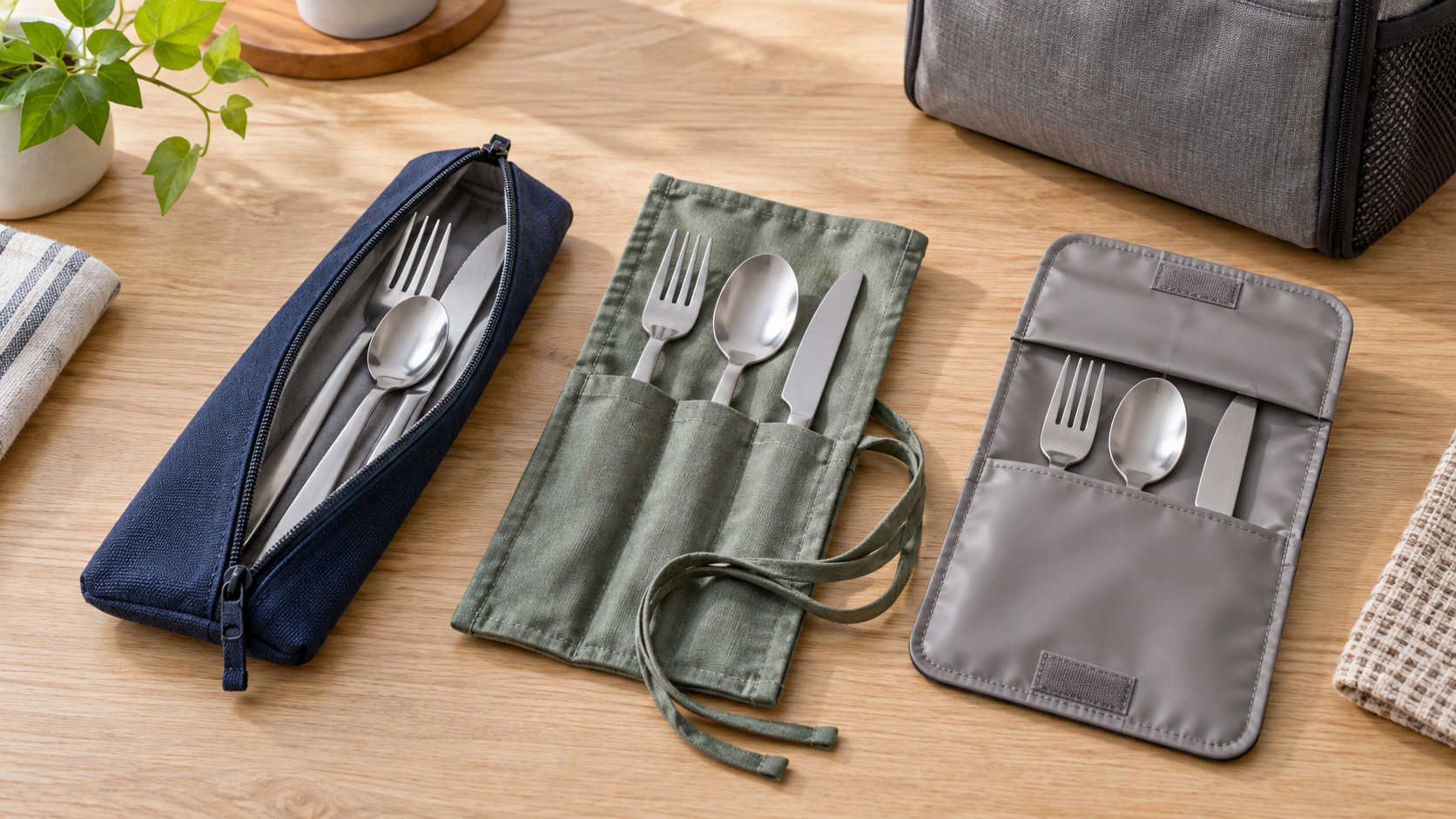
A soft utensil pouch can group the fork, spoon, and blunt table knife you already carry without adding the fixed bulk of a hard case. The best format is the one that fits the longest utensil, closes without strain, fits the loaded lunch bag, and can be washed and fully dried according to its care label.
As an Amazon Associate, GoodWeighFinds earns from qualifying purchases.
Who this guide is for
This guide is for adults who already own ordinary reusable cutlery and want a flexible carrier inside a work-lunch bag. It does not rank utensil sets, disposable cutlery, sharp kitchen knives, or rigid cases.
If you are still choosing between flexible and rigid storage, start with the utensil pouch versus hard-case comparison. For the complete carry setup, use the insulated lunch-bag pillar guide.
Best-fit formats, not named winners
| Format | Useful when | Main tradeoff to check |
|---|---|---|
| Zippered pouch | You want a contained shape and quick open-close access | The zipper, end seams, and lining reduce usable length and add drying areas |
| Roll-up pouch | The utensil mix changes and separate slots help prevent bunching | The open width, tie length, slot depth, and extra fabric can increase the packed footprint |
| Fold-over sleeve | You want a simple, low-profile wrap around a small set | The flap or fastener must stay closed without pressing utensil tips through the material |
| Napkin wrap already owned | You need basic grouping and do not have a spill or protection problem | It may loosen in the bag, but it avoids another specialized item |
Measure the utensils and the whole lunch load
Lay out the exact fork, spoon, and blunt table knife normally carried. Measure the longest piece from end to end and the widest stacked bundle. Compare those figures with the listing's usable interior, not merely its exterior dimensions. Zipper stops, binding, seams, pocket curves, and flap folds can shorten the usable space.
Then place a paper rectangle matching the closed pouch dimensions inside the normally loaded lunch bag. Confirm that it does not press container latches, block the zipper, bend around a bottle, or occupy space needed by a cold pack. A flexible pouch is not automatically compact once filled.
Selection criteria that matter
- Usable length and width: Require enough clearance for the longest utensil without forcing the closure or loading a pointed end against a seam.
- Closure: Check whether a zipper, tie, snap, hook-and-loop patch, or fold stays clear of the utensils and can be operated with the grip and dexterity you have.
- Material disclosure: Look for specific outer and lining materials rather than vague “eco-friendly,” “food safe,” or “premium” wording.
- Cleaning directions: Verify whether the whole pouch is machine washable, hand washable, or wipe-clean only. Follow the exact care label.
- Drying path: Deep pockets, thick binding, covered zipper tape, and layered seams need room to open and dry. A claim such as “quick drying” is not a category fact.
- Inside inspection: A light or fully opening interior makes crumbs, residue, damaged coating, and trapped moisture easier to see.
- Included items: Confirm whether listing photos show cutlery that is included or only staged. This guide assumes you are carrying utensils already owned.
- Empty storage: Check whether the pouch lies flat, rolls, or keeps some thickness when empty.
- Seller and returns: Verify current terms when interior measurements or material details remain unclear.
Run a no-buy test
Wrap the usual clean, dry utensils in a washable napkin or place them in an existing small pouch for several workdays. Note whether they come loose, press against other items, remain damp after cleaning, or create no practical problem at all. Measure the successful bundle and use those dimensions as the minimum for any purchased pouch.
If an existing wrap stays secure and is easy to wash, a dedicated product may add only another closure and care routine. If the problem is pressure from a crowded bag rather than grouping, a soft pouch may not solve it; revisit the soft-versus-rigid decision.
Who should skip an utensil pouch
Skip this purchase if the workplace provides suitable utensils, an existing washable wrap works, the lunch bag has a dedicated pocket, or the carrier would routinely be packed damp. Skip listings that omit internal dimensions, material details, care instructions, or whether pictured utensils are included.
A soft pouch is also a poor fit for sharp kitchen knives or other tools that can puncture fabric. Use only products and carrying methods intended for the exact items, and follow workplace or transit rules.
Claims and evidence limits
A pouch can group utensils and separate them from part of a lunch bag. It does not make unwashed utensils clean, sanitize them, prevent every spill, or guarantee that a lunch stays organized. “Antimicrobial,” “odor proof,” “stain proof,” “leakproof,” and “dishwasher safe” remain claims to check against exact documentation; none is necessary to judge basic fit.
This category supports a packing routine. It does not change nutrition, eating behavior, or body weight.
Bottom line
Choose a soft utensil pouch only after the exact utensils and loaded lunch bag pass a measured-fit test. Prefer a closure you can use easily, clear material and care information, an interior you can inspect, and a shape that opens enough to wash and dry. Keep the napkin wrap or bag pocket you already own when it handles the job with less upkeep.