Routine-support buying guide
Best Walking Backpacks for Carrying Water and Everyday Essentials
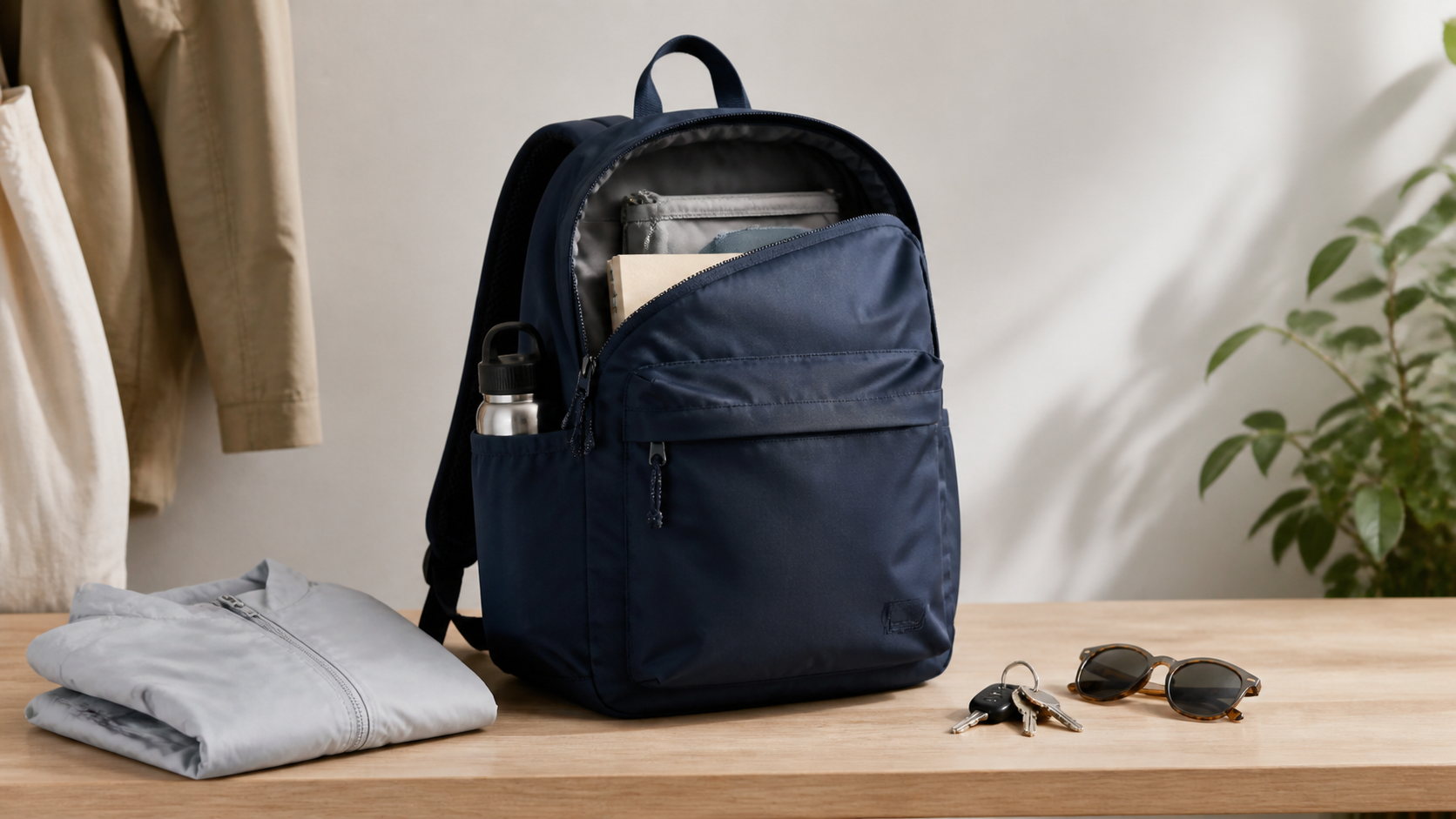
A compact backpack can keep water, keys, a phone, and a light layer together on an everyday walk. The useful choice is not the pack with the longest feature list; it is the one that fits the intended light load, stays reasonably stable, and makes the bottle and essentials easy to reach.
As an Amazon Associate, GoodWeighFinds earns from qualifying purchases.
Who this guide is for
This guide is for adults who want more carry space than a walking belt provides for ordinary, non-technical walks. It focuses on small daypacks for water, keys, a phone, sunglasses, and a light layer—not hiking packs, weighted backpacks, hydration-performance claims, or products that promise calorie burn or weight loss.
For the broader product-checking approach, start with the routine-support tools guide. If only a phone and keys need carrying, compare walking belts. If carrying no pack is the priority, compare lightweight water bottles for walks without a backpack. If the unresolved choice is structure versus compact backup storage, use the walking backpack versus packable daypack comparison before comparing models.
Useful backpack formats—not ranked winners
GoodWeighFinds did not wear-test current packs or verify named-product inventory. These formats describe practical tradeoffs without inventing a universal winner:
- Simple zip daypack: Usually offers an uncomplicated main compartment and familiar straps, but organization and bottle access vary widely.
- Compact pack with two bottle pockets: Can balance a bottle with another light item, provided the pockets actually fit the intended bottle and hold it securely.
- Packable daypack: Stores small between uses, but very light fabric and minimal back structure may let objects press through or shift.
- Small structured backpack: May hold its shape and organize essentials better, although structure adds empty weight and storage bulk.
- Sling-style pack: Can make contents easier to swing forward, but one-shoulder loading and movement may be a poor fit for some walkers.
Selection criteria that matter
- Capacity: List the ordinary load first, then choose enough space for it without using the pack's maximum volume as a target.
- Empty and filled weight: The pack's own weight counts. Estimate the combined load, including a filled bottle, rather than comparing capacity alone.
- Strap adjustment: Check the stated adjustment range, strap width, and whether excess webbing can be secured. Product photos do not prove a comfortable fit.
- Stability: A sternum strap, compression strap, or close-to-body shape may limit shifting, but treat comfort and “no bounce” language as maker claims until personally verified.
- Back panel: Mesh or channels may create some separation, but “breathable” does not guarantee comfort or eliminate sweat.
- Bottle access and retention: Compare the pocket's stated dimensions with the intended bottle, including its full diameter and height.
- Visibility: Reflective details can supplement other visibility choices but do not make a walker visible from every direction or ensure safety.
- Care: Verify whether the complete pack is hand washable, machine washable, or spot clean only.
- Weather wording: “Water-resistant” and “waterproof” are not interchangeable. Protect electronics separately when conditions are uncertain.
- Return terms: Fit is difficult to judge from dimensions alone, so understandable current return terms matter.
A practical comparison framework
Pack the intended essentials together and use that real load to check each candidate. Mark each line yes, no, or unclear:
- Does the listed capacity fit the intended items without substantial unused bulk?
- Is the empty weight stated, and is the filled load manageable for the planned walk?
- Do the strap range and pack dimensions appear compatible with the intended clothing and fit?
- Does the bottle pocket list dimensions or show enough detail to compare with the actual bottle?
- Can keys and a phone stay separate from a bottle and other hard objects?
- Can important items be reached without emptying the main compartment?
- Are reflective features described narrowly, without broad safety promises?
- Are fabric, care instructions, and weather limits clear for the exact model?
- Are the current seller and return terms understandable?
Fit checks before a longer walk
Try the pack with the normal load in a low-stakes setting first. Adjust both shoulder straps evenly, make sure the bottle remains retained during ordinary movement, and check whether hard objects press through the back. Repack or stop using it if the load shifts, interferes with movement, or creates persistent discomfort.
A generic buying guide cannot determine what load or fit is appropriate for someone with pain, balance concerns, mobility limits, recent injury, or another health consideration. In those cases, individual guidance from a qualified professional may be more useful than product features.
Who should skip this purchase
Skip a backpack if pockets in existing clothing, a bottle carried by hand, or a walking belt already handles the actual load. Also skip a new pack when its main appeal is extra capacity that would encourage carrying unnecessary weight.
A compact backpack may be a poor fit for someone who dislikes back contact, cannot comfortably use two shoulder straps, needs instant one-handed access, or needs specialized mobility-compatible carrying. Avoid weighted-walking, sweat-amplifying, posture-correction, calorie-burning, and body-result claims; those are different and more health-adjacent decisions than carrying ordinary essentials.
Bottom line
The best walking backpack is the smallest practical pack that fits the real load, adjusts clearly, retains the intended bottle, and is easy enough to clean and return if the fit is wrong. Compare dimensions and ordinary-use details before technical styling or unsupported performance language.