Everyday errand-carry comparison
Walking Backpack vs Packable Daypack for Errand Walks
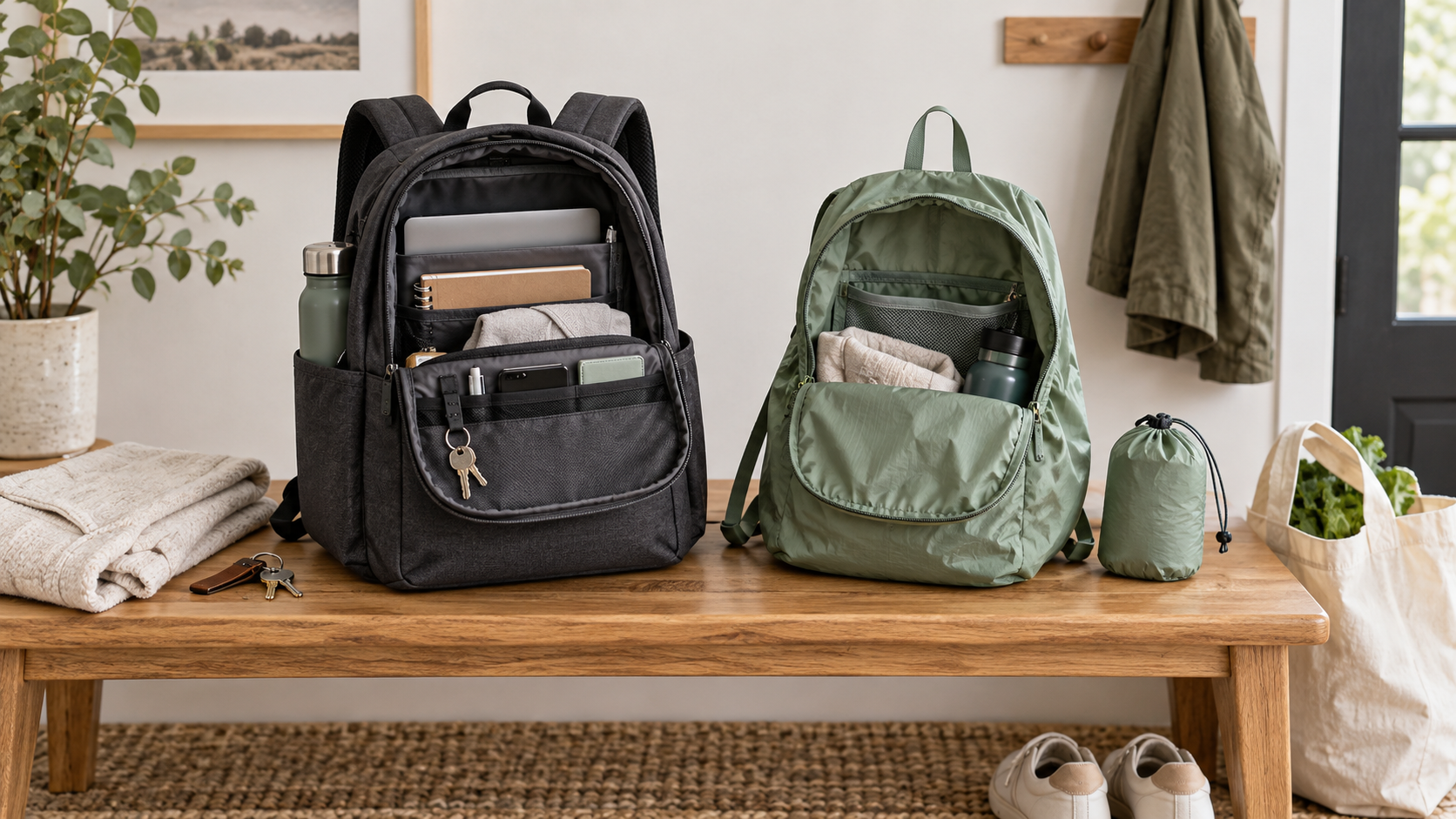
A structured walking backpack keeps its shape and can organize a predictable everyday load. A packable daypack trades much of that structure for a small stored footprint. Neither is automatically better: the practical choice depends on what you repeatedly carry, whether the bag travels empty as a backup, and which setup you will actually store, clean, and use.
As an Amazon Associate, GoodWeighFinds earns from qualifying purchases.
Quick decision
| Choose a structured walking backpack when… | Choose a packable daypack when… |
|---|---|
| The same bottle, layer, personal items, or small purchases travel on most walks. | The bag usually travels empty and comes out only when a light errand appears. |
| Separate pockets, a shape-holding back, and easier item access matter more than compact storage. | A small folded size matters more than padding, shape, or compartment separation. |
| Hard or irregular items need to be kept away from your back and from each other. | The load is light, soft-edged, closed, and predictable enough for minimal structure. |
| You have a regular hook, shelf, or entryway space for the open bag. | You have a reliable pocket, work bag, or travel kit where the packed bag will stay available. |
Start with one ordinary errand load
Lay out what you actually carried on the last few light errands: perhaps a reusable bottle, keys, phone, folded layer, compact umbrella, and one or two small purchases. Measure the largest normal item and consider its shape. Do not size either bag around an exceptional grocery run or use maximum capacity as a target.
A structured pack generally handles item separation and uneven shapes more predictably, but the extra panels, padding, and pockets add empty weight and storage bulk. A packable daypack can disappear into a larger bag between uses, but a bottle, box, keys, or other hard object may press through its flexible back or distort the load. Neither format is meant for hot, leaking, sharp, fragile, unusually heavy, or specialized medical items unless the exact product documentation says otherwise.
Fit and access tradeoffs
Compare the stated pack dimensions and full strap-adjustment range with the clothing you normally wear. A structured back panel or wider strap does not prove comfort; a lightweight strap does not prove discomfort. Fit, load placement, use time, and individual needs all matter, so try the usual load in a low-stakes setting while a return remains possible.
Structure can make a main opening, key pocket, phone sleeve, or bottle pocket easier to locate. A simple packable bag may require unpacking one item to reach another. Check whether the current listing provides usable pocket dimensions rather than relying on words such as “roomy.” For an external bottle pocket, compare its opening and depth with the actual filled bottle and inspect the retention method.
Setup, maintenance, and storage
- Structured backpack: Set both straps for the ordinary filled load, assign repeat items to specific pockets, and keep hard objects away from the back-facing panel.
- Packable daypack: Practice folding or stuffing it according to the maker's instructions and choose the exact place it will live when empty.
- Cleaning: Follow the complete bag's care label. More padding, lining, and compartments create more surfaces to inspect and dry; very light fabric can still have seams and coatings that need careful treatment.
- Weather wording: “Water-resistant,” “water-repellent,” and “waterproof” are not interchangeable. Check what part of the bag a claim covers and protect moisture-sensitive contents separately.
- Storage: Measure the structured bag's empty footprint and the packable bag's claimed packed dimensions. Confirm whether the stuff pouch is attached or another loose part to track.
- Returns: Verify the current seller and return terms before buying because photos and dimensions cannot settle personal fit.
Who each format fits
A structured walking backpack fits a repeated, known load when organization, bottle separation, and shape matter throughout the walk. It can also make sense when the bag starts filled at home rather than traveling as backup storage. Use the walking-backpack buying guide for a detailed model checklist after this format wins.
A packable daypack fits occasional light purchases when carrying an empty full-size backpack would create more bulk than it solves. It works best when its storage location is part of an existing routine and its minimal structure suits the real load. Before shopping, use the packable-daypack buy-or-skip test to check whether it will stay available and earn its space.
Claims and limits
Dimensions, materials, care directions, packed size, included parts, and load guidance should come from the current maker or seller documentation for the exact model. Comfort and durability reports from customers are anecdotes, not proof of the same result for another person or load. Neither bag improves posture, prevents pain, makes a route safe, increases calorie burn, or causes weight loss.
If either bag creates persistent pain, numbness, or skin irritation, stop using it. A qualified professional can help when discomfort continues or when pain, balance, mobility, or injury changes what carrying setup is appropriate.
When to skip both
- A backpack, tote, jacket pocket, or other carrier you already own handles the recurring load.
- You have not defined and measured an ordinary load or traced the full errand route.
- The trip involves loads better suited to wheels, delivery, or another carry arrangement.
- The listing omits usable dimensions, care directions, seller details, or understandable return terms.
- You need technical hiking, mobility-compatible, insulated food, child-carrying, or medical-equipment storage.
- The appeal rests mainly on posture, safety, calorie-burn, or weight-loss promises.
Next step
Use the routine-support tools pillar to compare other practical walking and errand tools without body-result promises. If the job is mostly carrying one bottle, compare a water bottle sling with a walking backpack before buying more capacity than you need.
Bottom line
Choose a structured walking backpack for a repeated load that benefits from shape, separation, and predictable access. Choose a packable daypack when compact backup storage is the real priority and the usual load is light enough for minimal structure. Reuse what you own when it already passes the same load, fit, route, and maintenance checks.