Walking-carry buy-or-skip guide
Is a Packable Daypack Worth It for Errand Walks?
A packable daypack can be useful when a walk regularly turns into a small errand and an empty backpack is too bulky to carry “just in case.” It is not automatically better than a tote or a backpack already at home. The useful question is whether a compact bag will stay available, fit the usual load, and remain manageable after the novelty wears off.
As an Amazon Associate, GoodWeighFinds earns from qualifying purchases.
The short answer
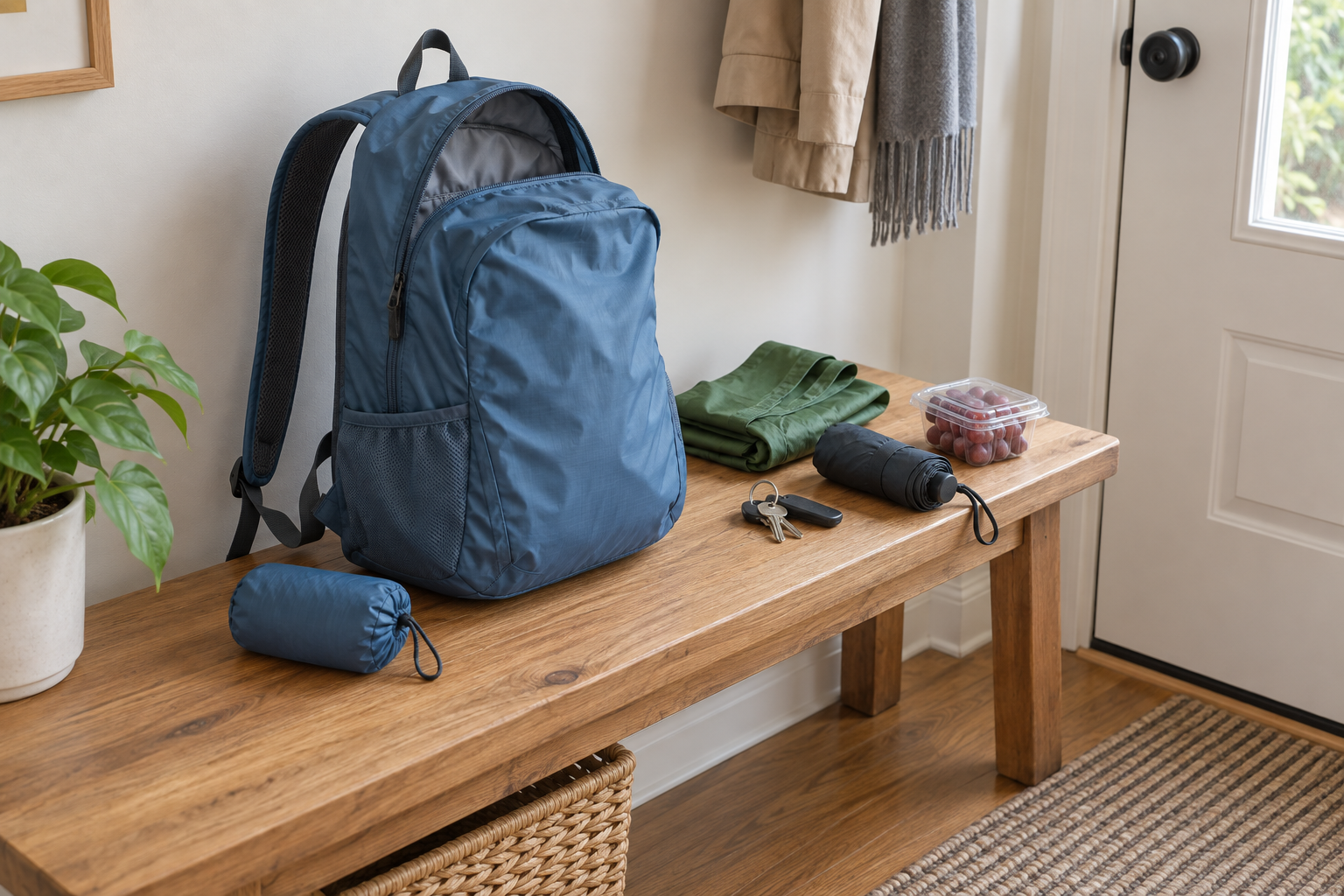
A packable daypack may be worth it when you make light errands on foot often enough to predict the load, want both hands available, and will consistently keep the folded bag in a coat pocket, work bag, bike basket, or entryway kit. It is easier to skip when trips are rare, the usual purchases are heavy or awkward, a tote already works, or you need the structure and wider straps of a regular backpack. If the need is established but the format is not, compare a structured walking backpack with a packable daypack.
| Question | A packable daypack may fit | Reuse or choose another format |
|---|---|---|
| How often? | The same light errand happens repeatedly | The need is occasional or hypothetical |
| What load? | Small, light, closed items with predictable dimensions | Heavy, sharp, hot, fragile, leaking, or bulky items |
| Where will it live? | A specific daily-carry or entryway location | No reliable place means it will likely stay home |
| What matters most? | Small packed size and hands-free carry | Structure, padding, load control, or larger capacity |
| What do you own? | Existing bags are too bulky for backup use | A tote, sling, or backpack already covers the job |
Run a one-week carry test before buying
Use any compact bag you already own for a week. Put it in the exact place where a packable daypack would live. Each time an errand appears, note whether the bag was with you, what went inside, whether the load changed shape, and whether you wanted two shoulder straps rather than handles. This tests the routine without pretending that a new product creates the routine.
Record the largest ordinary item and the heaviest ordinary combination, but do not turn one unusually large shop into the design target. A backup daypack intended for a loaf, a small sealed package, and an umbrella is a different tool from a grocery carrier. For planned shopping loads, use the compact cart versus reusable bags comparison.
Measure the open bag and the packed bag
Seller capacity figures do not reveal whether your actual items fit. Compare the open interior height, width, and depth with the usual load, allowing space for the zipper to close without forcing it. Check whether a side pocket fits the specific bottle you would carry and whether the opening remains usable when the main compartment is full.
Then check the folded dimensions and closure. A bag that folds into its own pocket may be convenient, but only if the resulting pouch fits the place where you intend to keep it and the folding routine is simple enough to repeat. “Packable” is a format description, not proof that the bag is small, light, easy to refold, or suitable for every load.
Check straps and load guidance without inferring comfort
Thin, minimally padded straps help some bags fold smaller, but that tradeoff can become noticeable as the load grows. Look for the maker's strap dimensions or adjustment range, inspect attachment points in listing photos, and follow any stated load limit or use guidance. No listing can establish individual comfort, posture, pain relief, or safe fit.
Try a returnable bag indoors with the ordinary load and clothing you expect to wear. Confirm that straps adjust without slipping, the bag does not block movement or access you need, and hard package corners do not press through the fabric. Stop using a bag if stitching, zippers, straps, or fabric show damage. If fit or carrying is affected by pain, balance, mobility, or another personal health concern, a qualified professional can help with individualized guidance.
Keep weather claims narrow
Terms such as “water-resistant” and “water-repellent” should be treated as maker claims, not promises that contents will stay dry. Check whether the listing names a test method, coating, seam construction, or care limitation, and keep electronics, papers, medicines, and other moisture-sensitive items in appropriate protection. A pack cover, umbrella, or different trip plan may be the more direct answer in sustained rain.
Plan for cleaning and storage
Read the care label before purchase. A light fabric bag may require spot cleaning or air drying, and coatings can have specific instructions. Check whether the interior can be turned out or reached after a spill. Do not assume a bag is suitable for loose food; use securely closed containers and follow the product's stated use and care.
The storage plan matters twice: the bag needs a reliable packed location before the errand, then enough drying space after cleaning or wet weather. If either step is unrealistic, an existing washable tote or regular backpack may be less fussy.
Costs and listing details to verify
- Complete dimensions: open exterior, usable interior, folded pouch, opening, and pockets.
- Carrying details: empty weight, strap adjustment, handles, closures, and maker-stated load or capacity.
- Construction claims: fabric description, zipper type, seams, and weather wording—without treating those as durability proof.
- Care: washing, drying, coating, and storage instructions.
- Seller terms: seller identity, return window, return condition, and any warranty language.
Do not use price, star ratings, review count, badges, or availability copied into an evergreen decision. Those details change. The stable comparison is whether the listed measurements, instructions, and terms fit the job.
When to skip it
- You cannot name a recurring errand or a reliable place where the folded bag will stay.
- A bag you own already fits the ordinary load and is easy enough to carry.
- Your typical items need padding, structure, insulation, leak containment, or more secure organization.
- The load routinely exceeds the maker's guidance or becomes uncomfortable in minimal straps.
- The listing omits the dimensions, care instructions, seller details, or return terms you need.
Choose by job, not by weight-loss promise
A daypack carries items. It does not make walking happen, increase calorie burn, improve posture, or produce weight-loss results. For a broader way to compare ordinary gear without those promises, use the routine-support tools guide. If the real choice is bottle-only carry versus room for a layer and errands, compare a water bottle sling with a walking backpack. If you already know you need a regular compact pack rather than an emergency backup, the walking backpack guide covers measured fit, access, bottle storage, care, and skip criteria.
Buy a packable daypack only when the one-week test shows a recurring light-load errand, the folded bag has a dependable home, and the listing provides enough measurements and care details to judge fit. Reuse a tote or structured backpack when it already solves the same problem with less uncertainty.