Buying guide
Best Walking Gloves for Cool-Weather Routines
Cold fingers can make an ordinary walk less appealing, but a bulky winter glove may be more gear than a cool day requires. The useful choice is a lightweight pair that fits, preserves enough dexterity, and matches the actual conditions—not one that makes sweeping warmth or performance promises.
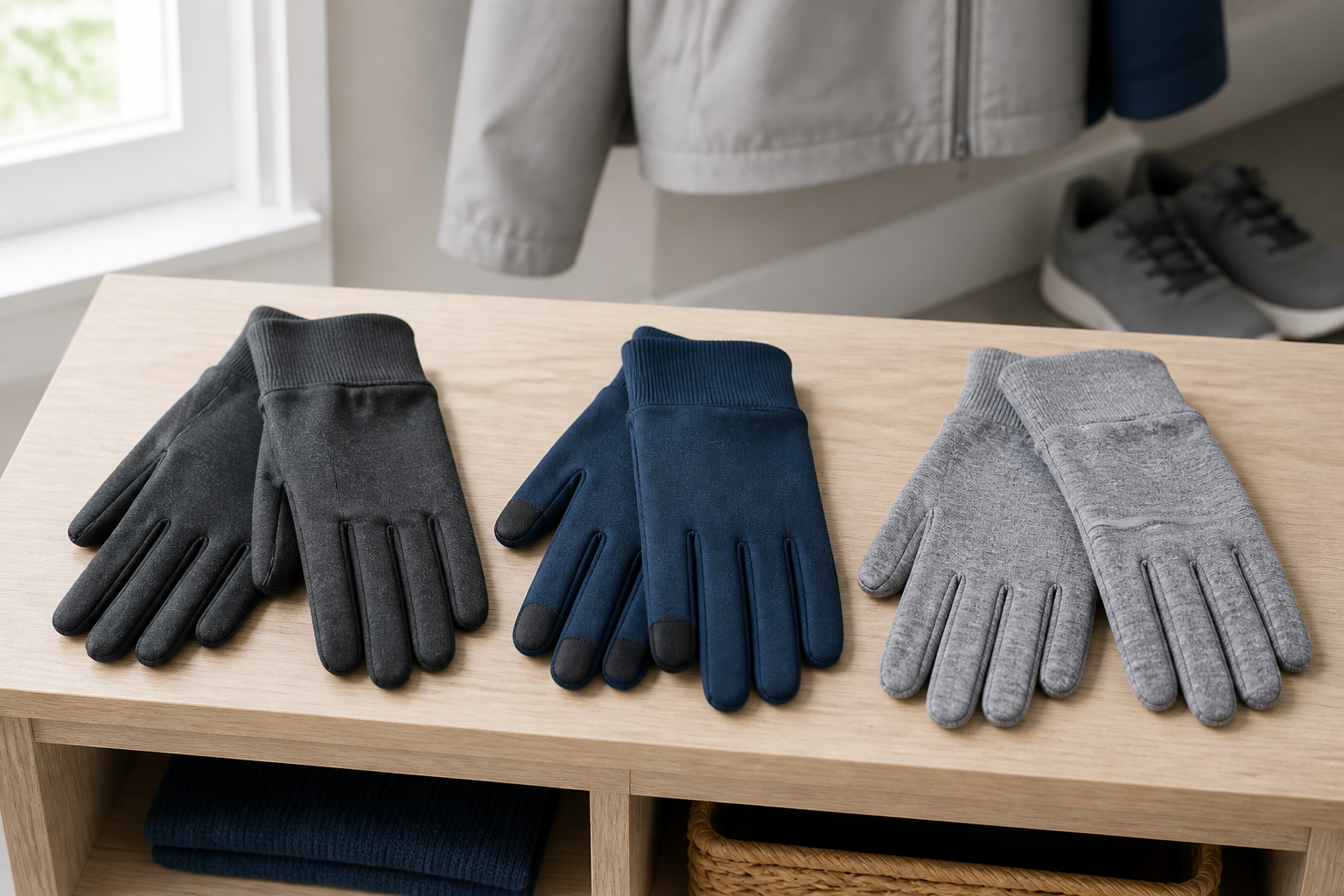
Who this guide is for
This guide is for adults choosing ordinary hand coverage for cool, breezy walks where exposed fingers feel uncomfortable but insulated snow gloves may be excessive. It focuses on fit and routine friction. Gloves do not make walking safer in every condition, improve circulation, prevent cold injury, or cause weight loss.
For the broader product decision, start with the routine-support tools pillar. If weather protection is the larger problem, compare walking hats for light weather and packable rain jackets.
Best-fit glove formats, not unsupported winners
No glove products were worn, temperature-tested, or ranked for this guide. These are useful formats to compare against your conditions and tasks.
- Best format for mild, dry conditions: A thin full-finger knit or stretch glove with a close cuff and enough flex to handle keys.
- Best format for phone access: A fitted glove with clearly identified conductive zones on the thumb and finger you actually use; touchscreen labeling is not a guarantee of precise control.
- Best format for dim walks: A light-colored glove or one with reflective trim as a supplemental visibility detail, never a replacement for lighting and broader reflective gear.
- Best format for variable weather: A compact pair that can be removed and stowed easily when hands warm up.
- Best format for frequent washing: A simple construction with explicit care instructions and a fabric that can dry fully between uses.
Selection criteria that matter
- Use the maker's size chart: Measure hand circumference and length as directed. Generic small, medium, and large labels are not interchangeable across listings.
- Check fingertip fit: Excess fabric can reduce phone and key control; a glove that pulls tightly across the knuckles can restrict comfortable movement.
- Compare cuff coverage: Note the cuff length and whether it overlaps the sleeve you normally wear without bunching.
- Separate fabric facts from warmth claims: Material and construction can be checked. Broad “thermal” or temperature-range language needs context about wind, moisture, activity, and individual comfort.
- Treat touchscreen use as a convenience claim: Look for identified conductive fingers, but expect performance to vary by phone, screen protector, finger placement, and fit.
- Read visibility wording narrowly: Reflective trim can help a glove catch light from some angles. It does not make a person conspicuous by itself.
- Verify wash care: Follow the current instructions for the exact pair; high heat or aggressive washing may affect stretch, coatings, or conductive panels.
- Check the return path: Fit is difficult to judge from a listing, so confirm whether unworn sizing exchanges are practical before ordering.
A simple comparison framework
Before opening product tabs, write down the coldest ordinary conditions in which you plan to walk, the sleeve you will pair with the gloves, and whether phone use is essential. Then mark each listing yes, no, or unclear:
- Does the listing provide hand measurements rather than only letter sizes?
- Is the glove intended for mild or cool conditions rather than severe cold?
- Can the cuff overlap the usual jacket or sweatshirt sleeve?
- Are touchscreen zones and reflective details identified precisely?
- Are material content and washing instructions stated for this exact item?
- Can the pair be stored in the pocket or bag normally used on a walk?
- Would the gloves still be useful if they made no fitness or body-result difference?
Weather limits matter more than marketing
Lightweight walking gloves are not a universal cold-weather solution. Wind and moisture can make a thin glove feel inadequate, while cold tolerance varies substantially. A seller's temperature number cannot account for the full route, duration, precipitation, wind, activity level, or individual needs.
Check a reliable local forecast and shorten, relocate, or skip a walk when conditions exceed your clothing and experience. Numbness, persistent pain, loss of dexterity, or skin color changes are reasons to get out of the cold rather than testing a product claim. For a condition that affects circulation, sensation, or cold tolerance, individualized guidance belongs with a qualified healthcare professional.
Who should skip this purchase
Skip lightweight gloves if severe cold, strong wind, steady rain, snow, or prolonged exposure calls for purpose-built protection. Also skip a listing when its sizing method, material, care instructions, or intended conditions are missing. If an existing pair already fits the route and weather, a new “walking” label adds no practical value.
Skip products that promise calorie burn, fat loss, detox effects, medical circulation benefits, guaranteed injury prevention, or safe use across an extreme temperature range. Those claims are outside the job of an ordinary glove.
Bottom line
The best cool-weather walking glove is the lightest practical pair that fits your hand and cuff, lets you handle essentials, can be washed as directed, and stays within its weather limits. Compare measurements and construction first; treat touchscreen, warmth, and visibility language as claims to verify, not guarantees.