Walking-shoe fit and upkeep guide
Best Walking Shoe Insoles for Everyday Comfort: What to Compare
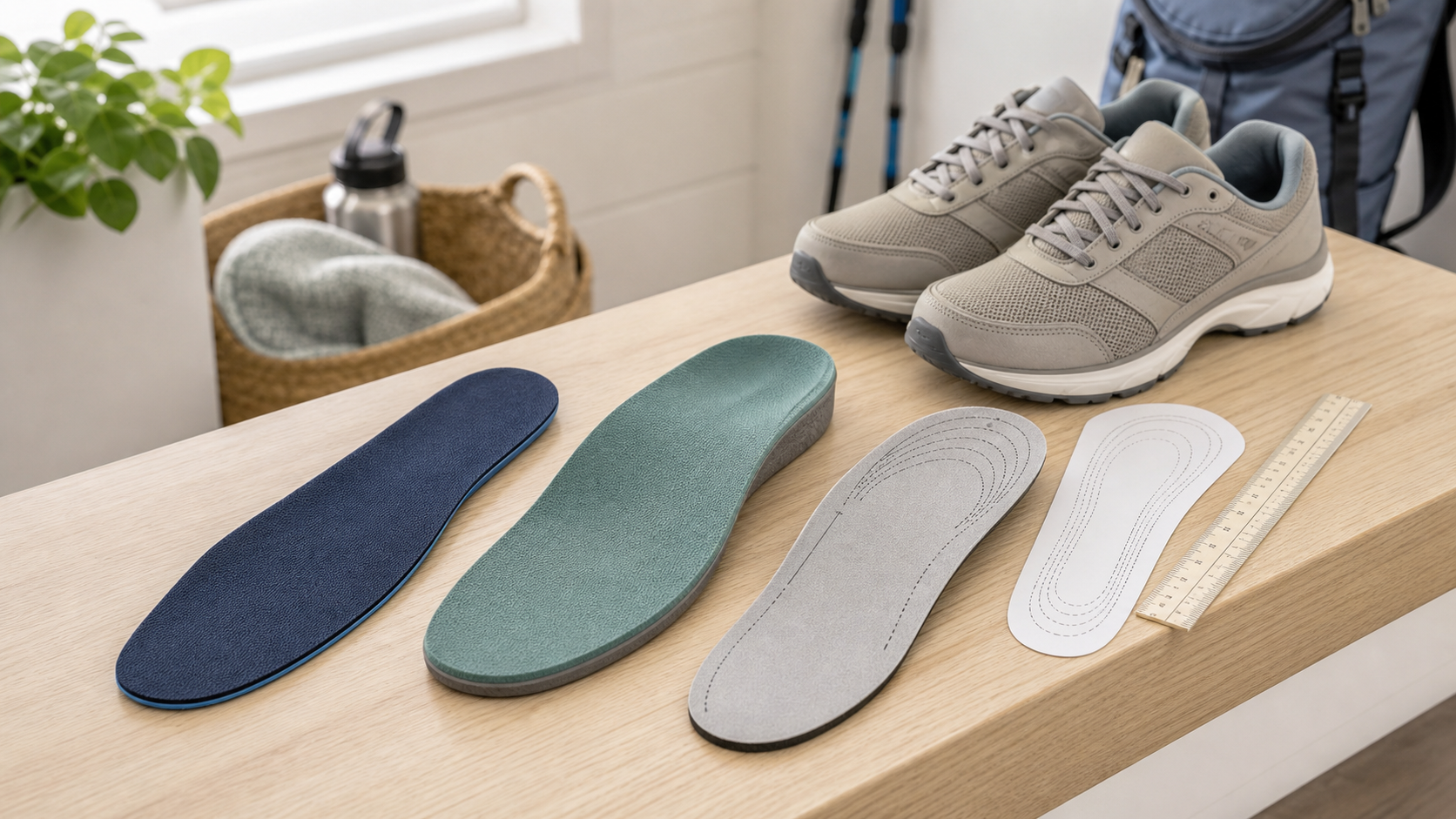
A replacement insole can refresh a worn removable liner or change how much room is inside a walking shoe. The useful comparison starts with the shoe, the original liner, and measurable fit—not promises to correct posture, treat pain, or change the way your body works.
As an Amazon Associate, GoodWeighFinds earns from qualifying purchases.
Who this guide is for
This guide is for adults replacing a removable factory liner or comparing ordinary, non-medical insoles for everyday walking shoes. It is about shoe-space compatibility, trimming, upkeep, and returnability. For the shoe decision itself, use the walking-shoe buying guide. For other practical tools without body-result promises, see the routine-support tools pillar.
An insole does not cause weight loss, guarantee comfort, prevent injury, or establish a treatment. If a listing depends on those claims, it is outside this guide’s scope.
Best-fit formats, not unsupported winners
- Best fit for replacing a thin factory liner: A low-volume, full-length insert that closely matches the original liner’s outline and thickness.
- Best fit when the shoe has verified extra room: A moderately cushioned insert, provided it does not crowd the toes or lift the heel out of the heel counter.
- Best fit for unusual shoe outlines: A trim-to-fit insert with clear size lines and maker instructions, using the removable factory liner as a template when allowed.
- Best fit for easy upkeep: A simple, removable design with specific cleaning and drying directions and few bonded layers to inspect.
- Best fit when sizing is uncertain: A product with published measurements and a return policy that still applies after the permitted fit check.
Selection criteria that matter
- Removable-liner check: Confirm the shoe’s original liner is meant to come out. Stacking a new full-length insole on top can reduce space and change heel hold.
- Length and width: Compare the replacement with the original liner at the toe, widest forefoot point, waist, and heel. A labeled shoe-size range is not a set of measurements.
- Total thickness: Look beyond the heel. Forefoot and edge thickness affect toe room, while heel thickness can affect how securely the shoe holds the foot.
- Shoe volume: Test with the socks normally worn. Toes should not be crowded, the upper should not feel newly tight, and the heel should not be pushed above its intended position.
- Trim instructions: Check which end may be cut, whether the maker permits tracing the old liner, and whether trimming changes return eligibility.
- Shape: A pronounced contour is not automatically better. Treat “support,” “alignment,” “stability,” and similar words as product descriptions unless competent evidence supports a specific claim.
- Materials: Verify what the exact listing states rather than inferring foam type, odor control, antimicrobial performance, or durability from appearance.
- Surface and movement: Check whether the top layer is smooth or textured and whether the underside is designed to stay flat without adhesive.
- Care: Follow model-specific cleaning and drying directions. Do not machine-wash, heat-dry, or soak an insert unless its maker allows it.
- Replacement guidance: Treat a replacement interval as manufacturer guidance, not a universal deadline. Also inspect compression, delamination, cracking, persistent dampness, and fit changes.
- Returns: Confirm seller, return window, condition requirements, and what happens after trimming or wearing outdoors.
A practical comparison framework
Remove the original liner if the shoe permits it and record the same facts for every candidate:
- Exact model and stated size range
- Published full length, forefoot width, heel width, and thickness
- Whether dimensions are before or after trimming
- Low-, medium-, or high-volume description, with measurements where available
- Full-length versus partial-length format
- Trim steps and tools required
- Material and component-specific care directions
- Maker’s replacement guidance and the limits of that guidance
- Seller identity, return window, and trimmed-item policy
Mark missing facts as unclear. Do not substitute customer anecdotes for measurements, and do not treat comfort reports as proof that the same insert will fit another person or shoe.
How to check fit without inventing a test claim
Before trimming, compare the unaltered insert and original liner on a flat surface. Follow only the maker’s approved process. After installation, check that the insert lies flat, does not buckle, and does not create obvious crowding or heel slippage. Keep the check indoors and within the seller’s return conditions.
This is a basic purchase-fit check, not a medical assessment or evidence that an insert prevents injury. A product should not need a pain-relief story to justify its dimensions, care instructions, and return terms.
Who should skip this purchase
Skip a new insole if the existing removable liner is intact, dry, lies flat, and the shoe already feels suitable. Skip full-length replacement inserts when the shoe has a fixed liner, very little internal volume, or no clear compatibility information. A different sock thickness or replacing a worn-out shoe may be the more direct decision.
Do not use this category guide to self-treat persistent pain, numbness, wounds, loss of sensation, swelling, injury, or a foot concern related to diabetes or circulation. Those situations need individualized guidance from a qualified healthcare professional, not a general Amazon comparison. Stop using an insert that creates new pain, pressure, rubbing, instability, or skin irritation.
Claims and listings to avoid
- Guaranteed pain relief, posture correction, injury prevention, or body alignment
- Medical-condition language without a clear regulatory and evidence context
- Before-and-after pressure maps presented without methods or source details
- “Doctor recommended” or “clinically proven” without identifying who, what, and where
- Universal fit claims with no dimensions or shoe-volume guidance
- Weight-loss, calorie-burning, circulation, detox, or metabolism claims
Bottom line
Start by matching the original liner’s outline and volume. Compare measured thickness, trim rules, materials, care, replacement guidance, and returns, then reject any listing that turns an ordinary shoe insert into a treatment promise. The best fit is the least complicated option that lies flat and preserves suitable room in the exact walking shoe.