Reusable work-lunch buying guide
Best Washable Lunch Napkins for Reusable Workday Kits
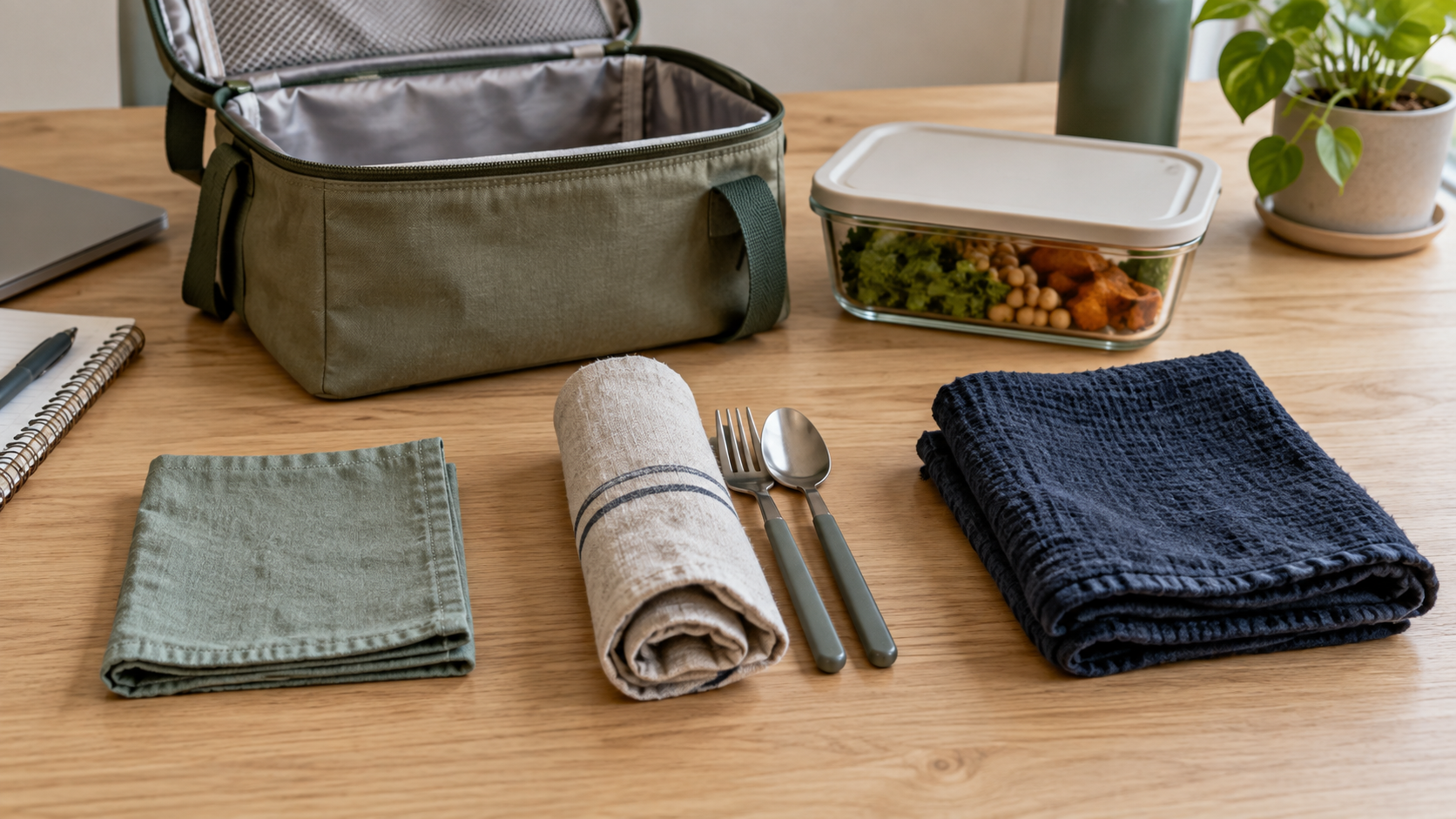
A washable napkin can replace a recurring disposable item in a packed-lunch routine, but the useful choice is usually the cloth that fits the bag, handles the messes you actually make, and can be washed and dried without becoming another neglected task. This guide compares formats and listing details rather than naming an unsupported winner.
As an Amazon Associate, GoodWeighFinds earns from qualifying purchases.
Start with the job the napkin needs to do
For light crumbs and dry hands, a compact square may be enough. Saucy foods, condensation, or using the cloth as a placemat can call for more surface area. Write down the usual job before comparing sets; otherwise a large bundle or decorative pattern can distract from whether the cloth will be used.
Measure an existing paper napkin or clean cloth that feels practical. Compare both its open dimensions and its folded footprint with the free space in the lunch bag. A larger cloth is not automatically better when it crowds a container or returns home damp in a tight pocket.
Compare fabric descriptions carefully
| Listing description | Why readers consider it | What to verify |
|---|---|---|
| Cotton cloth | Common, familiar fabric category | Exact fiber percentage, weave, dimensions, and care directions |
| Linen or linen blend | Often offered in thinner textured formats | Blend percentages, shrinkage wording, pressing expectations, and edge finish |
| Waffle or terry texture | More pronounced loops or surface texture | Folded bulk, snag-prone edges, lint wording, and wash care |
| Mixed-fiber cloth | May be sold for easy care or a particular feel | Full fiber disclosure and whether the listed care routine fits yours |
Fabric names alone do not establish absorbency, stain release, softness, or lifespan. Treat those as maker claims unless the listing provides a clear, specific basis. If the fiber content is vague or inconsistent across the title, description, and care label, skip the listing.
Inspect the edge finish
Look for clear close-up images of all four edges. A turned-and-stitched hem, mitered corner, serged edge, or unfinished-looking decorative fringe creates a different feel and care routine. Check for maker wording about fraying and whether any trim changes the usable surface.
Decorative buttons, rings, snaps, or detachable pieces add packing and washing decisions. They may be useful for a specific routine, but a plain square is easier to evaluate and leaves fewer parts to track.
Read washing and drying instructions before buying
“Washable” does not answer the practical questions. Check the stated wash temperature, compatible cycle, detergent restrictions, bleach guidance, tumble-dry or air-dry directions, and ironing expectations. Follow the care label for the exact item rather than borrowing instructions from another fabric.
Plan the return trip too. A used cloth needs a defined spot away from loose clean items, followed by a wash and full drying routine at home. A small washable pouch may help with organization, but only if its own care directions and packed dimensions fit the kit.
Choose a set size from the laundry cycle
Count how many packed lunches typically occur between laundry days, then add only the small buffer the routine genuinely needs. A five-day workweek does not automatically require a large set if laundry runs midweek, and a low unit price is not savings when half the cloths remain unused.
Confirm that the listing's quantity refers to individual napkins, not bundles pictured for styling. Avoid relying on current price, stock, ratings, or review counts because those can change and are not maintained on this page.
Test packability with a paper mock-up
Fold paper or a clean household cloth to the listed napkin dimensions and place it in the lunch bag after the container, cold source if used, utensils, and bottle. Check whether it has a clean pocket or whether it must sit directly beside food containers. Then reserve a realistic place for the used cloth on the trip home.
If the kit already includes a washable utensil wrap that doubles as a napkin, or a clean kitchen cloth fits without friction, a dedicated purchase may solve nothing. For the rest of the carry system, compare reusable utensil sets and work lunch bags separately.
Who should skip a washable lunch napkin set?
- Keep using a clean cloth you own when its size, care routine, and packed footprint already work.
- Skip a multipack when the quantity is much larger than the number used between laundry days.
- Skip vague listings that omit dimensions, fiber content, quantity, or complete care directions.
- Choose disposable napkins when laundering and keeping used cloth separate is not workable for the setting; do not frame that constraint as a moral failure.
- Skip decorative features that add bulk, snag points, or removable parts without solving a recurring lunch problem.
Keep the product claim modest
A washable napkin can be one reusable component of a packed-lunch kit. It does not make food healthier, control an appropriate portion, improve adherence, or cause weight loss. Environmental comparisons also depend on materials, manufacturing, washing, drying, lifespan, and disposal, so this page does not claim that every reusable cloth is categorically superior.
For a broader choose-or-skip framework, use the routine-support tools guide. If the unresolved issue is carrying cutlery without adding a rigid case, the utensil-case decision guide lays out lower-bulk alternatives.
Bottom line
Choose a washable work-lunch napkin by the mess it needs to handle, measured open and folded size, complete fiber disclosure, edge construction, wash and dry directions, and the number needed between laundry cycles. The best option may be a modest set—or a suitable cloth already in the drawer—rather than the thickest fabric or largest bundle.