Rigid case, soft wrap, or no new accessory
Is a Hard Utensil Case Worth It for Work Lunches?
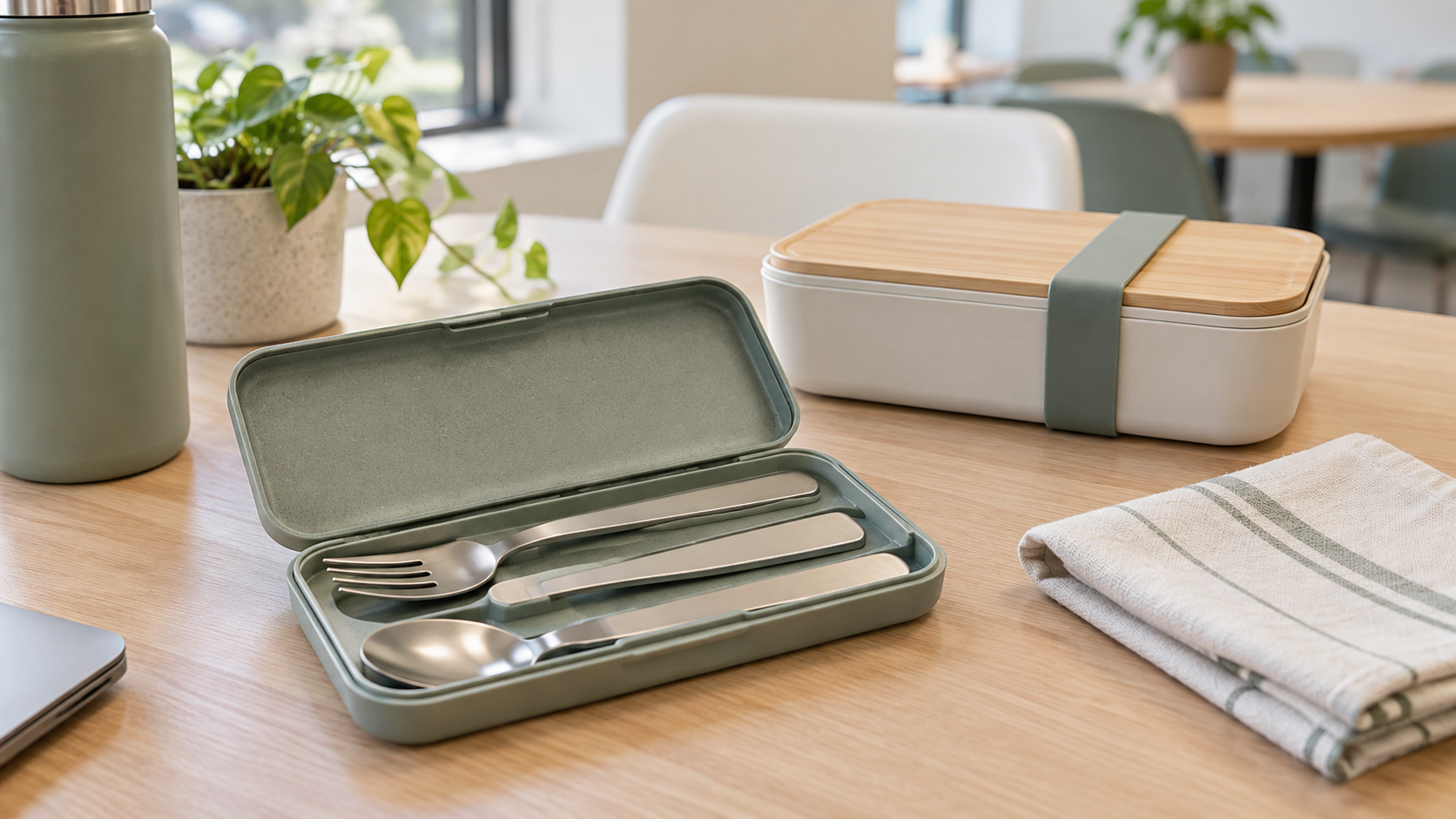
A hard utensil case can be worth buying when reusable cutlery repeatedly snags on other items, gets separated in a shared bag, or needs protection from pressure. It is probably unnecessary when a washable wrap, pouch, or clean container you already own keeps the same utensils together with less bulk.
As an Amazon Associate, GoodWeighFinds earns from qualifying purchases.
The quick answer
- Likely worth it: your usual utensils fit inside without forcing the lid, the closed case fits the lunch bag, and rigid storage solves a repeated snagging, crushing, or separation problem.
- Test first: wrap the exact utensils in a clean napkin or place them in a small container you own, pack the complete lunch, and see whether the problem remains.
- Probably skip it: space is already tight, a washable pouch works, the case is awkward to clean or dry, or you usually use workplace cutlery.
Start with the problem, not the accessory
A case can solve three narrow jobs: keep a set together, shield other bag contents from utensil edges, and protect lightweight cutlery from pressure. It does not make unwashed utensils clean, prevent every spill inside a lunch bag, or add useful capacity.
If the only issue is forgetting utensils, keeping a spare clean set at work may be simpler. If loose pieces are hard to find, an existing pocket or washable pouch may be enough. Buy rigid storage only when the fixed shell performs a job those options do not.
Measure the utensil and the complete case
- Longest piece: measure from the handle end to the tip; listings may emphasize exterior length rather than usable interior space.
- Stacked thickness: include raised spoon bowls, fork curves, thick handles, and any reusable straw or chopsticks you actually carry.
- External footprint: compare the closed case with the flat space beside your container and cold pack.
- Closure clearance: confirm utensils sit below the rim and do not press the latch or hinge.
- Opening room: check that you can remove the case through the lunch bag's real opening after everything else is packed.
Check cleaning and drying before convenience
Look for specific manufacturer care directions for both case and utensils. Hinges, clips, fitted grooves, and textured interiors can collect residue or hold water. A case that closes while damp or is difficult to inspect may add upkeep instead of simplifying the routine.
Plan where the open case will dry and whether all surfaces are reachable. Do not treat “dishwasher safe,” antimicrobial, odor resistant, or leakproof language as universal unless the maker defines it for the exact model and use.
Compare the alternatives
- Cloth napkin or utensil wrap: flexible and compact, but it needs a secure fold or tie and clear washing routine.
- Washable soft pouch: adapts to different utensil shapes and packs flatter, though it offers less crush protection.
- Small existing container: useful for a trial if it closes securely and is appropriate for the intended contact and cleaning method.
- Lunch-bag pocket: costs nothing when it keeps clean utensils separate and does not expose sharp edges.
- Spare set at work: removes the daily carry step where secure, permitted storage and washing access already exist.
When the case becomes clutter
Skip a case that requires changing useful utensils solely to fit, crowds out the cold pack or food container, pops open when flexed, or adds several loose pieces. Also skip molded sets that include tools you will not use; unused pieces consume the same fixed space.
If the broader setup is the problem, compare reusable utensil sets and their carry formats or review the insulated lunch-bag fit guide before adding another organizer.
Bottom line
A hard utensil case earns its space only when it fits your real cutlery, closes without pressure, fits the complete lunch load, and solves a repeated problem better than a washable soft option. Measure first, run a no-cost packing test, and check the care instructions. For a broader screen of ordinary meal-prep helpers, use the routine-support tools guide.