Meal-prep storage comparison
Fridge Organizers vs Produce Containers for Meal Prep Visibility
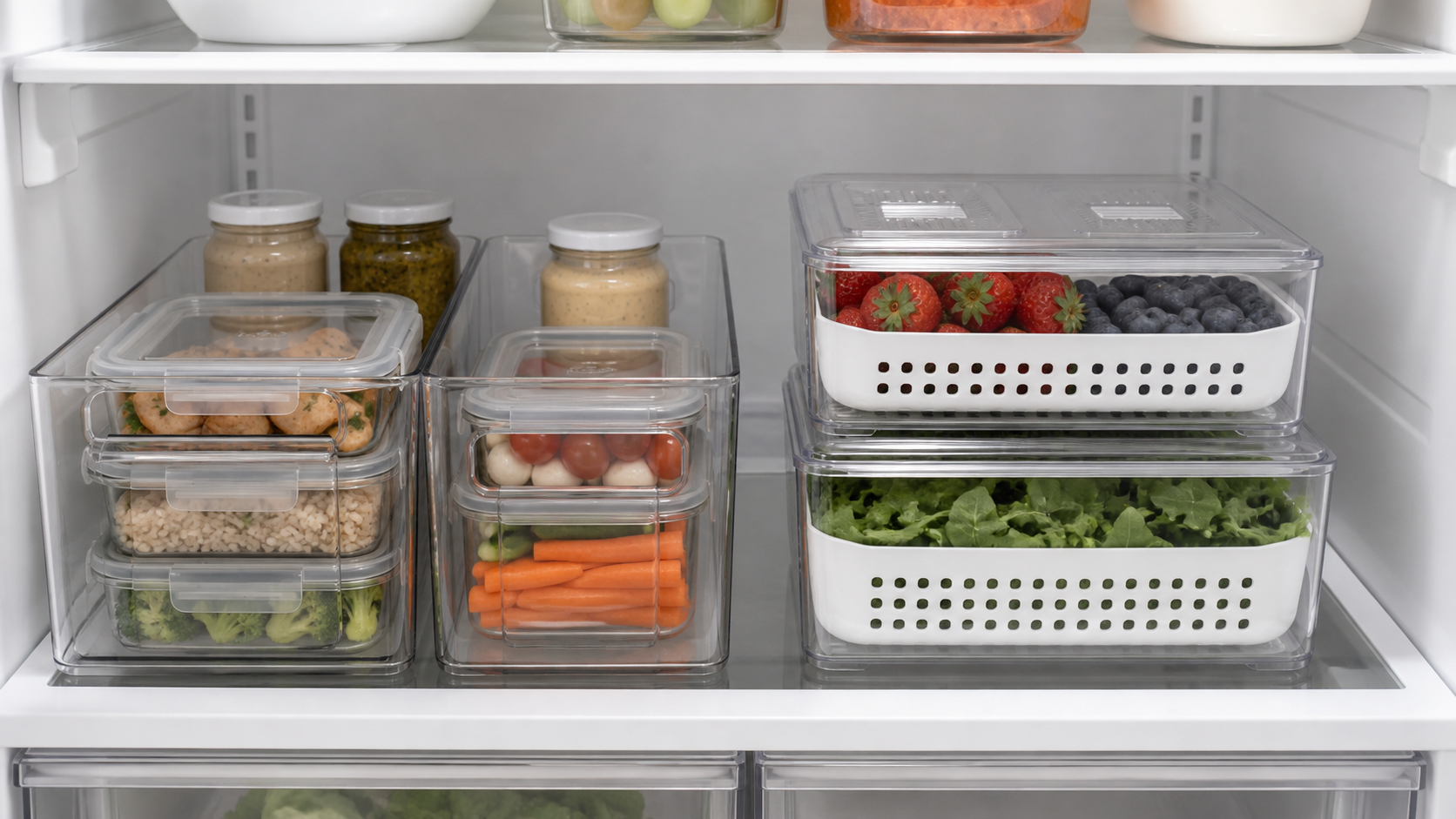
Fridge organizers group many kinds of food so you can pull out a whole category at once. Produce containers add produce-specific features such as lids, vents, baskets, or drain trays. Choose according to what keeps disappearing in your fridge, not because either format promises better eating or weight loss.
As an Amazon Associate, GoodWeighFinds earns from qualifying purchases.
Quick answer
Choose open fridge organizers when the main problem is seeing, grouping, and moving mixed items. Choose produce containers when you repeatedly store specific fruits or vegetables and will use, clean, dry, and reassemble the extra parts. Use neither if shelf zones, labels, or containers you already own make food visible enough.
How the formats differ
| Decision point | Fridge organizers | Produce containers |
|---|---|---|
| Main job | Groups mixed packaged or contained foods into a visible shelf zone. | Holds produce in an enclosed, purpose-specific setup. |
| Access | Open tops can make frequently used items quick to reach. | Lids and inner baskets add steps but separate contents from the shelf. |
| Fit | Measure shelf depth, width, height, handles, and pull-out clearance. | Measure the same clearances plus lid removal and vent access. |
| Parts | Often one bin, though handles and dividers vary. | May include a lid, vent control, basket, divider, or drain tray. |
| Cleaning | Fewer parts, but corners and handles can trap residue. | More seams and components to wash and dry fully. |
| Best skip sign | A bin would hide items behind other items or consume needed shelf height. | The produce type or household routine does not match the maker's intended setup. |
Choose organizers for mixed-item visibility
An open organizer is useful when small jars drift to the back, meal components need one pull-out zone, or household members need a simple visual category. Its value is access, not extra layers of packaging. Clear walls help only when the bin is not overfilled and the front remains visible.
Measure the usable shelf, including the door swing, shelf lip, light housing, vents, and the space needed to lift or pull the bin. Check the maker's load and stacking instructions instead of assuming a long bin stays rigid when full. Avoid placing uncovered food directly into a general organizer unless the product is explicitly intended for that use.
Choose produce containers for a specific produce routine
A produce container may fit when you repeatedly wash or portion the same produce and its basket, drain tray, or ventilation control has a clear job in that routine. Features are not universal: different foods have different storage needs, and marketing terms such as “freshness keeper” do not establish a duration or outcome.
Read the current instructions for whether produce should be washed before storage, how vents are set, whether liquid should be drained, and which parts are dishwasher labeled. If those instructions are missing or too vague to follow, a plain container or the refrigerator's existing produce drawer may be easier to use responsibly.
Measure before choosing either
- Shelf opening: Record usable width, depth, and height rather than exterior refrigerator dimensions.
- Access clearance: Leave room to pull a bin forward or remove a lid without unloading the shelf above.
- What disappears: List the exact foods that get overlooked; choose a format around that recurring problem.
- Visibility: Check whether stacking or opaque inner baskets will hide the food you are trying to remember.
- Care: Count the corners, vents, seals, baskets, and trays that must be washed and dried.
- Labeling: Decide whether a removable date label or simple shelf zone would solve the problem for less.
Claims and limits to check
Treat “keeps food fresh longer,” “airtight,” “leakproof,” “antibacterial,” and similar phrases as claims that need precise current support and intended-use details. This comparison does not verify those claims. Neither format replaces temperature control, product instructions, or appropriate food-storage guidance.
Do not buy either format because it is marketed as portion control, appetite control, or a weight-loss system. These are organization tools. Their practical question is whether they reduce friction and make stored food easier to find.
When a simpler setup is enough
Try a no-cost shelf zone for one week: put the foods you most often overlook at eye level, group sealed items together, and add a removable date label where useful. If that works, another container may only take up space. Also skip a new product when your refrigerator drawers already fit the produce, existing containers stack safely, or household members will not maintain a more complicated system.
Next steps
This page maps to the routine-support tools pillar. If general grouping is the answer, use the fridge organizer guide for bin dimensions, handles, stacking, cleaning, and visibility criteria. If produce-specific storage is the answer, use the produce container guide to compare lids, baskets, drainage, vents, care, and skip signs. If you are unsure whether any bin will help, start with the fridge organizer worth-it decision.
Bottom line
Use a fridge organizer to group mixed items and make a shelf easier to scan. Use a produce container only when its specific parts match produce you store often and a care routine you will actually follow. Measure the whole access path, test a simple shelf zone first, and avoid freshness or body-result promises that the format itself cannot prove.