Work-lunch food-jar comparison
Glass Food Jar vs Stainless Steel Food Jar for Work Lunches
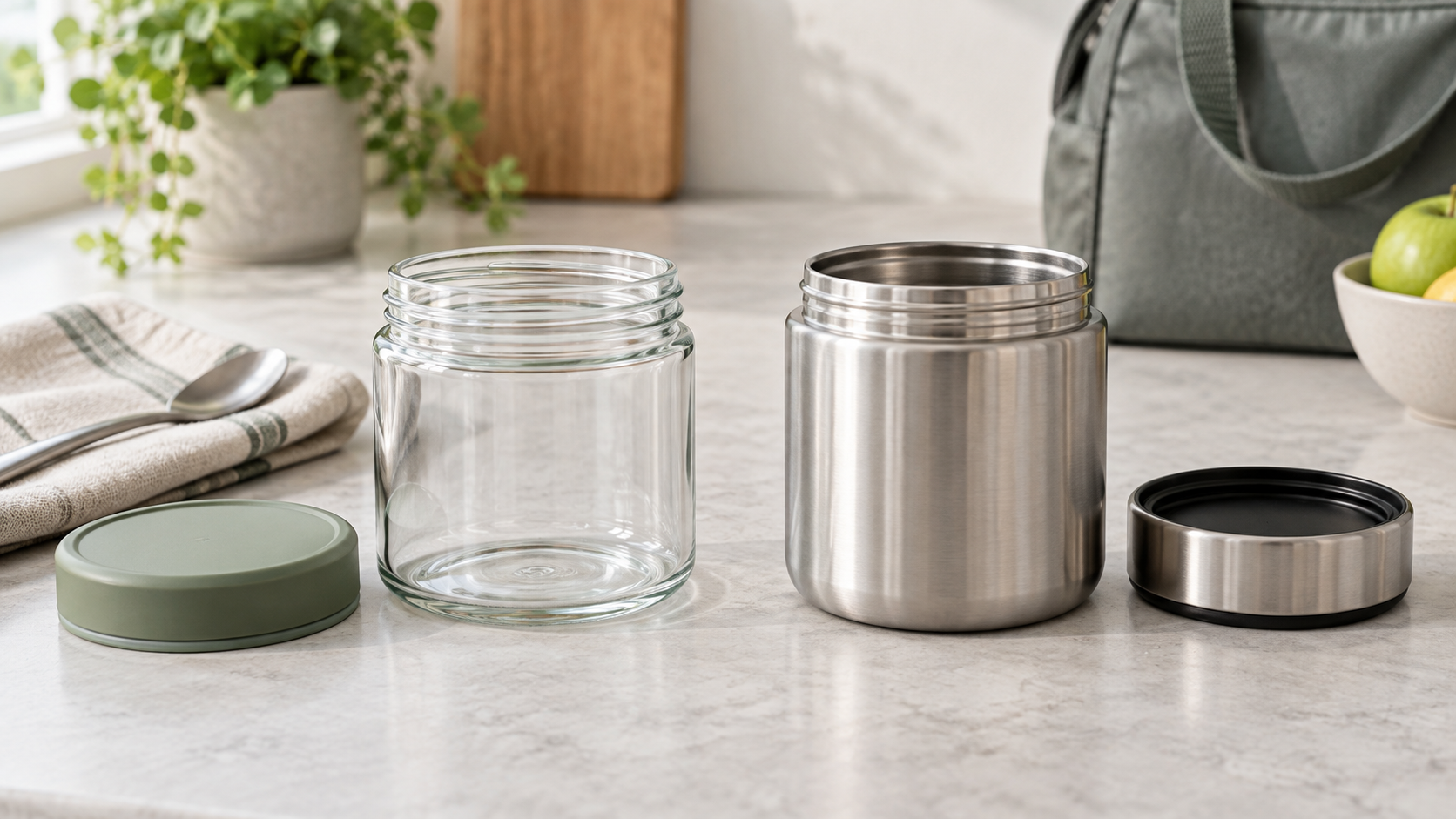
A glass food jar makes the contents visible and may fit a workplace reheating routine when the exact jar is labeled for that use. A stainless-steel insulated food jar is built around slowing temperature change and portable eating. Neither format is automatically leakproof, microwave-safe, lighter, or better for every lunch: the useful comparison is the complete workday workflow.
As an Amazon Associate, GoodWeighFinds earns from qualifying purchases.
Quick decision
| Choose glass when… | Choose stainless steel when… |
|---|---|
| Seeing the contents and reheating at work are central to the routine, and the exact vessel is labeled for the intended appliance use. | Portable temperature retention matters more than seeing or reheating the food, and the maker's preparation directions fit the routine. |
| You can protect the jar from impact and the measured filled weight is manageable in the complete lunch bag. | You want a less breakable vessel and have checked for dents, lid damage, interior condition, and model-specific limitations. |
| A compatible replacement lid or gasket is available, or the lid uses parts you can inspect and clean easily. | The mouth, lid channels, gasket, and vessel depth are accessible with the cleaning tools and drying space you have. |
| You already own a suitable jar that passes a lid, fit, and use-label check. | Your usual meal is compatible with the jar opening and usable capacity—not just the advertised total capacity. |
Start with the workplace workflow
Glass can make sense when lunch moves from refrigerator to an appropriate workplace appliance and then to the table. Check the instructions for the exact base, lid, gasket, and sleeve separately. “Glass” alone does not prove that a vessel tolerates a microwave, freezer, oven, dishwasher, or a sudden temperature change.
An insulated stainless-steel jar can make sense when reheating access is limited or a single compact vessel is easier to carry. It is not microwave-compatible, and insulation does not create one universal holding time. Follow the current manufacturer directions for preparation, filling, closing, opening, cleaning, and any stated time or temperature conditions.
Measure more than capacity
- Opening: Measure the mouth against the spoon or fork, food pieces, filling utensil, and cleaning brush you expect to use.
- Closed size: Check the widest diameter and full height with the lid installed, then compare those numbers with the lunch bag, backpack, refrigerator shelf, locker, or desk space.
- Filled weight: Add the empty vessel, lid, food, utensils, sleeve, and any secondary container. Glass is often heavier for a comparable job, but the exact model decides the real difference.
- Usable volume: Confirm the appropriate fill line or headspace in the maker directions instead of assuming the listed capacity is all usable in every situation.
- Stability: Check the base, lid grip, eating surface, and whether the packed vessel can remain upright through the actual commute.
Compare damage and replacement risk
Glass can chip, crack, or break after impact or unsuitable temperature changes. Inspect it under good light and follow the maker's retirement guidance; do not use a damaged vessel. A protective sleeve may add grip or impact protection only to the extent the manufacturer specifies, and it also adds bulk and another item to clean.
Stainless steel avoids glass breakage, but it is not damage-proof. Dents, damaged seams, corrosion, coating wear, or a distorted rim can affect fit or use. Check the maker's guidance rather than assuming cosmetic damage is harmless. For either format, a lost proprietary gasket or lid can make the whole jar impractical, so check replacement-part availability before buying.
Lid design may matter more than body material
A wide opening can simplify filling and eating but creates a larger lid and gasket to handle. A narrow opening may fit a cup holder or bag pocket yet frustrate chunky foods and brushes. Count threaded pieces, valves, gasket channels, removable parts, and places where residue can hide. Verify which parts can be removed and how they should be reinstalled.
Broad “leakproof” wording is not enough for a commute. Look for defined manufacturer instructions, inspect the seal every time, and test the closed jar with water at home in a sink before trusting it beside electronics or papers. Even then, carry it upright inside a washable secondary barrier when a spill would be costly.
Run a no-cost test first
- Pack the lunch you actually take in a container you already own.
- Record its filled weight, required bag space, refrigerator or reheating steps, eating utensil, and cleanup.
- Note the repeated problem: visibility, breakage concern, temperature change, opening width, leaks, or too many parts.
- Buy only if one jar format directly addresses that repeated problem and its verified specifications fit the job.
If the real decision is between a complete flexible lunch kit and one insulated vessel, use the lunch bag versus food jar comparison. For model-selection criteria within the insulated format, see the insulated food jar guide.
Claims and evidence boundaries
Material names, current dimensions, component lists, and appliance or care labels should come from the exact manufacturer documentation or product listing. Insulation duration, leak resistance, impact resistance, and temperature-use language are conditional product claims—not facts about every jar in the category. Customer reviews can reveal questions to investigate, but they do not verify performance for your meal, route, or handling.
Neither jar causes weight loss or determines an appropriate meal amount. Treat weight-loss, “portion control,” metabolism, detox, or body-result wording as marketing that does not establish the value of the container. The broader routine-support tools guide keeps buying decisions tied to practical friction rather than promised outcomes.
When to skip both
- An existing sealed container already fits the lunch, workplace, carry route, and cleanup routine.
- The listing omits exact dimensions, component-specific appliance directions, care details, or material information.
- The meal needs several separate textures or sides that one jar cannot carry well.
- A required lid, gasket, sleeve, or cleaning tool is hard to replace or adds more upkeep than the jar removes.
- You cannot protect glass adequately or cannot inspect and clean the insulated jar's full interior and lid.
Bottom line
Choose glass when visibility and a verified workplace reheating workflow outweigh extra weight and breakage precautions. Choose stainless steel when a less breakable, insulated, single-vessel routine fits the food and commute—and you can follow the model's directions. Measure the entire setup, inspect the lid as closely as the body, and keep using a suitable container you already own when it solves the same job.