Buy, reuse, change the route, or skip
Is a Clip-On Light Worth It for Dawn or Dusk Walks?
A clip-on light can be worth buying when part of a regular route is dim, a light can stay firmly attached and aimed, and charging or battery checks will actually happen. It is not a guarantee that another road user will notice you, and it may be the wrong fix when changing the time, route, or primary light would address the problem more directly.
As an Amazon Associate, GoodWeighFinds earns from qualifying purchases.
The quick answer
- Potentially worth it: the route includes predictable low-light sections, the light clips securely to the clothing or bag you use, its aimed direction adds a useful cue, and its power routine is realistic.
- Test first: walk the route in full daylight, note lighting transitions and attachment positions, and try a charged light you already own without assuming one small light covers every direction.
- Probably skip it: the route feels unsafe for reasons a light cannot change, the clip shifts or hides under layers, upkeep will be missed, or a flashlight, headlamp, reflective item, different time, or different route better fits the job.
Start with the route, not the light
Separate two needs before shopping. A small marker light may add an illuminated cue on clothing or a bag. A path light is intended to help the user see the ground ahead. Product listings sometimes blur those jobs, but a compact clip light should not be assumed to illuminate uneven pavement or reveal hazards.
Walk or inspect the route in daylight. Note missing sidewalks, crossings, driveways, sharp bends, surface changes, tree cover, and sections where existing lighting changes. If the route itself is uncomfortable or difficult to navigate, changing the time or location can be more useful than adding an accessory.
Run an attachment test with your real layers
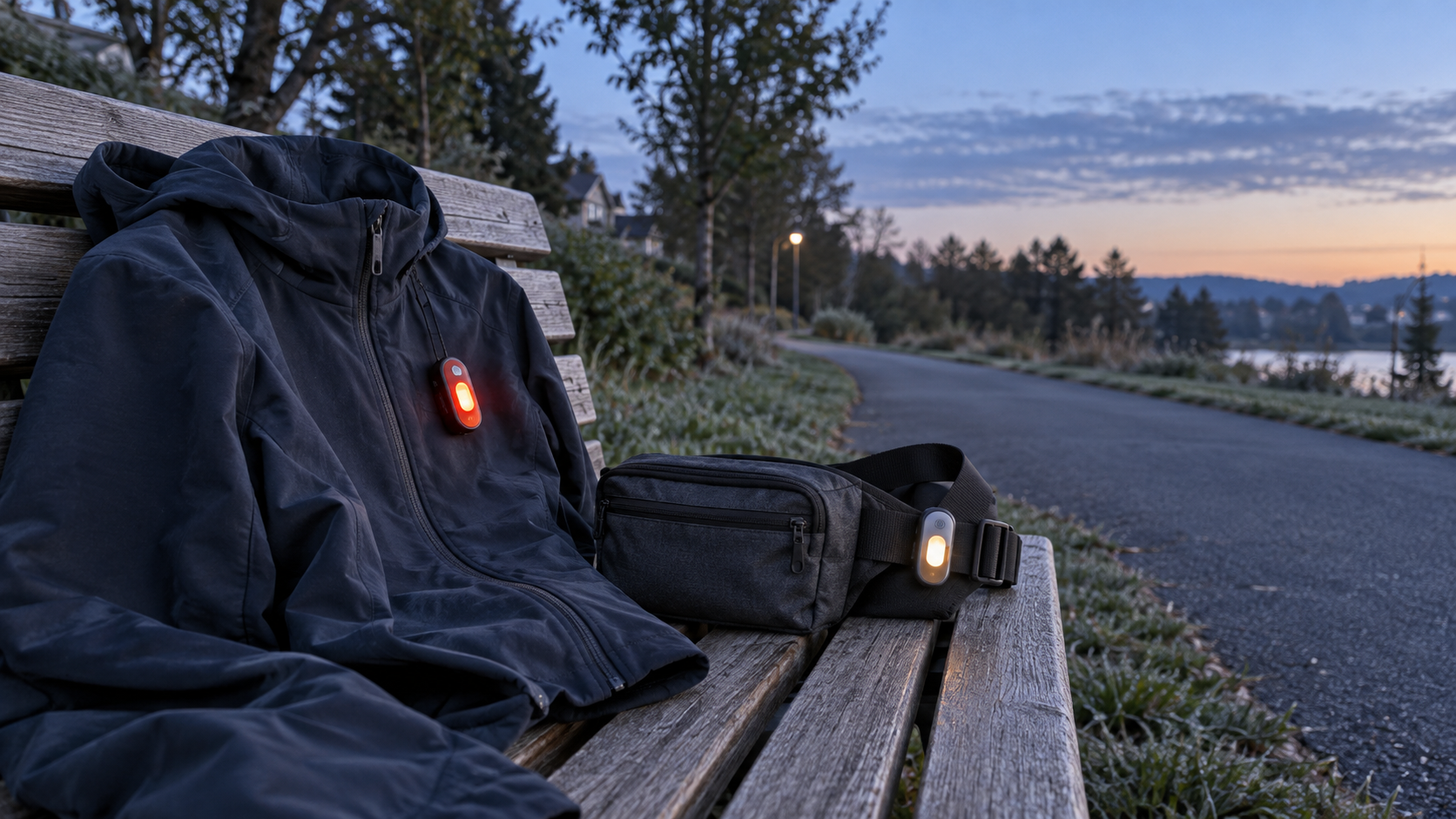
A clip is useful only if it can grip the jacket edge, pocket, belt, bag strap, or other location you will actually use. Measure the fabric or strap thickness and compare it with clear product photos and stated attachment guidance. Thick seams can stop a clip from seating; loose fabric can rotate it; an open coat or swinging bag can turn the light away.
Test the position while walking, reaching, and adding a rain layer. Do not attach a light where it blocks movement, snags a strap, or disappears behind an arm, scarf, open jacket, or backpack. One attachment point does not provide coverage from every approach.
Decide whether you need a marker or a path light
| Need | Format to assess | Important limit |
|---|---|---|
| Add a small illuminated cue | Clip-on marker light | Angle, obstruction, surroundings, and other road users still matter |
| See the walking surface | Flashlight or headlamp designed for that job | Beam claims and runtime depend on mode and test conditions |
| Add passive material that returns outside light | Reflective band, vest, or bag detail | It needs an outside light source and useful angle |
| Avoid a poor low-light route | Different time, location, or indoor option | Access and routine fit determine whether the alternative is practical |
Audit the power routine
For rechargeable designs, check the connector, charging indicator, stated charging directions, and whether charging can fit an existing routine. For replaceable-battery designs, identify the exact battery, opening method, storage plan for spares, and disposal requirements. A listed maximum runtime is not a promise for every mode, temperature, battery condition, or use pattern.
Build a simple pre-walk check: confirm the light turns on, select the intended mode, and inspect the attachment. Skip a product whose listing does not identify the power source or explain basic operation well enough to judge upkeep.
Read weather and brightness claims narrowly
“Water resistant” is not the same as waterproof, and neither term should be extended beyond the maker's exact conditions. Check the stated weather limit, port-cover instructions, and drying or storage directions. Do not infer rain suitability from an outdoor photo.
Lumens, flash patterns, and visibility-distance claims do not establish that a driver or cyclist will detect or respond to the wearer. Treat phrases such as “keeps you safe,” “360-degree protection,” or an unexplained distance as marketing, not a guarantee.
Compare what you already own
- Existing flashlight or headlamp: may better fit a need to see the ground, provided it is appropriate for the route and used according to its directions.
- Reflective gear: offers a different passive function; compare the reflective walking gear guide without treating reflection as guaranteed detection.
- Charged bike or bag light: may work if its maker permits that attachment and it stays secure and correctly oriented.
- Schedule or route change: costs nothing when a brighter, more comfortable option is available and realistic.
- No new purchase: is reasonable when an existing setup already covers the practical need.
When it is time to compare models
If the route-first test leaves a clear need for a compact attachable light, use the clip-on light selection guide to compare grips, aimed direction, controls, power, stated modes, weather wording, and return terms. Keep this decision separate from weight-loss expectations: a light may support the logistics of a chosen walk, but it does not cause fat loss or guarantee that a routine will continue.
Bottom line
A clip-on light earns its place only when it matches a specific low-light section, grips your real clothing or bag, stays aimed, and has a power routine you can maintain. It remains a supplementary cue rather than a promise of detection or safety. Change the route, time, or tool when that addresses the actual problem more directly, and use the routine-support tools guide for the broader buy-versus-skip framework.