Buy, delay, reuse, or skip
Is a Collapsible Mixing Bowl Worth It for a Small Kitchen?
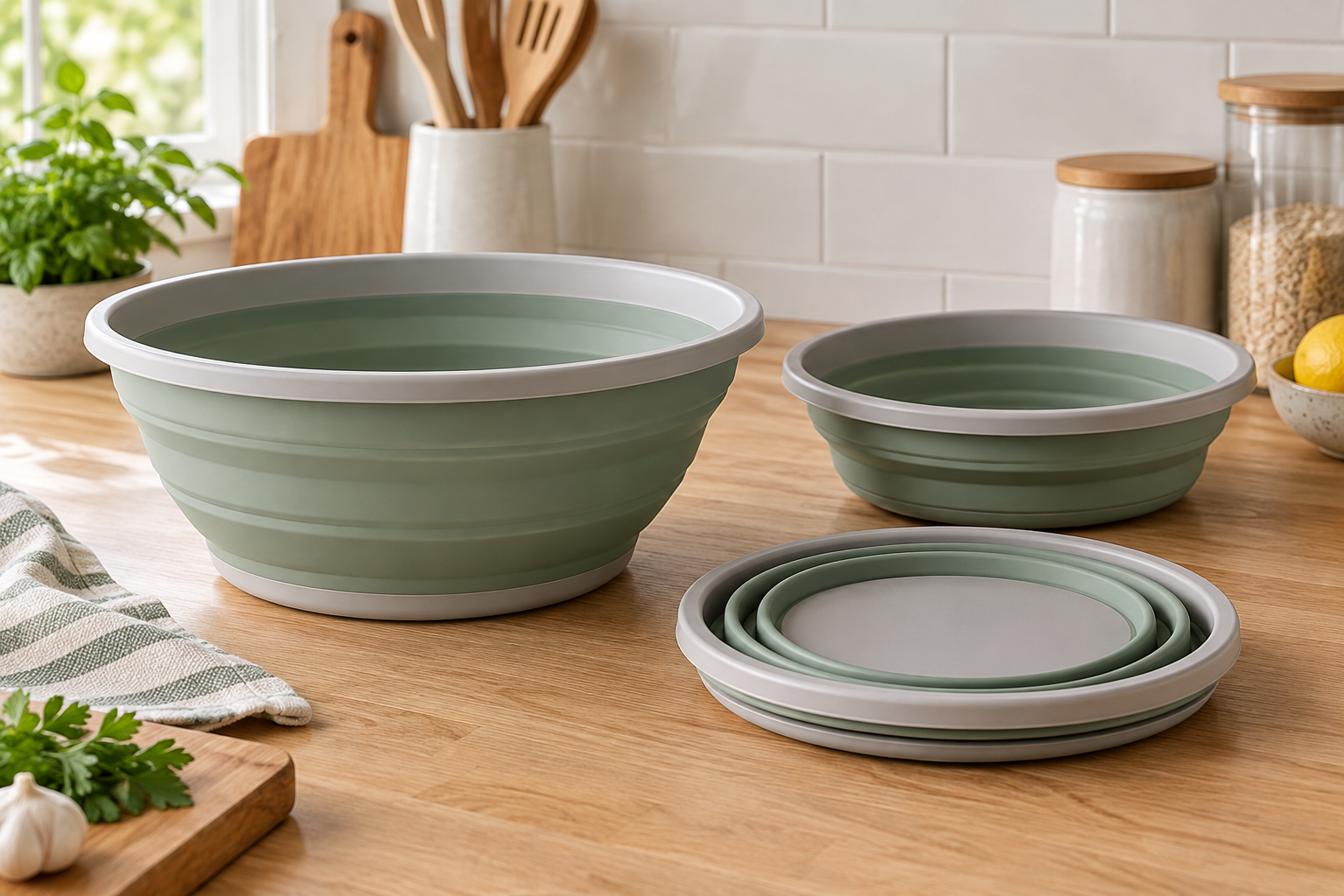
A collapsible mixing bowl can be worth buying when a rigid bowl repeatedly blocks scarce cabinet space and a measured folding bowl still suits the mixing job. Skip it when the existing bowl nests well, vigorous mixing needs a firmer base, or folds would add more washing and drying work than the storage saving is worth.
As an Amazon Associate, GoodWeighFinds earns from qualifying purchases.
The quick decision
- Buy: one frequently used rigid bowl creates a repeat storage conflict, and a documented collapsible option fits both that batch and the measured storage slot.
- Delay: you have not measured the useful capacity, complete collapsed height, or drying space.
- Choose an alternative: a nesting rigid bowl, multipurpose container, or rearranged shelf solves the same problem with less upkeep.
- Skip: the bowl is used infrequently, an existing one stores cleanly, or firm support matters more than saving cabinet height.
Start with a no-buy storage test
Remove the bowl you use most and note what becomes easier to store. If the freed height does not solve a real conflict, a collapsible replacement is unlikely to earn its cost. If it does, measure the empty slot's width, depth, and usable height around hinges, shelf lips, and neighboring cookware.
Next, record the rigid bowl's inside width and depth and the batches it handles without crowding. A folding bowl that fits the shelf but is too shallow for tossing or too narrow for a whisk has moved the problem rather than solved it.
What the purchase costs beyond the price
- Setup: the bowl must open fully and stay in its intended shape before ingredients are added.
- Cleaning: accordion folds, rim channels, handles, and base transitions must remain reachable under the maker's care directions.
- Drying: folds may need to stay expanded until every surface is dry, temporarily using the counter space the bowl was meant to save.
- Storage: count the rigid rim, base, handles, spout, and lid in the collapsed measurement.
- Replacement: tears, permanent deformation, trapped residue, or a loose rim can end the bowl's useful life sooner than a simple rigid bowl.
Red flags in a listing
- Only the folded center is shown, with no complete open and collapsed dimensions.
- “Space saving,” “sturdy,” “non-slip,” or “unbreakable” appears without useful conditions or product documentation.
- Capacity is listed without interior dimensions or room to stir.
- Materials, care directions, temperature limits, or intended appliance uses are unclear.
- A large set is presented as better value even though only one size matches a recurring job.
Who should skip or escalate
Skip the format if you rely on a heavy electric mixer, vigorous whisking, or another task that needs a rigid bowl and the product maker does not document that use. Keep very hot ingredients and appliances out of the decision unless the exact model's instructions explicitly permit them.
Stop using a bowl that will not remain fully open, has torn or separated material, traps residue that cannot be reached, or no longer sits as intended. Contact the manufacturer for model-specific use or replacement guidance when the instructions are unclear.
Choose the cheaper alternative when it works
A single rigid bowl may nest inside a pot or larger bowl you already own. A multipurpose food container may handle light mixing and covered staging if its maker documents those uses. Shelf rearrangement can also create height without adding another object. Test these options before paying for a folding mechanism.
Bottom line
A collapsible mixing bowl is worth it only when it solves a measured, recurring cabinet problem without compromising the actual mixing job or creating irritating cleanup. Prove the storage gain first, then compare complete dimensions, stability, care, drying, and use limits in the collapsible mixing-bowl format guide. For more low-hype kitchen decisions, use the routine-support tools pillar.