Routine-support buying guide
How to Choose Collapsible Mixing Bowls for Small-Kitchen Batch Prep
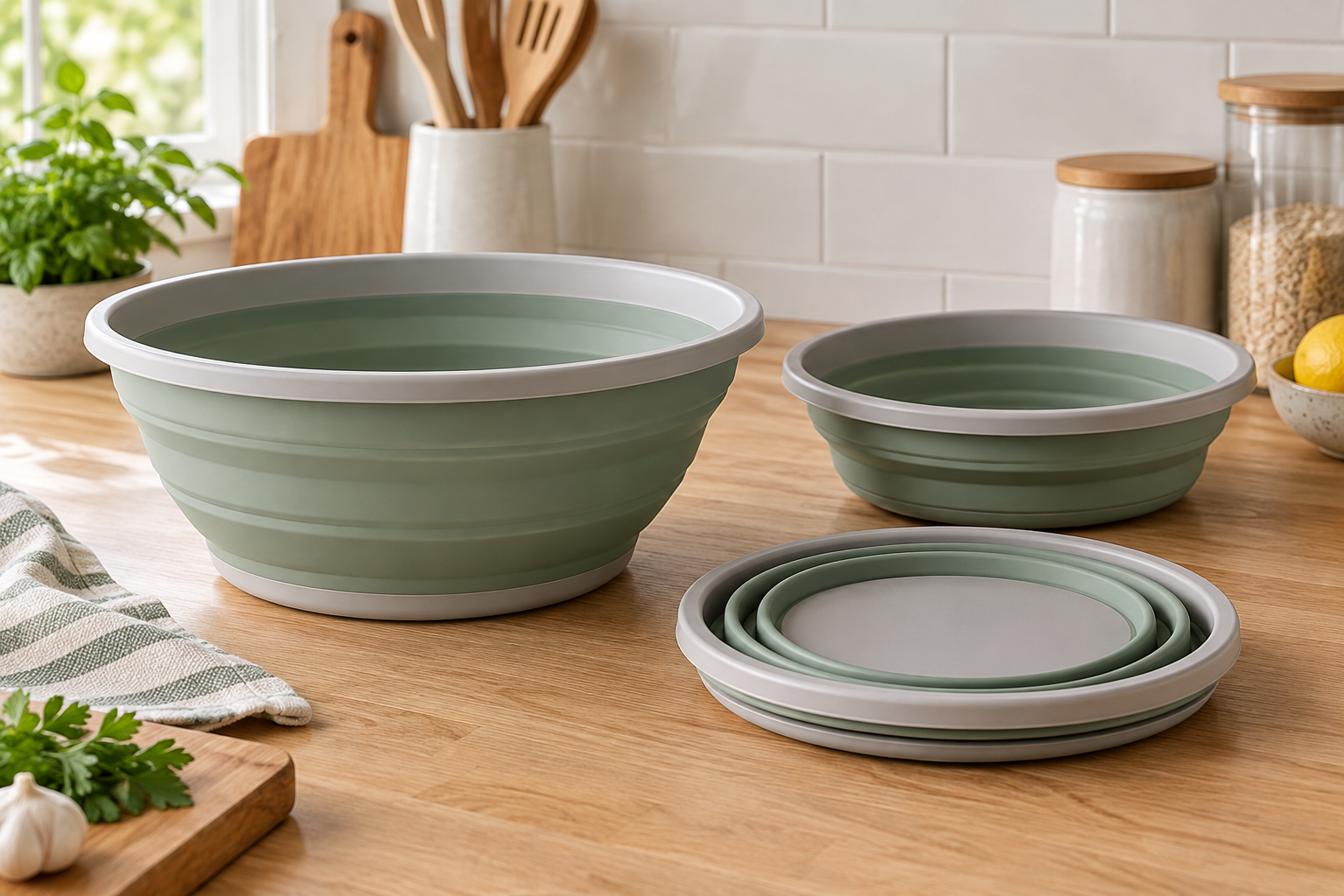
A collapsible mixing bowl can trade cabinet height for a little more setup and care. The useful question is whether it stays stable while open, fits the batches you actually make, cleans at every fold, and stores meaningfully flatter than a bowl already in your kitchen.
As an Amazon Associate, GoodWeighFinds earns from qualifying purchases.
Who this guide is for
This guide is for adults who regularly mix, toss, whisk, or stage ingredients but have limited cabinet or shelf height. It covers ordinary kitchen workflow and storage—not prescribed portions, nutrition plans, or weight-loss results.
If you have not established that a folding bowl solves a real storage problem, start with the collapsible mixing-bowl buy-or-skip decision. If ingredients need covered short-term staging, compare prep bowls with lids. If the main task is rinsing and draining, use the collapsible colander guide. The broader routine-support tools guide explains how to choose practical tools without body-result promises.
Useful formats, not unsupported winners
- Single rigid-rim bowl: A straightforward choice when one recurring batch size creates the storage problem.
- Nested size set: Potentially useful for several distinct tasks, but only if the complete collapsed stack fits the intended shelf.
- Handled or spouted bowl: Can help with holding or pouring, while adding projections that change cabinet fit and cleaning.
- Bowl with a separate lid: Adds short-term covered staging only when the maker documents that use; it also adds another part to store and match.
Selection criteria that matter
- Open capacity and dimensions: Compare stated volume with inside width and depth. Leave enough room to stir or toss without spilling over the rim.
- Collapsed height: Measure the full product, including rim, base, handles, and any lid. A low center section does not guarantee a low stored profile.
- Base stability: Look for a broad, level base and clear maker instructions. Treat slip-resistant or non-slip wording as a product claim, not a guarantee.
- Rim and grip: A rigid rim or handle may help when carrying a filled bowl, but it must not flex, pinch, or obstruct the usual utensil.
- Fold geometry: Check how the bowl locks open and collapses. A format that folds unexpectedly under ordinary pressure is a poor fit.
- Cleaning access: Every accordion fold, seam, rim channel, and base transition should be reachable under the current care instructions.
- Drying: Confirm whether folds remain open enough to inspect and dry before the bowl is collapsed for storage.
- Material and use labels: Verify food-contact material wording plus exact dishwasher, microwave, freezer, and temperature directions for the specific model.
A five-minute fit check before ordering
- Choose the bowl already used most often and measure its inside width, depth, and useful capacity.
- Measure the intended shelf or drawer, including door, hinge, and item-clearance limits.
- Decide whether one bowl or several distinct sizes solve a real recurring task.
- Trace the washing and drying path, including where an expanded bowl can sit until every fold is dry.
- Check the current listing for exact open and collapsed dimensions, materials, care directions, appliance limits, included pieces, and return terms.
Claims that need a closer look
“Space saving” is meaningful only when both open and collapsed measurements fit your kitchen. “Sturdy,” “non-slip,” “stain resistant,” “odor resistant,” and “unbreakable” need model-specific support and conditions. Do not infer heat or appliance compatibility from material appearance; follow the exact maker directions.
A mixing bowl is not automatically suitable for storing food, heating it, holding very hot ingredients, or supporting heavy mixer attachments. Use it only for documented tasks, and stop using it when tears, permanent deformation, trapped residue, a loose rim, or a damaged base prevents reliable opening or cleaning.
Who should skip this purchase
Skip a collapsible bowl if an existing bowl already fits the cabinet, if a wide rigid base is important for vigorous mixing, or if folds would add frustrating cleanup. A simple rigid bowl may be easier to inspect, dry, stack, and use with an electric mixer.
Skip large sets when only one size solves the problem. Also skip listings that omit open and collapsed dimensions, capacity, materials, care directions, or use limits.
Bottom line
A useful collapsible mixing bowl must work as a bowl before it works as a storage trick. Match the open size to a recurring prep task, measure the complete collapsed profile, verify stability and care details, and keep an existing rigid bowl as the no-buy comparison.