Small-kitchen buy-or-skip guide
Is an Under-Cabinet Paper Towel Holder Worth It for a Small Kitchen?
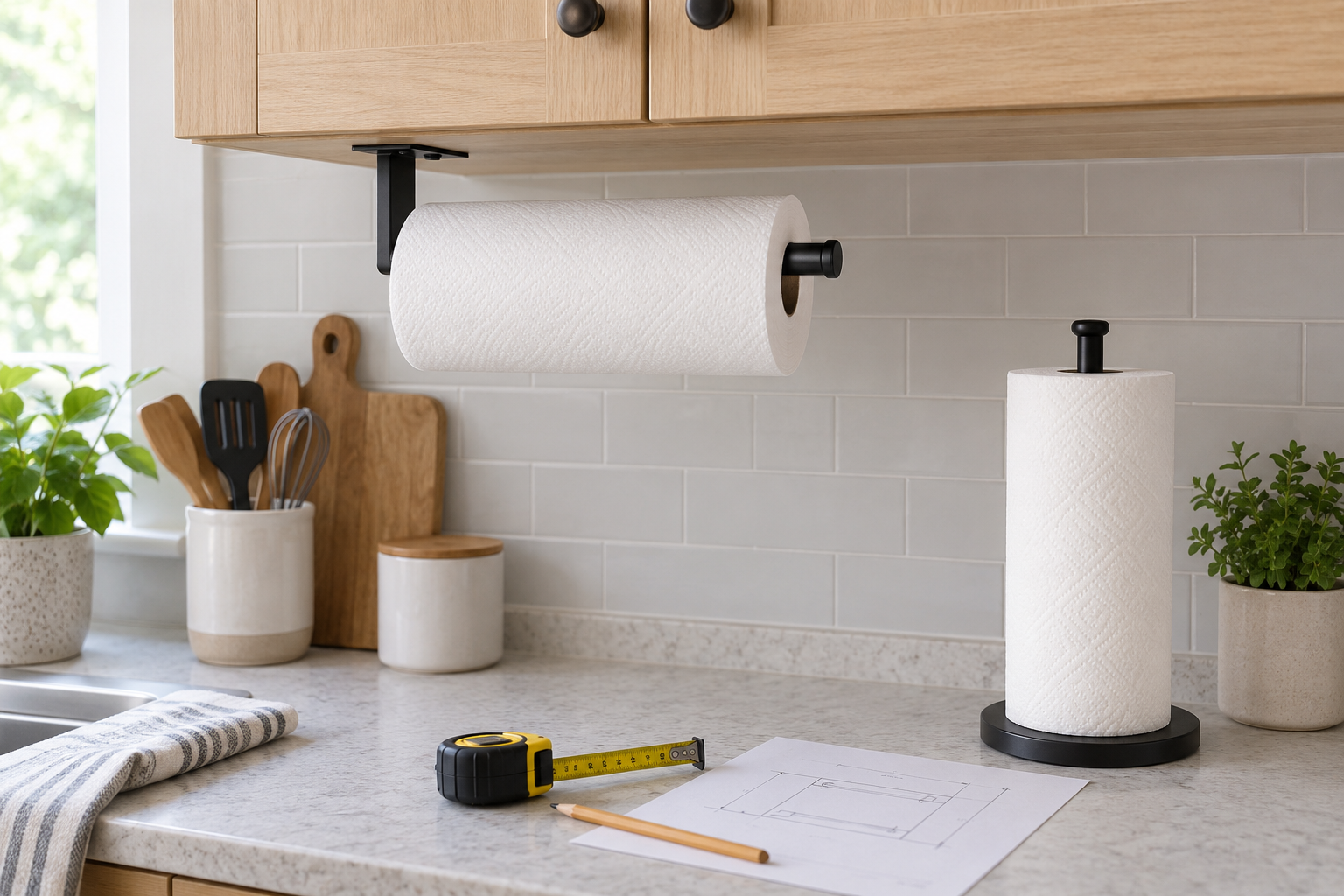
An under-cabinet paper towel holder is worth considering when a countertop roll repeatedly crowds the same prep area and one measured mounting position keeps the full roll reachable without blocking doors, appliances, or work space. Delay or skip it when placement is uncertain, installation is not permitted, or a movable holder already works.
As an Amazon Associate, GoodWeighFinds earns from qualifying purchases.
The short decision
| Decision | When it fits |
|---|---|
| Buy | The current roll regularly takes needed prep space, a full roll fits a measured position, installation is permitted, and the loading path remains easy to reach. |
| Delay | You have not tested the location during real prep, measured the largest rolls you buy, or confirmed the cabinet surface and mounting instructions. |
| Choose an alternative | A freestanding holder, wall location, shelf, or keeping the roll in a nearby cabinet preserves flexibility with no installation. |
| Skip | The roll would conflict with a door, light, outlet, sink, heat source, appliance vent, or comfortable reach—or the mount risks a surface you cannot alter. |
| Escalate | Ask the property owner or a qualified installer when lease permission, cabinet construction, concealed utilities, or suitable fasteners are uncertain. |
Run a no-buy placement test first
Move the current roll to the proposed zone for several meal-prep and cleanup sessions. A temporary mock-up made from the roll and removable painter's tape can show its full diameter and width without pretending tape can support an installed holder. Open every nearby cabinet and use the counter normally.
Write down the specific improvement: more cutting-board space, a shorter reach from the prep area, or fewer times the roll gets moved. If no repeated friction disappears, a permanent holder is unlikely to earn its setup.
Measure the whole working envelope
- Full roll: Measure the largest roll diameter and width you regularly buy, including any end caps or stops.
- Cabinet underside: Note depth, material, thickness, seams, trim, hinges, lighting, outlets, and instructions from the cabinet maker when available.
- Loading path: Leave enough side clearance to remove the empty core and load a full roll.
- Use path: Check reach, hand clearance, tearing direction, and whether pulling would interfere with an open door or items on the counter.
- Nearby hazards: Keep paper and the holder clear of cooktops, toaster slots, hot appliances, flames, water spray, and appliance vents according to product and appliance instructions.
Mounting changes the tradeoff
A drilled holder can be a durable fixed setup only when the cabinet material, thickness, location, and supplied fasteners are suitable. Do not guess about concealed wiring, lighting, plumbing, or a thin cabinet panel. An adhesive holder avoids holes, but surface preparation, curing time, temperature, moisture, finish, and removal rules still limit where it can be used. “Damage-free” is a seller claim, not a promise for every finish.
Clamp-on or slide-on formats may preserve reversibility, but their bracket thickness can interfere with a door and their stated surface range still needs checking. A renter should get permission where the lease or mounting method requires it.
Cost, maintenance, and setup
Total cost includes the holder, mounting supplies not included, installation help if needed, possible surface repair, and return shipping. A dedicated holder also creates a cleaning job around the bracket and under the cabinet. Check whether the spindle or arm can be wiped without removing the mount and whether splashes or grease commonly reach the proposed location.
Setup friction matters after purchase too. If reloading requires clearing the counter, reaching awkwardly, or removing parts that are easy to misplace, the saved footprint may not improve the routine.
Listing red flags
- No complete installed dimensions or full-roll clearance diagram.
- “Universal” roll or cabinet fit without dimensional limits.
- One-hand tearing shown without explaining the resistance mechanism or mounting requirements.
- Adhesive listings that omit supported surfaces, preparation, curing, temperature, moisture, or removal instructions.
- Drilled designs with unclear hardware or no cabinet-material guidance.
- Damage-free, rustproof, load, or durability promises with no useful limits.
- No identifiable seller, instructions, or practical return terms.
Who should skip one?
Skip a mounted holder when the current roll is not actually disrupting prep, you often move it between work zones, every available position conflicts with another task, or installation uncertainty outweighs the small space gain. A freestanding holder is usually the calmer alternative when kitchen layout or housing permission may change.
Also skip any model that depends on unverified surface claims, improvised fasteners, added glue, or a location too close to heat, water, or appliance airflow. Delay the project until the surface and installation can be checked rather than treating a product listing as cabinet guidance.
Bottom line
An under-cabinet paper towel holder can be worth it when a real counter-space problem, full-roll measurements, safe clearance, mounting permission, easy reloading, and routine upkeep all line up. Test the placement before buying and keep the freestanding holder when flexibility wins. If the ownership case is clear, use the under-cabinet holder format guide to compare mounting styles. For broader low-hype kitchen decisions, continue with the routine-support tools pillar.