Shared-pantry label comparison
Shelf-Edge Label vs Container Label for a Shared Pantry
A shelf-edge label names a fixed pantry zone; a container label identifies one item wherever it moves. The better format depends on whether your household returns items to consistent places, moves containers often, and will actually maintain the system.
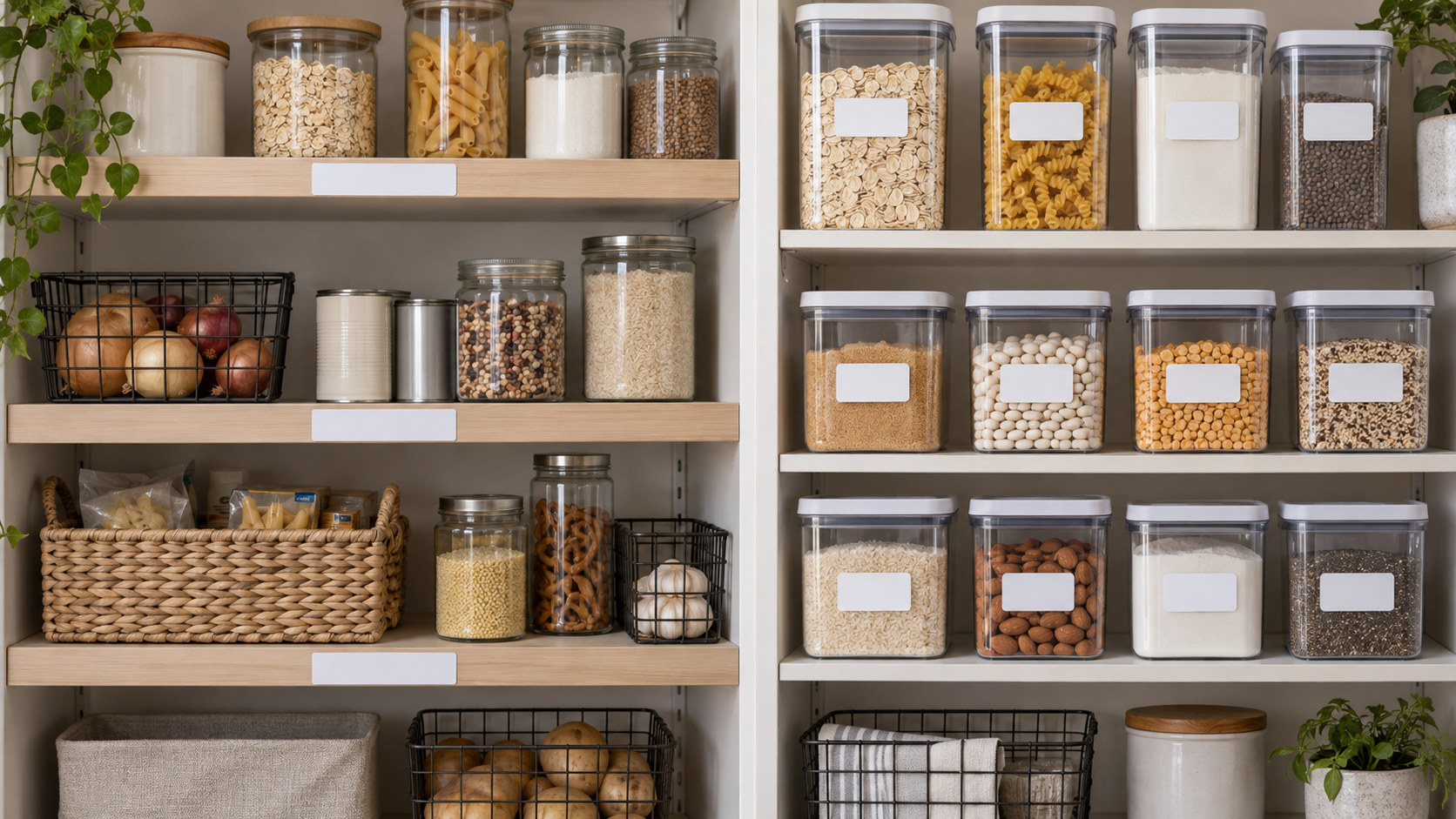
As an Amazon Associate, GoodWeighFinds earns from qualifying purchases.
The quick comparison
| Decision | Shelf-edge label | Container label |
|---|---|---|
| What it identifies | A fixed zone or category | One container or item |
| Best fit | Households that return items to consistent shelves | Containers that move between shelves or rooms |
| Visibility | Readable at the shelf front even when items change | Visible only when the labeled face is turned outward |
| Updating | Change the zone when the pantry layout changes | Relabel each container when its contents change |
| Surface issue | Must suit the shelf edge, clip, or holder | Must suit the container material and shape |
| Cleaning | May stay away from food-container washing | May need removal or special care before washing |
Who shelf-edge labels fit
Shelf labels fit a pantry organized by stable homes: breakfast items on one shelf, packed-lunch supplies in one zone, or baking tools in one cabinet section. Anyone can see where an item should return without reading every container.
- Measure the edge: note usable height, thickness, rounded trim, and whether doors or drawers pass close by.
- Choose the attachment deliberately: adhesive labels, clips, and slide-in holders require different edges and clearance.
- Use broad zone names: a shelf label becomes fussy when every minor stock change requires rewriting it.
- Check removal wording: “removable” is a claim to verify for the exact shelf finish, not a residue guarantee.
Who container labels fit
Container labels suit decanted foods, shared bins, or supplies that routinely move. The identification travels with the container, which helps when several shelves hold similar-looking contents. It also creates more individual labels to write and maintain.
- Check the usable face: measure a flat area that remains visible when containers sit together.
- Match the writing method: confirm which marker or pen the maker specifies and whether it is included.
- Plan for changing contents: reusable labels still require erasing, cleaning, or replacing when the container's job changes.
- Follow care directions: do not assume a label can go through a dishwasher, freezer cycle, or soaking unless the current instructions say so.
Setup and maintenance tradeoffs
Shelf-edge labels require agreement about zones. Setup takes measuring and a household decision about where categories live, but the number of labels can remain small. Container labels require less commitment to a fixed layout, yet every new or repurposed container adds an update step.
For either format, clean and dry the supported surface as directed before applying anything. Test one label in an inconspicuous area when the shelf finish or container matters. Periodically remove labels that no longer communicate a useful distinction; more labels do not automatically make a pantry easier to use.
Try a no-buy test first
Use folded paper cards or low-tack notes for a week without attaching them to valuable finishes. Label three broad shelf zones, then label three movable containers. Watch what actually fails: people ignoring zones, containers rotating out of view, labels needing constant revision, or no meaningful problem at all.
If shelf zones help, the pantry shelf-label worth-it guide provides a fuller buy-or-skip test. If the household needs printed output and repeatable tape sizes, use the label-maker guide after deciding where labels should live.
Skip criteria
- Skip both when everyone already finds and returns pantry items without friction.
- Skip shelf-edge labels when items have no stable home or the shelf edge cannot accept the attachment without obstructing doors or access.
- Skip container labels when contents change frequently, containers lack a suitable visible surface, or washing instructions conflict with the label.
- Skip an elaborate system when a small number of existing bins, clips, or handwritten cards solve the problem.
- Do not use ordinary organization labels as food-date, allergen, or safety controls unless the label and household process are specifically designed for that job.
Bottom line
Choose shelf-edge labels when the location is the useful message and container labels when identification needs to move with the item. Measure the exact surface, count the ongoing updates, and test a small zone before labeling the whole pantry. For the broader product-neutral framework, visit the routine-support tools guide.