Label the location, the container, or nothing
Is a Pantry Shelf Label System Worth It for a Shared Kitchen?
Pantry shelf labels can be worth using when several people repeatedly disagree about where broad categories belong. They are probably unnecessary when the pantry already stays understandable, the arrangement changes every week, or labels would add another system nobody wants to maintain.
As an Amazon Associate, GoodWeighFinds earns from qualifying purchases.
The quick answer
- Likely worth it: the same broad items are repeatedly misplaced, the household agrees on a few stable zones, and removable labels suit the shelf surface.
- Test first: use folded paper cards or low-tack notes for one normal shopping cycle before buying a dedicated system.
- Probably skip it: one person uses the pantry, categories move constantly, the labels would be hard to read, or nobody wants responsibility for updates.
Start with the shared problem, not the labels
Write down the recurring friction in one sentence. “Breakfast items keep splitting across three shelves” is a label-sized problem. “The pantry is too deep and everything disappears behind everything else” is more likely an access or container-layout problem.
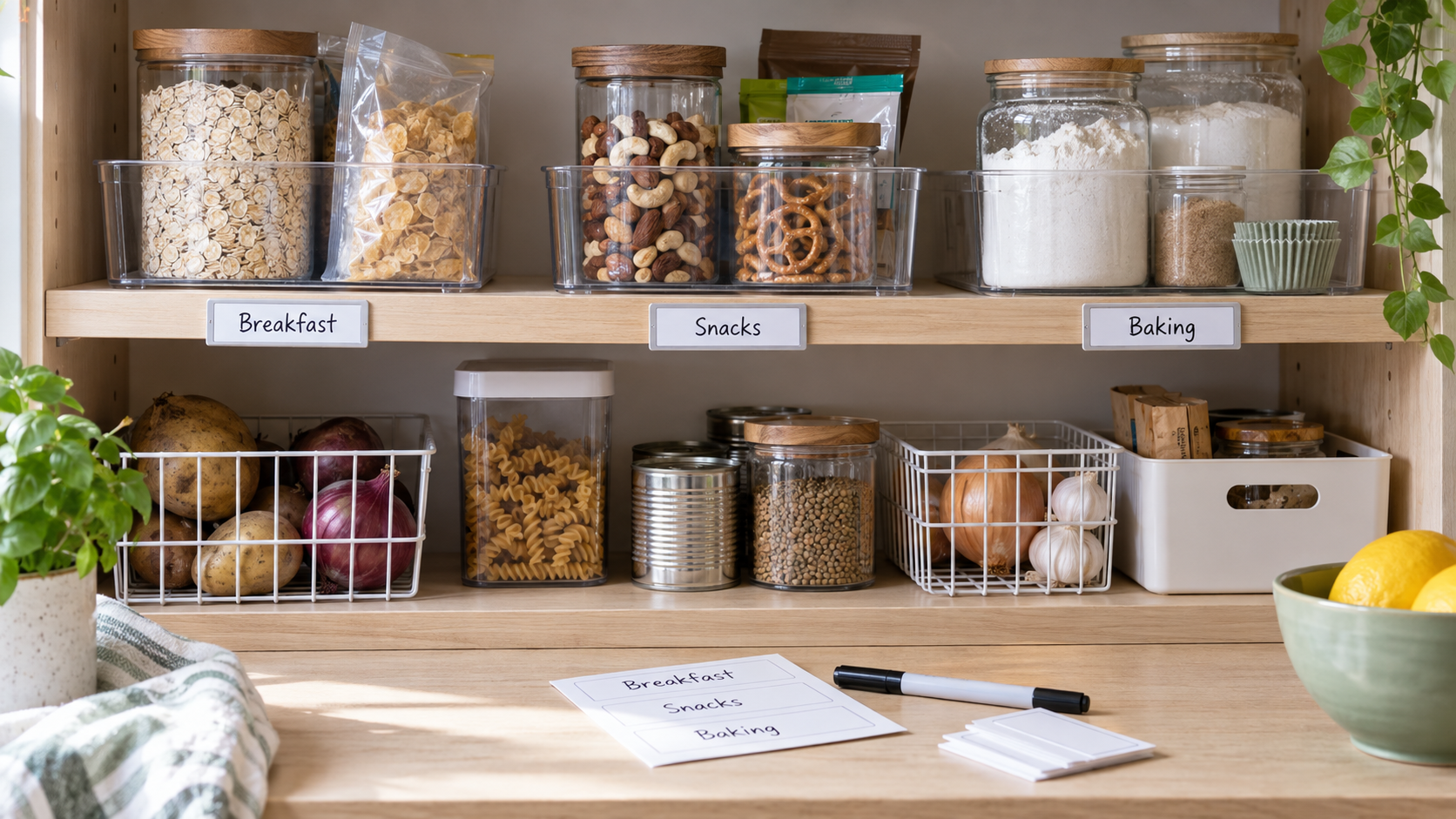
Use the fewest zones that make sense to everyone who uses the space. Broad labels such as breakfast, snacks, baking, or packed lunches are easier to maintain than a label for every ingredient. A system that needs constant exceptions is not earning its space.
Run a no-cost trial first
Place temporary paper cards at the proposed shelf edges and live with them through unpacking groceries, cooking, and putting items away. Check whether people notice the labels, understand the words, return items to the intended area, and still have room for unusual packages.
This is a workflow test, not a promise that labels will reduce waste, change eating habits, or make a household more organized. If the trial is ignored, buying nicer labels is unlikely to fix the underlying disagreement.
Check the shelf surface and readable area
- Placement: measure the flat front edge and confirm a label will not block a door, drawer, shelf pin, or handhold.
- Readability: choose enough writing area for short words at a size every household member can comfortably read.
- Surface: follow the maker's compatible-surface and removal wording; unfinished wood, paint, laminate, wire, and textured plastic can behave differently.
- Writing method: include the correct marker, insert card, label tape, or refill in the real cost and upkeep.
- Cleaning: check whether the label must be removed before wiping the shelf and whether seams or holders trap crumbs.
Shelf labels and container labels solve different jobs
A shelf-edge label names a location. It can remain useful when packages change, but only while that zone stays stable. A container label follows a movable bin or jar, which helps identify its contents but can become wrong when the container is repurposed.
Choose one level first. Labeling both every shelf and every container can create visual noise and extra upkeep. If printed labels for movable bins are the priority, use the pantry label-maker guide for tape, refill, privacy, and control criteria.
Compare cheaper and simpler alternatives
- Paper cards: test wording and zones before adhesive touches a shelf.
- One shared pantry note: explain the overall arrangement without labeling every location.
- Existing bins: grouping items may be enough when access, rather than naming, is the issue.
- No formal system: reasonable when the pantry is small, obvious, or frequently rearranged.
When to skip or remove the system
Skip labels that require an unsupported surface, cover useful shelf-edge space, use tiny or low-contrast writing, or depend on costly proprietary refills for a simple job. Remove the system if stale labels become less trustworthy than no labels.
If deep-shelf access is the actual problem, compare a stackable pantry bin with a lazy Susan before adding labels. Labels can name a zone, but they cannot make an unreachable package easier to retrieve.
Bottom line
A pantry shelf label system is worth considering when it clarifies a small number of stable, agreed-upon locations for several people. Test the categories with paper, measure the readable shelf edge, confirm removal wording for the exact surface, and keep the system easy to revise. For the broader buy-or-skip method, use the routine-support tools guide.